
 fufufafa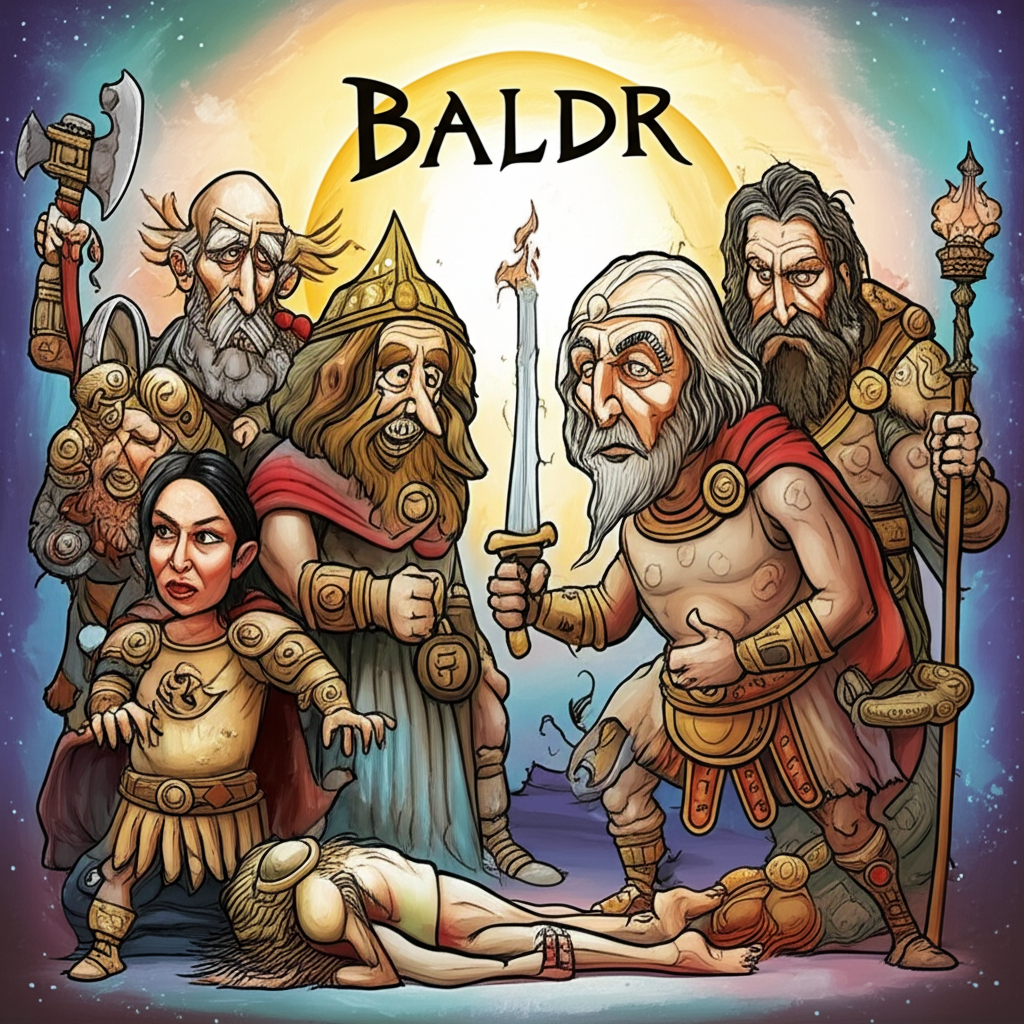
Introduction:
The tale of Baldr’s death is a cornerstone of Norse mythology, a collection of stories and beliefs shared by the Germanic peoples of Scandinavia and Iceland during the Viking Age and before. These stories, passed down through generations via oral tradition and later written in the Poetic Edda and Prose Edda, offer a glimpse into the worldview, values, and fears of a people deeply connected to the natural world. This is a traditional story, a product of human imagination and cultural expression, and not meant to be taken as a literal account of reality. It’s a powerful narrative, rich in symbolism, that continues to captivate and inspire.
Origins and Cultural Background:
The Viking Age, spanning roughly from the late 8th to the mid-11th centuries, was a period of exploration, expansion, and cultural exchange. Scandinavian society was characterized by a warrior culture, with a strong emphasis on honor, bravery, and loyalty. Life was often harsh, with the unforgiving climate of the north dictating the rhythm of existence. The people relied heavily on agriculture, fishing, and trade, but they also faced constant threats from raiding, warfare, and the unpredictable forces of nature.
This environment fostered a complex belief system. The Norse people viewed the world as a cosmic tree, Yggdrasil, whose branches and roots connected the nine realms, including Ásgard, home of the gods; Midgard, the realm of humans; and Helheim, the underworld. Their understanding of the world was profoundly shaped by their interaction with the environment. They saw the gods and goddesses as powerful beings who influenced human fate and controlled natural phenomena. Life, death, and the afterlife were central themes, reflected in their rituals, their art, and most importantly, their stories. They believed in a cyclical view of time, where events repeated themselves and the world would eventually end in Ragnarök, a cataclysmic battle.
Character/Creature Description:
Baldr, the shining god, son of Odin and Frigg, was the epitome of beauty, light, and goodness. He was described as the fairest of all the gods, with a radiant face and a gentle disposition. He was beloved by all, and his presence brought joy and peace to Ásgard. Unlike many of the more tempestuous deities, Baldr represented purity, innocence, and unwavering optimism. He was associated with the sun, the spring, and new beginnings.
His mother, Frigg, the goddess of love, marriage, and motherhood, possessed the gift of foresight. She was deeply devoted to Baldr and, fearing for his safety, extracted an oath from all things – from fire and water to stones and diseases – that they would not harm him. This, she believed, made Baldr invulnerable.
Loki, the trickster god, a complex and often malicious figure, was Baldr’s antithesis. He embodied chaos, cunning, and deception. Loki’s nature was one of instability and disruption; he delighted in subverting order and causing trouble. He was not inherently evil, but his actions often had devastating consequences.
Hel, the ruler of Helheim, was the daughter of Loki and the giantess Angrboða. She was described as having a fearsome appearance, half-black and half-flesh-colored. She presided over the realm of the dead, a place of coldness and darkness, where those who died of old age or sickness went. Hel was not inherently malicious, but she was stern and unwavering in her duty.
Main Story / Narrative Retelling:
A shadow fell upon Ásgard. Baldr, the beloved god, began to have ominous dreams, foretelling his death. The other gods were troubled, and his mother, Frigg, desperate to avert disaster, went throughout the nine realms, extracting oaths from every creature and object that they would not harm her son. The gods, to test Baldr’s invulnerability, made a game of throwing weapons at him, reveling in the fact that they did not harm him.
Loki, always the agent of chaos, was angered by Baldr’s invulnerability and by the joy of the other gods. Disguised as an old woman, he visited Frigg and, through subtle questioning, discovered that one small plant, mistletoe, had not taken the oath because it was deemed too young and harmless.
Loki, seizing his opportunity, fashioned a dart from the mistletoe. He then sought out the blind god Höðr, Baldr’s brother. Offering Höðr the dart, Loki guided his hand, and Höðr, unaware of what he was doing, threw the weapon at Baldr. The mistletoe pierced the shining god, and Baldr fell dead.
The sorrow in Ásgard was immeasurable. Frigg, heartbroken, made a desperate plea: she offered to reward anyone who could persuade Hel to release Baldr from her realm. Hermóðr, Odin’s son, volunteered to ride to Helheim. He rode Sleipnir, Odin’s eight-legged horse, for nine nights and nine days, until he reached the gates of the underworld.
He pleaded with Hel to release Baldr, and Hel agreed, on one condition: that all things in the world weep for Baldr. If all things wept for him, she would allow him to return to Ásgard. Hermóðr returned to Ásgard, and the gods sent messengers throughout the world, asking for tears for Baldr.
Everything wept – trees, stones, animals, and people. But one giantess, disguised as Loki, refused to shed a tear. Because of this single act of refusal, Baldr remained in Helheim.
The story ends with the anticipation of Ragnarök, the final battle, where Baldr will eventually return from the dead and usher in a new, golden age.
Symbolism and Meaning:
The Death of Baldr is rich in symbolic meaning. Baldr represents the beauty, innocence, and light of the world, making his death a metaphor for the loss of these qualities. His death can be interpreted as the inevitable triumph of darkness over light, the fragility of goodness in the face of chaos.
Loki’s role as the instigator of Baldr’s death highlights the destructive nature of deceit and envy. His actions can be seen as representing the forces of negativity that can undermine even the most beautiful and perfect of things.
The journey to Helheim and the attempt to bring Baldr back speaks to the human longing for immortality and the fear of death. The inability to retrieve Baldr underscores the finality of death and the inevitability of loss. The weeping of the world demonstrates the profound grief that death causes and the interconnectedness of all things.
The story also reflects the Norse view of the cyclical nature of time and the eventual renewal that follows destruction. The promise of Baldr’s return suggests hope for a future where goodness triumphs over evil and light overcomes darkness.
Modern Perspective:
The tale of Baldr’s death continues to resonate in modern culture. It has inspired countless works of art, literature, and music. In literature, it has been retold in novels, poems, and comics. In movies, the story has been adapted, often with dramatic embellishments, as part of larger narratives. Video games frequently incorporate Norse mythology, allowing players to embody the gods and experience the mythic world.
The story is studied in academic contexts, providing insights into the history, language, and beliefs of the Norse people. Its themes of betrayal, loss, and the struggle between good and evil are universally relatable, making it a compelling subject for exploration and interpretation.
Conclusion:
The Death of Baldr, like all stories from the Norse tradition, is a product of human imagination and a reflection of a specific cultural worldview. It is a tale of loss, betrayal, and the enduring power of hope. It’s a reminder of the cyclical nature of life, the fragility of beauty, and the constant struggle between light and darkness.
As Muslims, we acknowledge that Allah (SWT) is the true Creator and Sustainer of all things. We recognize that the stories of other cultures are valuable for understanding human history, storytelling traditions, and the capacity for imagination, but we do not ascribe divine qualities or power to any being besides Allah (SWT). We appreciate the cultural heritage and the rich tapestry of human storytelling, understanding that these tales offer unique perspectives on the human condition.


