fufufafa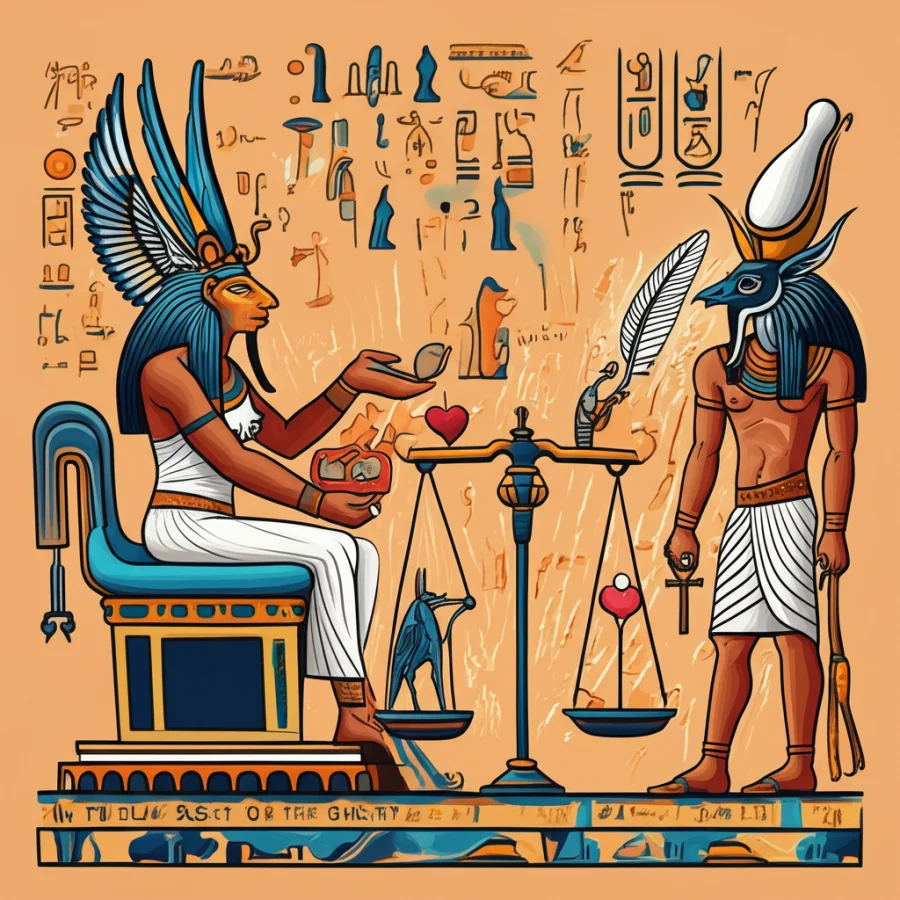
In the sun-drenched sands and along the life-giving Nile of ancient Egypt, a rich tapestry of myths and legends was woven, attempting to explain the mysteries of the cosmos, the rhythm of life and death, and the very nature of existence. Among these captivating narratives is the story of Ra, the supreme solar deity, and the profound ceremony known as the Weighing of the Heart. This is not a tale of historical fact or divine decree, but rather a testament to the imaginative power of an ancient civilization, a way for them to grapple with profound questions about morality, justice, and the afterlife.
The Egyptians, a people deeply attuned to the cyclical nature of their environment, saw the sun as the ultimate life-giver. Ra, the embodiment of this celestial power, was not merely a god; he was the force that brought forth the dawn, sustained life, and ultimately presided over the journey of souls after death. Their world was one of stark contrasts: the fertile black land of the Nile valley against the vast, unforgiving desert; the predictable inundation of the river that brought life, and the encroaching darkness of night. This duality permeated their worldview, and their mythology sought to reconcile these forces. The concept of maat, an abstract principle of truth, order, justice, and cosmic balance, was central to their understanding of the universe. It was against this backdrop of cosmic order and the cyclical dance of life and death that the myth of the Weighing of the Heart took shape.
Central to this narrative is Ra himself, often depicted as a powerful man with the head of a falcon, crowned with a sun disk encircled by a cobra, symbolizing his supreme authority and protective power. However, the Weighing of the Heart ceremony itself is primarily presided over by Osiris, the god of the afterlife, the underworld, and resurrection, who had taken on this role from the primordial creator. While Ra remains the ultimate cosmic power, it is Osiris who acts as the judge in this crucial post-mortem examination. Other figures play vital roles, such as Thoth, the god of wisdom, writing, and the moon, who meticulously records the outcome of the judgment, and Anubis, the jackal-headed god of mummification and the afterlife, who guides the deceased through the underworld and prepares them for the ceremony. The antagonist, a creature of chaos and oblivion, is Ammit, often described as a composite beast with the head of a crocodile, the forequarters of a lion, and the hindquarters of a hippopotamus – a terrifying embodiment of destruction.
The narrative unfolds in the Hall of Two Truths, a celestial court where the soul of the deceased, having passed through the trials of the Duat (the Egyptian underworld), stands before Osiris and a council of gods. The deceased, now a shimmering spirit, is presented to the divine tribunal. The heart, believed by the Egyptians to be the seat of intellect, emotion, and memory, is carefully placed on one pan of a great scale. On the other pan rests a single feather, the feather of maat, representing the divine principle of truth and justice. This is the moment of ultimate reckoning.
Anubis, with his steady gaze, oversees the delicate balance. Thoth, his stylus poised, waits to inscribe the verdict. The deceased, having rehearsed their negative confessions – a series of declarations of sins they have not committed – hopes for a favorable outcome. As the scale settles, the tension in the Hall is palpable. If the heart is lighter than the feather of maat, or perfectly balanced, it signifies a life lived in accordance with truth and justice. The soul is then deemed worthy to enter the eternal paradise, the Field of Reeds, a lush and idyllic land where they will continue to exist in a blessed state.
However, if the heart is heavy, weighed down by the burden of transgressions, guilt, and untruths, it tips the scale against the feather of maat. In this dire scenario, the heart is cast before Ammit, the Devourer. With a savage roar, she consumes the heart, condemning the soul to eternal oblivion, a complete cessation of existence, the ultimate fear of the ancient Egyptians. This terrifying fate underscores the profound importance they placed on living a life of integrity and adherence to maat.
The symbolism embedded within this myth is rich and multifaceted. The scale itself is a universal symbol of justice and balance. The heart, as the vessel of one’s being, represents the entirety of their life and actions. The feather of maat embodies the ideal of righteousness, the standard by which all lives are ultimately measured. The journey through the Duat and the subsequent judgment highlight the Egyptian belief in accountability for one’s deeds, even after death. The stark contrast between eternal paradise and utter annihilation speaks to their profound anxieties about death and the desire for a meaningful, morally upright existence. Ra, as the ultimate source of light and life, presides over this cosmic order, ensuring that the principles of maat are upheld even in the realm of the dead.
In contemporary times, the myth of the Weighing of the Heart continues to resonate, albeit in different forms. It has found its way into literature, art, and popular culture, often serving as a dramatic and evocative motif. From depictions in historical documentaries to its metaphorical use in discussions about justice and morality, the imagery of the heart being weighed against truth remains a powerful archetype. In video games, similar concepts of judgment and consequence often appear, drawing on the archetypal fears and aspirations associated with the afterlife. Scholars of ancient cultures study this myth to gain insight into the ethical frameworks, religious beliefs, and psychological landscapes of ancient Egyptians.
It is crucial to reiterate that the story of Ra and the Weighing of the Heart is a product of ancient Egyptian imagination and cultural expression. It offers a fascinating window into their worldview and their attempts to comprehend life, death, and morality. As Muslims, we recognize that only Allah is the true Creator and Sustainer of all existence, and that all judgment ultimately rests with Him. However, by studying these ancient narratives, we can appreciate the diverse ways in which humanity has sought to understand its place in the cosmos, the enduring power of storytelling, and the rich tapestry of our shared cultural heritage. The Weighing of the Heart, in its imaginative grandeur, serves as a reminder of the universal human quest for meaning, justice, and the hope for an enduring existence.