fufufafa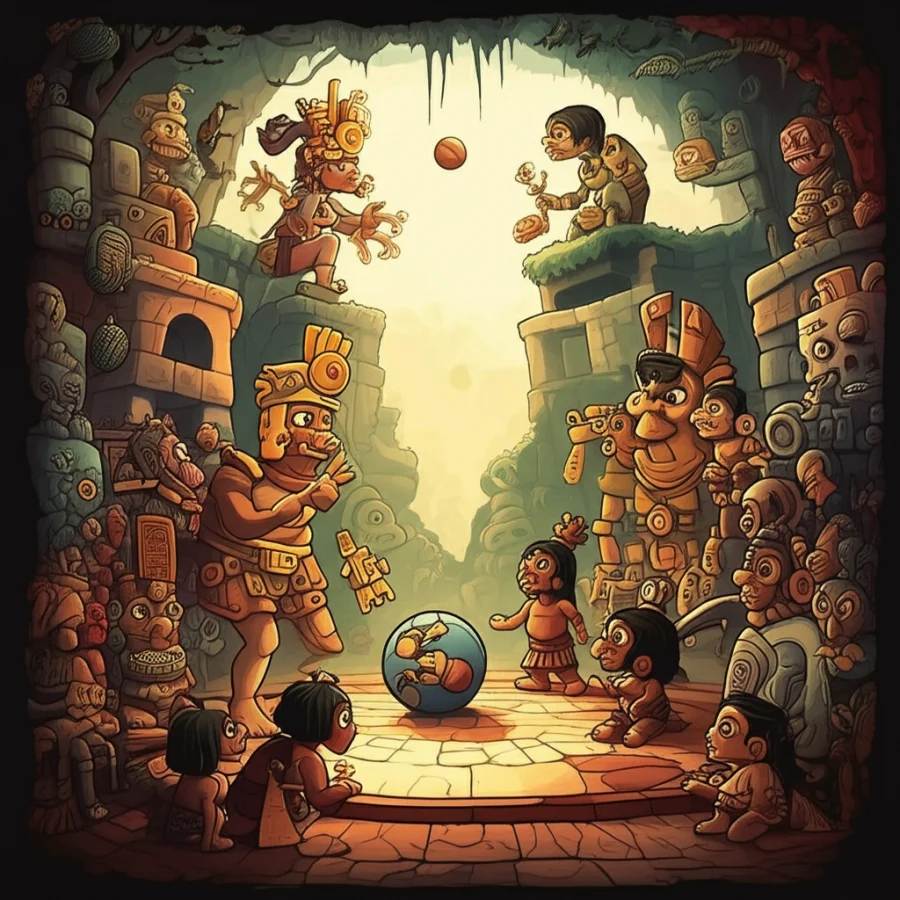
From the sun-drenched Yucatán Peninsula, a land sculpted by ancient Maya civilization, whispers of a profound and dramatic story have echoed through the ages. This is not a tale of historical fact, but a rich tapestry woven from the beliefs and imagination of a people who once thrived there. The Maya, a culture renowned for its astronomical prowess, intricate calendar systems, and monumental architecture, also possessed a vibrant mythology that sought to explain the cosmos, the forces of nature, and the very essence of life and death. Among their most potent narratives is the story of the ballgame, a ritualistic spectacle deeply intertwined with the spiritual landscape, particularly in the magnificent city of Chichen Itza. This is a story told by ancient people, a window into their worldview, not a doctrine to be held as truth.
The era in which these stories flourished was one of remarkable cultural dynamism for the Maya. From roughly 250 to 900 CE, the Classic Maya period witnessed the rise of sophisticated city-states, each with its own ruling elite, elaborate religious practices, and extensive trade networks. The environment of the Yucatán, characterized by its porous limestone bedrock, dramatic sinkholes (cenotes), and dense tropical forests, profoundly shaped their understanding of the world. For the Maya, the world was not a static, material place but a vibrant, interconnected cosmos teeming with supernatural forces. The celestial bodies, the cycles of rain and drought, the fertility of the earth, and the passage of life and death were all imbued with divine significance. Their cosmology was a complex hierarchy of gods, spirits, and cosmic entities, often depicted in anthropomorphic and zoomorphic forms, embodying natural phenomena and abstract concepts.
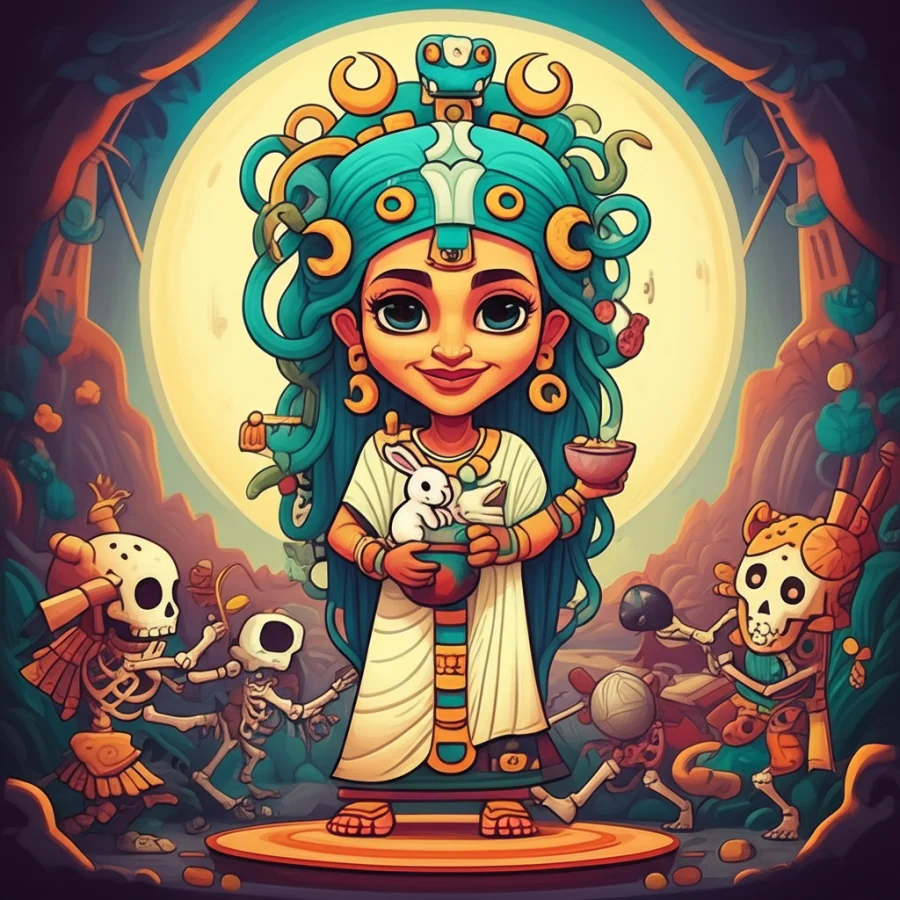
Central to many Maya myths, and thus to the ballgame, is the figure of Kukulkan, often depicted as a feathered serpent. This powerful entity, whose name translates to "Feathered Serpent" or "Precious Serpent," was a deity associated with creation, wisdom, the wind, and the heavens. Kukulkan was not merely a creature but a potent symbol. The serpent, with its shedding skin, represented renewal and transformation, while feathers evoked the sky and the realm of the gods. His dual nature, combining the earthly and the celestial, made him a bridge between the human world and the divine. In some narratives, he is seen as a benevolent creator, while in others, he can be a formidable and demanding deity. The ballgame itself, played with a solid rubber ball, was more than a sport; it was a sacred ritual, a cosmic reenactment, and a perilous undertaking that could have profound consequences, often involving the gods themselves.
The most compelling myth surrounding the ballgame at Chichen Itza, as recounted through ancient inscriptions and codices, involves the Lords of Xibalba, the Maya underworld. Xibalba was not simply a place of punishment but a realm of death, darkness, and formidable supernatural beings, a mirror to the world above. It was a place where the living and the dead interacted, where trials were faced, and where cosmic balance was often contested.
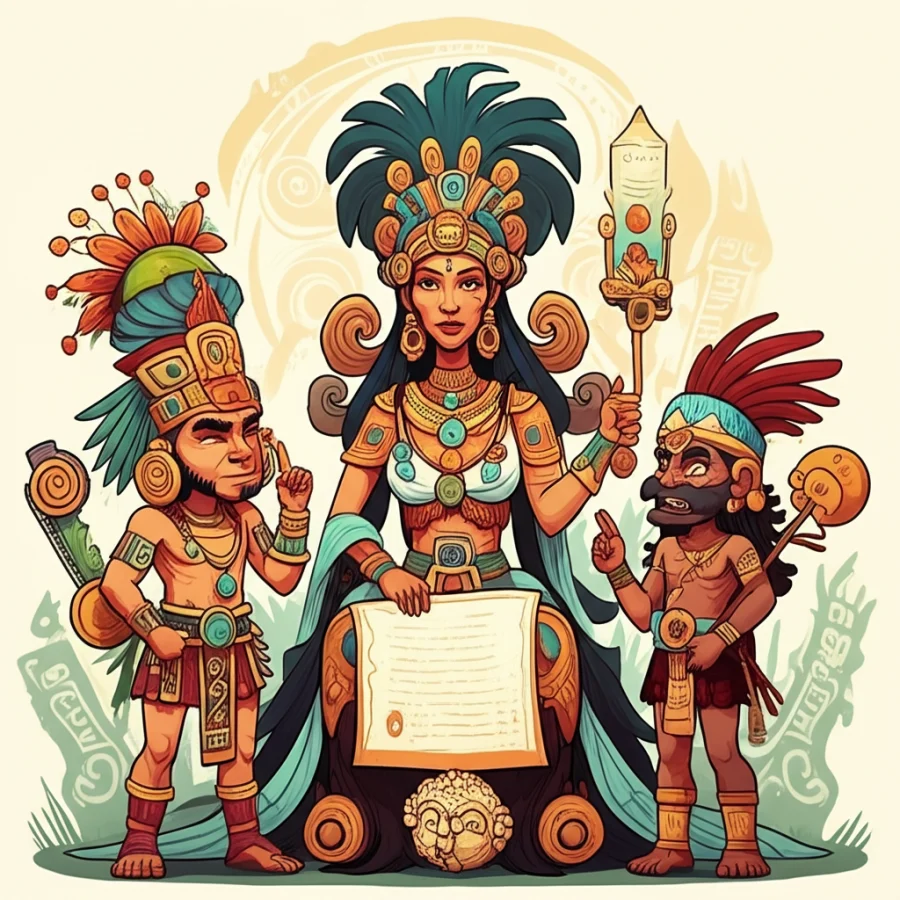
The story begins with Hun Hunahpu and Vucub Hunahpu, twin hero brothers, who were renowned players of the sacred ballgame. Their boisterous play and the echoes of their game reached the ears of the Lords of Xibalba. These dark deities, envious of the mortal brothers’ skill and perhaps their very existence, summoned them to the underworld. The journey to Xibalba was perilous, fraught with treacherous trials and cunning traps designed by the lords.
Upon their arrival, Hun Hunahpu and Vucub Hunahpu were subjected to a series of challenges. One of the most famous involved a game of pok-ta-pok, the Maya ballgame, played against the Lords of Xibalba themselves. The Maya ballgame was played with a heavy, solid rubber ball, which players could only strike with their hips, thighs, or forearms – never their hands or feet. The goal was to propel the ball through stone rings mounted high on the walls of the playing court. The stakes in this divine match were unimaginably high.
The Lords of Xibalba, masters of trickery and darkness, were determined to defeat the mortal heroes. The game was fierce, a display of incredible skill and agility. However, the underworld deities eventually triumphed. In a devastating turn of events, Hun Hunahpu and Vucub Hunahpu were defeated and, according to the myth, sacrificed. Their heads were severed, and one of Hun Hunahpu’s heads was placed in a hollow tree, where it miraculously continued to speak.
This act of divine retribution, however, did not signify the end of the story. From the severed head of Hun Hunahpu, a mortal woman named Ixquic became pregnant. She was the daughter of one of the Lords of Xibalba, a cruel irony. Fearing her father’s wrath, Ixquic fled Xibalba and eventually gave birth to a new set of twin heroes, Hunahpu and Xbalanque, who would become the protagonists of the next phase of the epic.
These new hero twins, raised in secrecy, would eventually embark on their own journey to Xibalba to avenge their father and uncle and to challenge the reign of the underworld lords. Their path was equally fraught with danger, testing their courage, intelligence, and mastery of the ballgame. They faced more trials, outsmarted the lords with cleverness and trickery, and ultimately emerged victorious, bringing a new order to the cosmos and ensuring the continuation of life.
The symbolism embedded within this myth is profound and multifaceted. The ballgame itself represented much more than a physical contest. It was a microcosm of the cosmic struggle between light and darkness, life and death, order and chaos. The ball, with its circular motion, could symbolize the sun, the moon, or the very cycle of time. The act of striking the ball could be seen as an attempt to manipulate these cosmic forces. The challenging journey to Xibalba and the subsequent trials reflected the human experience of facing adversity, mortality, and the unknown. The hero twins’ triumph over the Lords of Xibalba offered a narrative of hope and resilience, suggesting that even in the face of overwhelming darkness, life and order could prevail. The feathered serpent, Kukulkan, often associated with the underworld in some Maya interpretations, or as a celestial deity who played a role in the twins’ victory, embodied the cyclical nature of existence, the constant renewal of life from death.
In the modern world, this ancient Maya myth of the ballgame and its connection to Chichen Itza continues to resonate. It has inspired countless works of literature, film, and art, offering a rich source of narrative and thematic material. Archaeologists and cultural historians study these stories to gain deeper insights into Maya society, their beliefs, and their worldview. The iconic ballcourt at Chichen Itza, with its imposing architecture and acoustic properties, serves as a tangible reminder of the importance of this ritualistic game in Maya life. The narrative of the hero twins and their struggle against the underworld lords is often interpreted as a representation of the human quest for knowledge, the overcoming of fear, and the eternal battle for balance in the universe.
It is crucial to reiterate that the story of the ballgame of Chichen Itza is a cultural narrative, a product of ancient Maya imagination and their attempts to understand the world around them. It is a testament to their rich storytelling tradition and their complex belief systems. As Muslims, we recognize that only Allah (God) is the true Creator and Sustainer of all existence, the ultimate source of power and knowledge. These ancient stories, while fascinating from a cultural and historical perspective, do not hold divine authority. However, by exploring such myths, we can gain a deeper appreciation for the diversity of human thought, the enduring power of storytelling, and the vast tapestry of cultural heritage that enriches our understanding of humanity’s past. The echoes of the feathered serpent and the dramatic games played under the gaze of ancient gods continue to captivate, reminding us of the boundless capacity for human imagination and the enduring legacy of stories passed down through generations.