fufufafa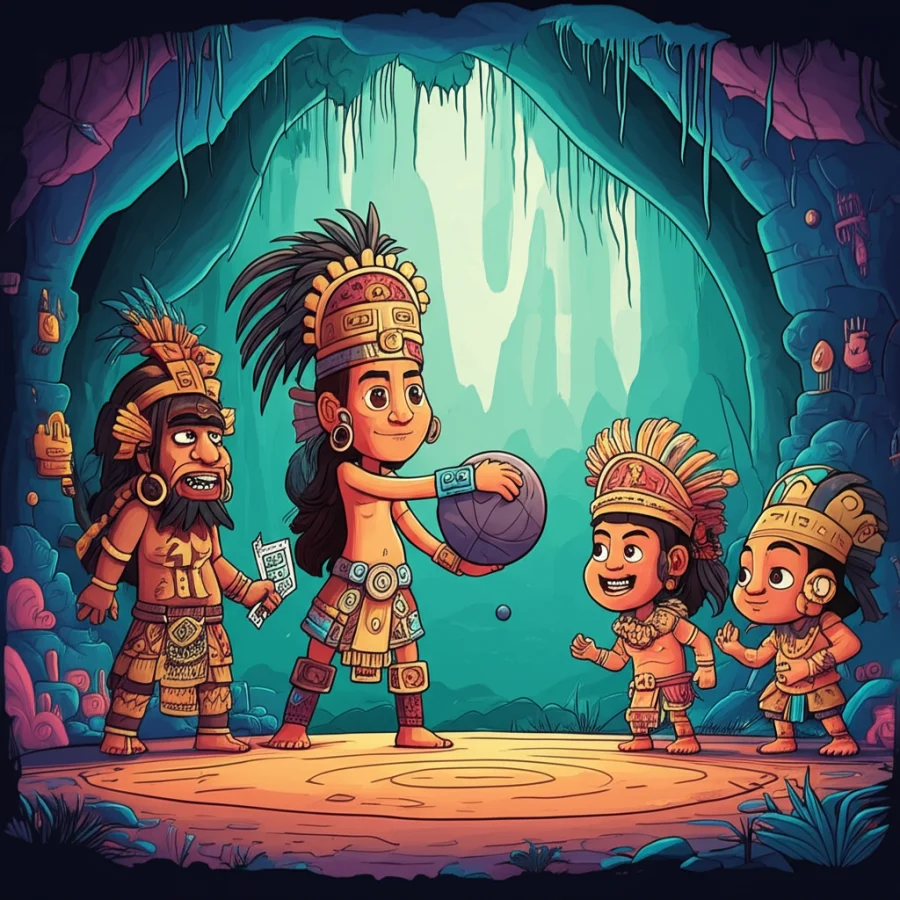
Across the verdant, humid landscapes of Mesoamerica, particularly within the rich tapestry of Maya civilization, ancient stories were woven like intricate patterns into the fabric of daily life. These were not mere tales; they were explanations, moral compasses, and reflections of a worldview deeply intertwined with the natural world and the unseen forces that governed it. Among these profound narratives, one particularly captivating legend speaks of the origins of the cenotes – the astonishing, water-filled sinkholes that punctuate the Yucatan Peninsula. This is the myth of the Ballgame of Xibalba, a story told by ancient peoples to understand the sacredness and mystery of these subterranean pools.
To truly grasp the genesis of this myth, we must transport ourselves to a time when the Maya flourished, a civilization renowned for its sophisticated understanding of astronomy, mathematics, and intricate religious practices. Their world was one of cycles: the predictable march of the sun and moon, the fertile rhythm of the rains and droughts, and the inevitable passage from life to death. They perceived the universe as a complex, interconnected entity, where the celestial realm, the earthly plane, and a vibrant, often formidable, underworld were in constant dialogue. The earth itself was a living entity, and its hidden depths held both wonder and trepidation. The cenotes, with their seemingly bottomless water and the echoes of the earth’s interior, were natural manifestations of this profound duality – gateways to the unknown, sources of life-giving water, and places of potent spiritual significance.
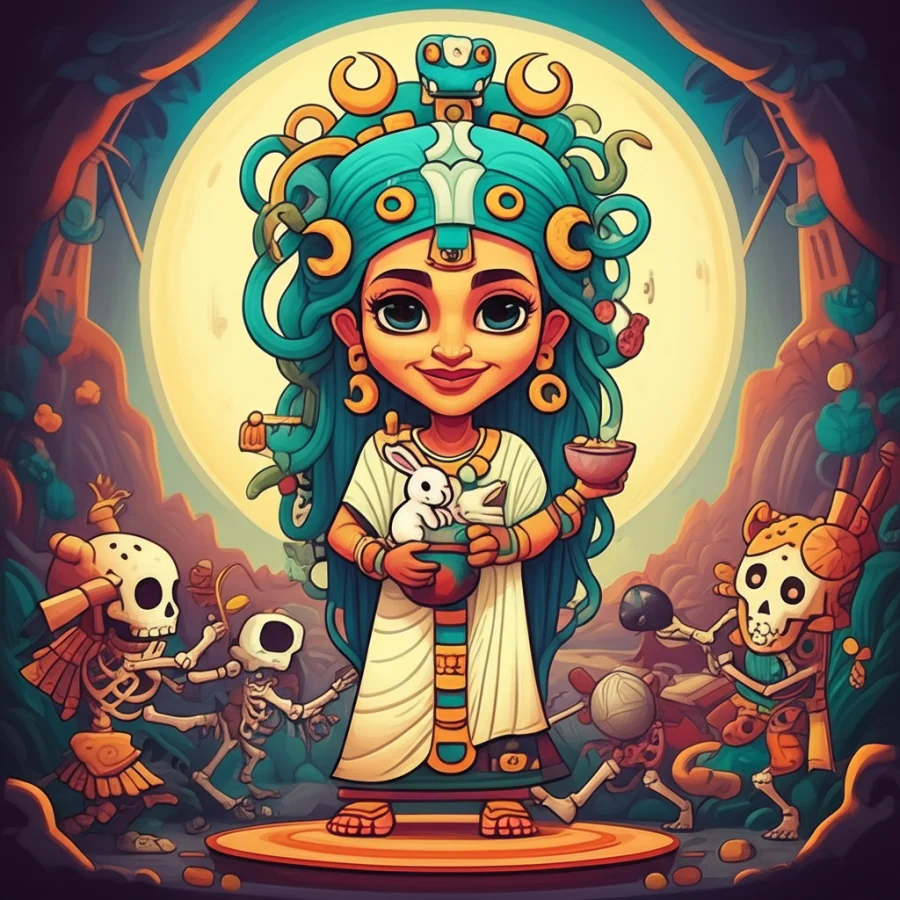
Central to the myth of the cenotes is the concept of Xibalba, often translated as the "Place of Fright" or the "Underworld." This was not a place of simple punishment, but a complex realm populated by a pantheon of deities and creatures who held sway over life, death, and the very balance of existence. Among these inhabitants, the Lords of Xibalba were the most prominent, figures who embodied the trials and tribulations that mortals might face, both in life and in the journey to the afterlife. Their stories often involved tests, games, and a profound connection to the cyclical nature of decay and rebirth.
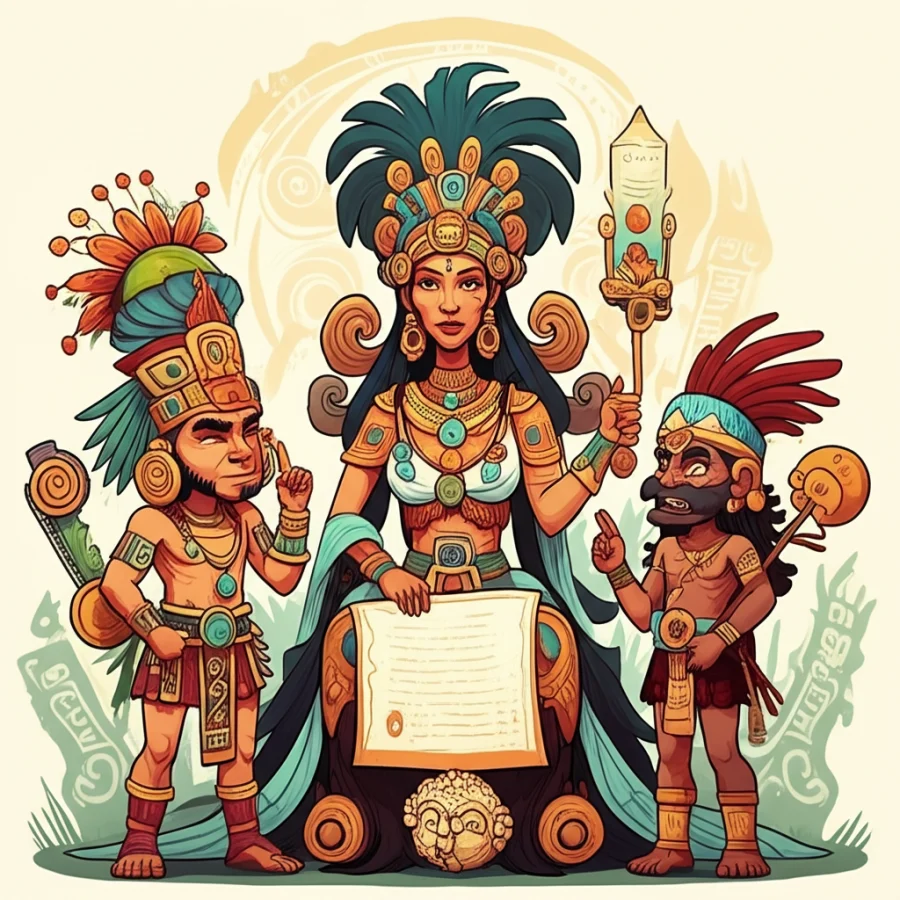
The heart of the cenote legend lies in a dramatic and perilous game, a celestial contest with earthly consequences. The story recounts how the Hero Twins, Hunahpu and Xbalanque, legendary figures in Maya mythology, descended into Xibalba. This descent was not voluntary; it was a consequence of a trickery orchestrated by the Lords of Xibalba, who lured their father and uncle to their doom in the underworld. The Hero Twins, driven by a desire to avenge their family and perhaps to restore balance, embarked on their own journey into the darkness.
Upon their arrival, they were confronted with a series of daunting challenges and deadly trials, orchestrated by the cunning Lords of Xibalba. These trials were not merely physical; they were tests of intellect, courage, and resilience. One of the most iconic of these trials was a sacred ballgame, played with a heavy rubber ball. The game was not for sport or recreation in the human sense; it was a ritualistic contest, a symbolic battle where the stakes were extraordinarily high – the very fate of the Hero Twins and, by extension, the harmony of the cosmos.
The Lords of Xibalba, eager to defeat and destroy the twins, employed their dark magic and cunning tactics. They conjured illusions, created treacherous environments, and manipulated the rules of the game. The twins, however, were resourceful and divinely guided. They outsmarted their adversaries, demonstrating remarkable agility and wisdom. The game itself was depicted as a struggle between light and darkness, life and death, order and chaos. The rhythm of the bouncing ball, echoing in the subterranean chambers of Xibalba, became a powerful metaphor for the pulse of the underworld.
The outcome of this cosmic ballgame is crucial to understanding the myth’s connection to the cenotes. While the exact details vary in different tellings, a common thread suggests that the Hero Twins ultimately triumphed, outmaneuvering and overcoming the Lords of Xibalba. Their victory, however, was not a complete annihilation of the underworld’s power. Instead, it represented a reassertion of balance and a testament to the enduring power of light and life even in the face of overwhelming darkness.
The symbolism embedded within this myth is rich and multifaceted. The ballgame itself can be interpreted as a representation of the cyclical nature of life and death, the constant ebb and flow of existence. The heavy rubber ball, a symbol of unity and the cosmos, was propelled by the actions of both the divine and the mortal, connecting the celestial and the terrestrial. The Lords of Xibalba, with their enigmatic powers, may have symbolized the natural forces that were both feared and revered by the Maya – the unpredictable aspects of nature, the inevitability of death, and the mysteries of the subterranean world. The Hero Twins, on the other hand, embodied courage, ingenuity, and the ability of humanity, guided by divine favor, to confront and overcome adversity.
The cenotes, in this narrative, are often understood as the earthly manifestations of Xibalba, or at least the points where the underworld’s influence is most profoundly felt. The water within them, a vital source of life for the Maya, was seen as having a sacred connection to the underworld’s hidden reservoirs. The act of performing rituals or leaving offerings at cenotes was a way for the Maya to appease the spirits of the underworld, to seek blessings for water, and to honor the cyclical journey of life and death. The very formation of these sinkholes, the sudden appearance of water from the earth, could have been interpreted as the earth itself opening up to reveal the mysteries of Xibalba, perhaps as a consequence of the intense energies unleashed during the Hero Twins’ legendary game.
Today, the myth of the Ballgame of Xibalba continues to resonate, albeit in different forms. It serves as a captivating element in literature, enriching fictional narratives with its themes of heroism, sacrifice, and the eternal struggle between good and evil. In popular culture, elements of Maya mythology, including the concept of Xibalba and its trials, have found their way into video games and films, introducing these ancient stories to new audiences. For cultural anthropologists and historians, the myth remains an invaluable window into the worldview and spiritual beliefs of the ancient Maya, offering insights into their understanding of the cosmos, their relationship with nature, and their profound engagement with the cycles of existence.
It is important to reiterate that the Ballgame of Xibalba is a traditional story, a product of ancient human imagination and a means of interpreting the world. It is a cultural heritage, a testament to the storytelling traditions that have shaped human understanding for millennia. As Muslims, we recognize that only Allah (God) is the true Creator and Sustainer of all existence, and that divine power resides solely with Him. These ancient narratives, while fascinating and culturally significant, are understood within the framework of our faith as expressions of human attempts to understand the divine and the mysteries of creation. They remind us of the enduring human need to tell stories, to seek meaning, and to connect with the past, celebrating the richness of cultural heritage and the boundless power of human imagination.