fufufafa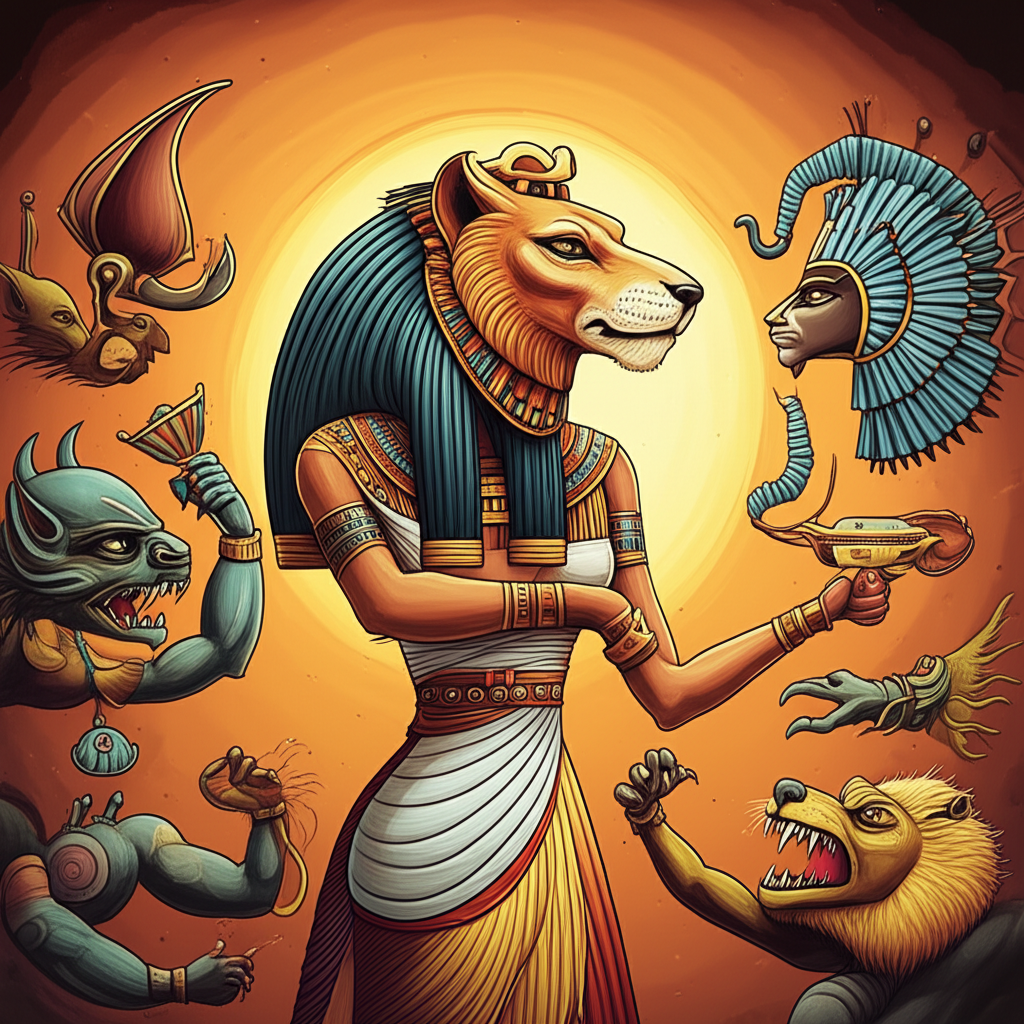
Introduction:
The tale of Sekhmet and the Trial of Sun’s Night Journey emerges from the rich tapestry of ancient Egyptian mythology. This is a traditional story, a vibrant thread woven into the fabric of a civilization that flourished along the Nile River. It is a story told by people who lived thousands of years ago, a story meant to explain the world around them, to grapple with concepts like creation, destruction, and the eternal cycle of life and death. The following is a retelling of this ancient narrative, presented solely for educational and cultural understanding.
Origins and Cultural Background:
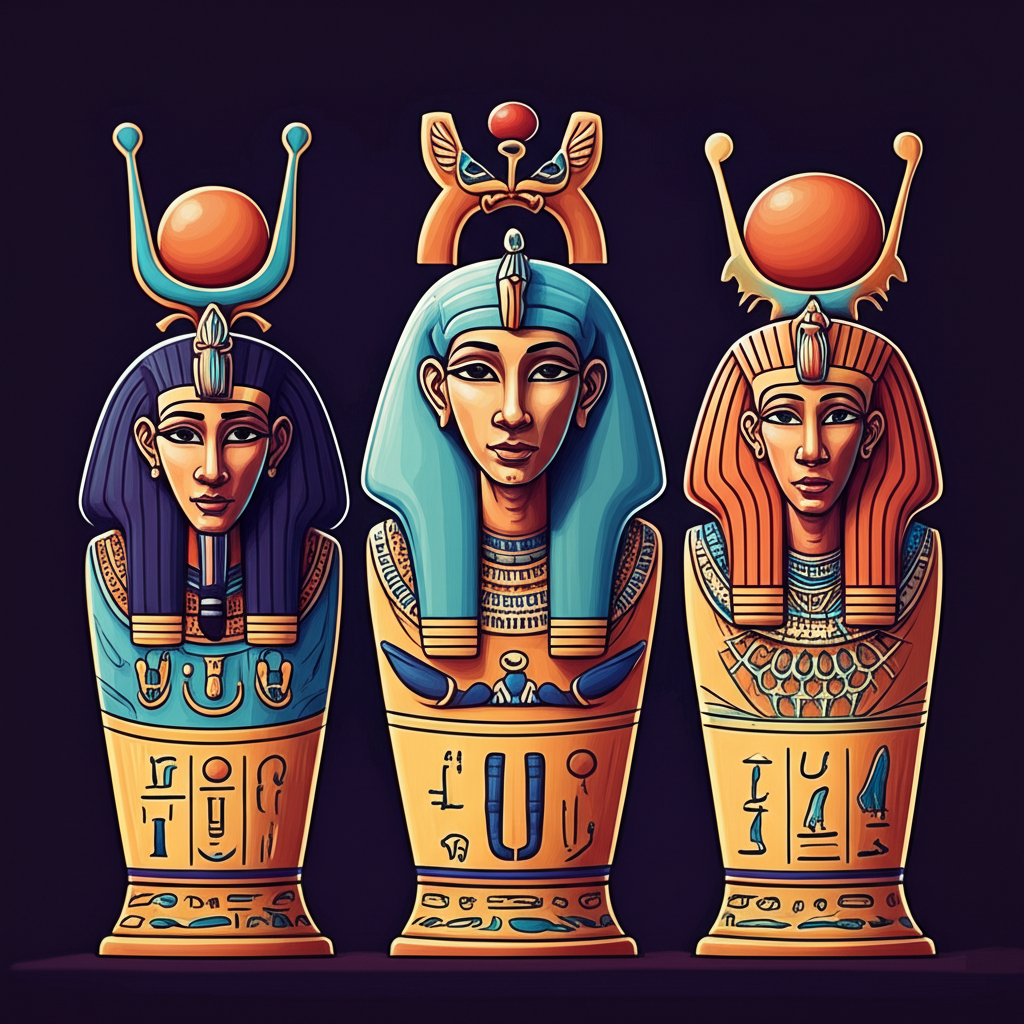
The myth of Sekhmet originates in the civilization of ancient Egypt, a society that thrived for millennia. The Egyptians lived in a world dominated by the predictable rhythms of the Nile. The river’s annual floods, bringing fertile silt, were the lifeblood of their agriculture, the foundation of their civilization. Their world was one of divine intervention. They saw the gods and goddesses as active participants in the affairs of humans, influencing everything from the weather to the harvest, from personal fortunes to the fate of the nation.
The Egyptians were deeply concerned with the afterlife. Their elaborate burial rituals, their monumental tombs, and their detailed depictions of the journey of the soul through the underworld all speak to a profound belief in the continuation of life beyond death. This belief shaped their understanding of the world, leading them to create complex cosmologies and pantheons of gods and goddesses, each embodying different aspects of the natural world and human experience. Their world was a place of magic, where the boundaries between the physical and spiritual realms were fluid, and where the gods and goddesses were both powerful and, in their own ways, flawed. The Sun, Ra, was of central importance to the Egyptians; thus, his nightly journey through the underworld became a significant concept, fraught with peril and triumph.
Character/Creature Description:
At the heart of this myth stands Sekhmet, the powerful lion-headed goddess of war, healing, and destruction. She is depicted as a woman with the head of a lioness, crowned with the solar disk and the uraeus, the cobra symbolizing royal authority and divine power. Her fierce gaze and imposing presence reflect her dual nature: a force of both protection and annihilation. Sekhmet is not simply a goddess of battle; she is also a healer, a protector of pharaohs, and a force of cosmic balance. Her association with the desert, with the harsh realities of life and death, highlights her role as a figure who embodies both the destructive and regenerative aspects of the world. Her breath was said to create the desert, her rage to be a fire. Her role in the myth is not one of a simple villain but of a complex figure driven by powerful emotions.
Main Story/Narrative Retelling:
The sun god Ra, in his waning years, ruled over a world that he had created. Yet, as the years passed, some of humanity began to disrespect him. They grew arrogant and rebellious, forgetting the divine order. Ra, witnessing this, became deeply troubled. He summoned the gods and goddesses to advise him. Their council decided that the rebellious humans must be punished.
From Ra’s eye, a fierce power was unleashed, transforming into Sekhmet. Her lioness head roared, and she descended to Earth, a whirlwind of destruction. She rampaged through the land, her fiery breath consuming all who opposed her. The rivers ran red with the blood of the unrepentant. Soon, the entire world was gripped by fear, and the remaining humans sought refuge.
Ra, watching Sekhmet’s devastating rampage, was horrified. He had intended punishment, but not annihilation. He realized that Sekhmet, fueled by his own divine power, was beyond his control. He decided to intervene. He commanded the gods to brew a potent concoction: a vast quantity of beer, dyed red with ochre to resemble blood. This was poured out across the fields of Egypt.
Sekhmet, still fueled by her rage, came upon the sea of red liquid. She saw what she believed to be blood and drank greedily. The beer, however, was intoxicating. As she drank more and more, her rage began to subside. Her destructive impulse was replaced with a blissful stupor. Slowly, the goddess of war became the goddess of healing once more, her thirst for destruction quenched.
Meanwhile, as the blood-red sunset painted the sky, Ra began his nightly journey through the Duat, the underworld. The Duat was a dangerous place, a realm of trials and tribulations, of monsters and serpents, where Ra faced challenges to his very existence. He had to navigate through treacherous landscapes and overcome the forces of chaos that sought to prevent his rebirth each morning. This perilous voyage was a metaphor for the cyclical nature of life and death, of the sun’s daily struggle against darkness.
Ra’s night journey was not alone. Sekhmet, calmed by the beer, and now softened in her heart, played a critical role in his journey. She was the one who could now protect Ra, and his soul, against the chaotic elements of the underworld. She was now the defender, and the protector.
As the morning approached, and Ra began to rise again, victorious over the forces of darkness, Sekhmet returned to her place. The world was saved, and the sun rose once more.
Symbolism and Meaning:
The myth of Sekhmet and the Trial of Sun’s Night Journey is rich with symbolic meaning. Sekhmet, as the goddess of both destruction and healing, represents the duality of the world. She embodies the raw power of nature, the destructive forces that can bring about chaos, but also the potential for renewal and regeneration. Her rampage can be interpreted as a metaphor for the consequences of human disobedience, a reminder of the need for respect and reverence for the divine order. The beer, the deceptive “blood,” represents the potential for manipulation and the unintended consequences of actions. Ra’s night journey symbolizes the cyclical nature of life, death, and rebirth. It underscores the constant struggle between light and darkness, order and chaos. The myth, as a whole, underscores the importance of balance, the need to recognize both the destructive and the creative forces within the world, and the importance of divine protection.
Modern Perspective:
The myth of Sekhmet and the Trial of Sun’s Night Journey continues to resonate in modern times. It appears in various forms in literature, movies, and video games. The character of Sekhmet, with her fierce beauty and complex nature, is often portrayed as a powerful and compelling figure. She is interpreted as a symbol of female strength, of the power of nature, and of the capacity for both destruction and healing. The story of Ra’s nightly journey, with its themes of struggle, perseverance, and rebirth, continues to inspire storytellers. The myth is studied in cultural studies, as a window into the beliefs and values of ancient Egyptian civilization. The story’s themes of duality, the consequences of actions, and the cycle of life and death, remain relevant to the human condition.
Conclusion:
The tale of Sekhmet and the Trial of Sun’s Night Journey is a testament to the power of human imagination and the enduring appeal of storytelling. It is a cultural artifact, a window into the beliefs and worldview of the ancient Egyptians. We, as Muslims, recognize that only Allah is the true Creator and Sustainer. It is important to remember that these are stories, not articles of faith. Nevertheless, they offer valuable insights into the past, providing a glimpse into the creative capacity of humans. They allow us to reflect on the nature of good and evil, the cyclical nature of life, and the human quest for meaning and understanding. They remind us of the rich tapestry of human cultures and the enduring power of the imagination.