fufufafa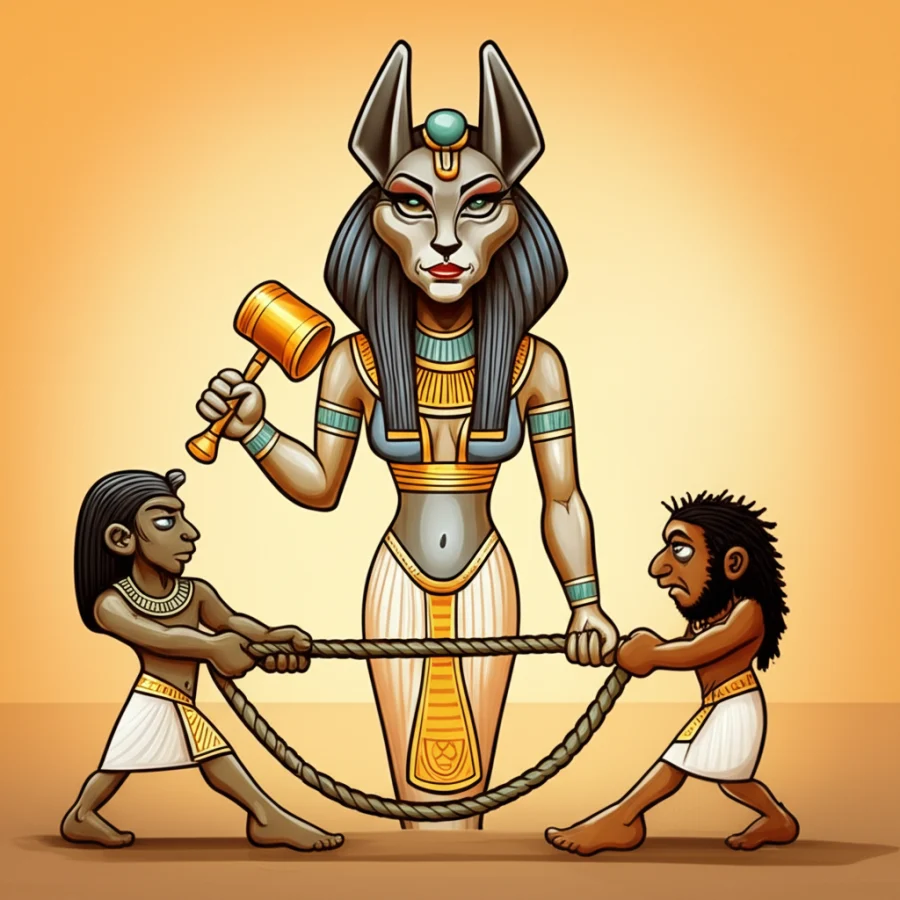
Introduction:
The sands of ancient Egypt whisper tales of gods and pharaohs, of cosmic battles and the eternal struggle between order and chaos. Among these stories, etched onto temple walls and preserved on papyrus scrolls, is the myth of the Trial of Contendings, a dramatic legal battle between the divine brothers Horus and Set. At the heart of this conflict, and a pivotal figure in its unfolding, is the fearsome goddess Sekhmet, the “Powerful One,” whose very name evokes images of raw power and unbridled fury. This is a traditional story, a product of the imaginative minds of the ancient Egyptians, a people who sought to understand the world through the lens of myth and legend. It is not a story meant to be taken as literal truth, but rather a reflection of their beliefs, fears, and aspirations.
Origins and Cultural Background:
The stories of Sekhmet and the Trial of Contendings originated in ancient Egypt, a civilization that flourished for over three millennia along the fertile Nile River valley. The era in which these myths were shared saw the rise and fall of dynasties, the construction of colossal pyramids, and the development of a complex religious system. The Egyptians viewed the world as a place governed by divine forces, where gods and goddesses held sway over the natural world, human destiny, and even the afterlife.
Their society was deeply intertwined with religion. Everything from the flooding of the Nile to the success of a harvest was attributed to the whims and actions of the gods. Temples served as both places of worship and centers of power, housing elaborate rituals and intricate depictions of the divine pantheon. The pharaoh, considered a living god, acted as a mediator between the human and divine realms. Their worldview was cyclical, revolving around the sun’s daily journey and the annual flooding of the Nile, representing rebirth and renewal. This cyclical understanding of time, coupled with a belief in the afterlife, deeply influenced their art, architecture, and, of course, their myths.
Character / Creature Description: Sekhmet
Sekhmet, the “Powerful One,” embodied the fierce, untamed aspects of the Egyptian pantheon. She was a goddess of war, destruction, and healing, often depicted as a woman with the head of a lioness, her golden eyes burning with an incandescent rage. Her lioness head symbolized her ferocity and power, the embodiment of the desert’s harsh environment and the sun’s scorching heat. The lioness was a hunter, and Sekhmet, similarly, was a protector, a warrior who would unleash her fury upon those who threatened the cosmic order, known as Ma’at, the principles of truth, balance, and justice.
Sekhmet’s symbolic attributes are rich and complex. Her fiery breath could incinerate her enemies, while her healing powers could mend the wounds of the afflicted. She was associated with the sun’s destructive heat, but also its life-giving energy. In some myths, she is portrayed as a daughter of Ra, the sun god, and is sometimes linked with the Eye of Ra, a powerful symbol of divine retribution and protection. It is crucial to understand that these attributes are symbolic, reflecting the ancient Egyptians’ attempts to understand the multifaceted nature of power, destruction, and the balance between order and chaos.
Main Story / Narrative Retelling:
The stage was set for the Trial of Contendings after the murder of Osiris, the king of Egypt, by his treacherous brother Set. Osiris’s son, Horus, was determined to reclaim his rightful inheritance and avenge his father’s death. This conflict between Horus and Set was not merely a family feud; it represented the struggle between order and chaos, good and evil.
The gods convened in a grand court to settle the matter. At the head of the tribunal sat Ra, the sun god, who presided over the proceedings. The trial stretched on for decades, filled with heated arguments, accusations, and counter-accusations. Set, the god of the desert, storms, and chaos, fiercely contested Horus’s claim to the throne. He employed trickery, deceit, and brute force, seeking to undermine Horus’s legitimacy.
Sekhmet, fierce and unyielding, was often called upon to maintain order within the divine court. During these long and arduous trials, the patience of the gods was often tested. At one point, Ra, weary of the incessant bickering and the stalemate, became enraged. In a fit of fury, he sent Sekhmet to punish humanity for their perceived transgressions.
Sekhmet, eager to fulfill her father’s command, unleashed her wrath upon the world. She rampaged across the land, slaughtering indiscriminately. Rivers of blood flowed, and the world trembled under her savage fury. Seeing the destruction and the nearing extinction of humanity, the other gods, including Ra, realized the error of their ways.
To stop Sekhmet’s destructive rampage, Ra devised a cunning plan. He ordered the brewing of a vast quantity of beer, dyed red with ochre to resemble blood. This intoxicating brew was poured out over the land, forming a vast lake. Sekhmet, in her bloodlust, stumbled upon the lake of beer and, mistaking it for blood, drank deeply. Intoxicated, she fell into a deep sleep, and her rage subsided. Thus, humanity was saved from complete annihilation, and the balance of the world was, once again, partially restored.
Eventually, after a series of trials and challenges, the gods, after a series of trials and challenges, came to a decision. After much deliberation, the divine court finally ruled in favor of Horus. Set, despite his cunning and power, was ultimately deemed unworthy to rule. Horus, with the support of the gods and the backing of Ma’at, was crowned pharaoh, ushering in an era of order and prosperity. Sekhmet, subdued but still powerful, returned to her role as protector and guardian, her fiery gaze watching over the land.
Symbolism and Meaning:
The Trial of Contendings is rich in symbolism. The conflict between Horus and Set represents the ongoing struggle between order (Horus) and chaos (Set). Horus, the rightful heir, embodies justice, stability, and the established order, while Set embodies the forces that threaten to disrupt that order.
Sekhmet’s role in the story is multi-faceted. She embodies both the destructive and protective aspects of power. Her rage represents the potential for chaos and the consequences of unchecked anger. However, her eventual taming and her subsequent role as a protector also demonstrate the ability to channel destructive forces for the greater good. The story of Sekhmet’s near destruction of humanity highlights the importance of moderation and the dangers of unchecked wrath. Ra’s intervention demonstrates the necessity of compassion and the power of wisdom in restoring balance.
The trial itself, with its protracted nature and the involvement of various deities, reflects the complexity of the Egyptian worldview. It suggests that establishing justice and maintaining order is a long and arduous process, requiring patience, wisdom, and the cooperation of various forces. The story offers valuable insight into the Egyptian understanding of leadership, morality, and the cyclical nature of existence.
Modern Perspective:
The myth of Sekhmet and the Trial of Contendings continues to resonate today, inspiring artists, writers, and scholars. It is a recurring theme in literature, movies, and games. The figure of Sekhmet, with her fierce and imposing image, has captured the imagination of many. She is often depicted as a symbol of female strength and power, a protector of the vulnerable, and a reminder of the destructive potential that can be found in even the most divine of beings.
The Trial of Contendings also serves as a source of inspiration for exploring themes of justice, morality, and the struggle between good and evil. It has been interpreted in various ways, from a simple morality tale to a complex allegory of human nature and the challenges of leadership. The story allows us to consider how ancient people confronted some of life’s most challenging questions.
Conclusion:
The tale of Sekhmet and the Trial of Contendings of Horus and Set is a cultural story, a product of the ancient Egyptian imagination. It is not meant to be a literal account of historical events, but rather a reflection of the people’s beliefs, fears, and aspirations. As Muslims, we recognize that only Allah is the true Creator and Sustainer. We understand that this is a story from a different time and culture, and we appreciate it as a valuable piece of cultural heritage.
The story offers us a glimpse into the rich tapestry of human imagination and the enduring power of storytelling. It reminds us of the importance of recognizing the value of different cultures and perspectives, and the enduring human need to seek meaning and understanding in the world around us. These stories, passed down through generations, offer us a unique window into the past, allowing us to connect with the shared human experience of creating myths and crafting narratives to explain the world around us.