fufufafa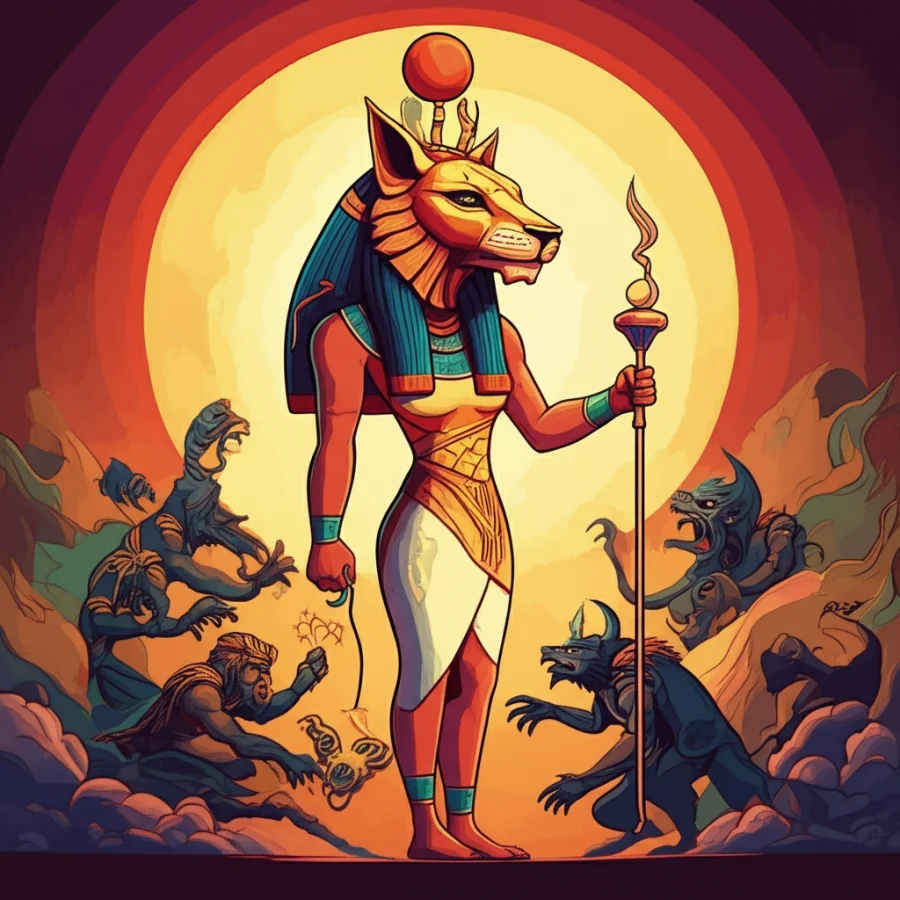
The Lioness of Fire: Sekhmet and the War of the Sun’s Night Journey
An Important Note for the Reader: The following article explores a story from ancient Egyptian mythology. It is presented for cultural, historical, and educational understanding. The characters, events, and beliefs described are part of a traditional folklore tradition and are not real, nor are they intended to be worshipped or practiced.
Introduction
From the sun-scorched sands and fertile banks of the Nile River comes a vast collection of stories that ancient people told to explain the world around them. These myths, born from a civilization that flourished for millennia, sought to give meaning to the rising of the sun, the flooding of the river, and the eternal struggle between order and chaos. One of the most compelling of these traditional narratives is the story of Sekhmet, the lioness-headed figure, and her role in a cosmic conflict known as the Sun’s Night Journey. This is not a historical account but a powerful cultural tale that reveals the ancient Egyptian imagination and its perspective on the forces of nature.
Origins and Cultural Background
This myth originates in the New Kingdom of ancient Egypt (circa 1550–1070 BCE), a period of great power, wealth, and monumental construction. For the people of this era, the universe was a place of divine activity. Their world was one of stark contrasts: the life-giving black land (Kemet) of the Nile Valley and the deathly red land (Deshret) of the desert. This duality was reflected in their worldview, which was centered on the concept of Ma’at—the principle of cosmic order, truth, balance, and justice. Opposing Ma’at was Isfet, the embodiment of chaos, violence, and falsehood.
The sun was the ultimate symbol of life and order. The sun god, Ra, was considered the king of the gods and the creator of all things. His daily journey across the sky was a testament to the victory of light over darkness. But when the sun set, it was believed to embark on a perilous journey through the underworld, the Duat, a realm filled with monstrous dangers. These ancient stories were not just entertainment; they were a framework for understanding existence, a way to process fears of the unknown, and a reinforcement of the societal and religious structures that maintained Ma’at.
The Powerful One: A Description of Sekhmet
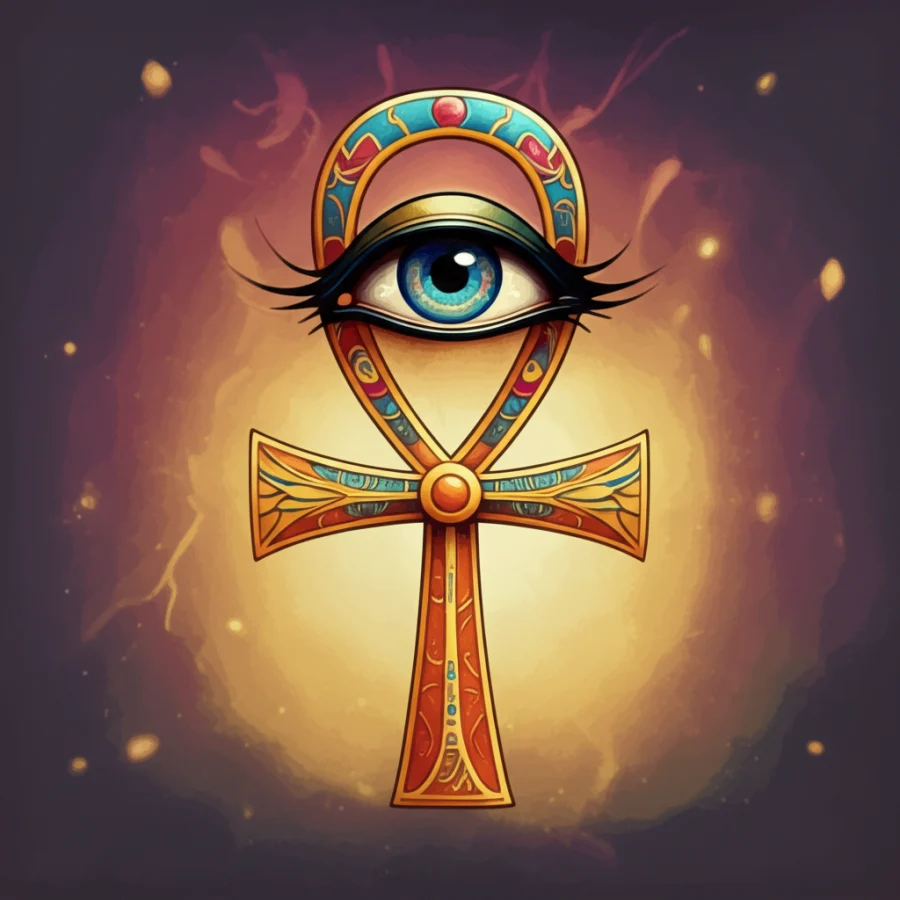
Sekhmet, whose name means "The Powerful One" or "She Who Is Powerful," is one of the most formidable figures in the Egyptian pantheon. She was typically depicted as a woman with the head of a fierce lioness, crowned with a solar disk encircled by a sacred cobra, the Uraeus. Often, she was shown dressed in red, the color of blood and vitality, and holding an ankh, the symbol of life, in one hand and a papyrus scepter in the other.
Her symbolism is profoundly dualistic. As a lioness, she represented the untamable and ferocious power of the wild. She was the bringer of plagues, the scorching desert wind, and the unyielding heat of the noon sun that could destroy crops and bring famine. In this aspect, she was "The Lady of Slaughter" and "The Mistress of Dread." However, this same fearsome power could be turned to protection. The force that could cause disease could also ward it off, and so Sekhmet was also a patroness of physicians and healers. Her priests were often considered skilled doctors. This duality is central to her myth: she embodies a power so immense it can either annihilate or preserve, reflecting the ancient understanding of nature’s own destructive and life-giving capacities.
Main Narrative: The Creation of Wrath and the Eternal War
The story begins in a time when the sun god Ra had grown old. He had ruled over gods and mortals for ages, but his body was weary, and humanity, seeing his frailty, began to mock him and conspire against his divine order. Their whispers of rebellion reached Ra’s throne, and his anger burned hot. He summoned his council of gods and declared his intention to punish the ungrateful mortals.
From his own divine essence, Ra plucked his fiery eye—the solar disk itself—and sent it to earth. As it descended, it transformed into a terrifying agent of his wrath: Sekhmet. With a roar that shook the foundations of the world, she was unleashed upon humanity.
Her rampage was a storm of fire and blood. She moved through the towns and villages of Egypt like a plague, her lioness claws tearing through armies and her breath a scorching wind. The fields ran red, and the Nile was said to have turned crimson with the slaughter. Sekhmet, consumed by a thirst for destruction, could not be stopped. She reveled in her power, fulfilling Ra’s command with terrifying efficiency.
But the other gods watched in horror. The punishment had become an extermination. They pleaded with Ra to call off his avenger before humanity was wiped from existence. Ra, seeing the devastation, relented. The challenge was how to stop a being made of pure, unadulterated rage. He devised a clever plan. He commanded his priests to brew vast quantities of beer and to mix it with red ochre and pomegranate juice until it had the deep, dark color of blood.
Seven thousand jars of this red beer were poured over the fields of Dendera, where Sekhmet was expected to continue her massacre. As dawn broke, she arrived, eager to continue her work. She saw the vast, shimmering red lake and, believing it to be the blood of her victims, she bent down to drink. She drank and drank, the intoxicating liquid soothing her fury. Her bloodlust subsided, her powerful muscles relaxed, and she fell into a deep, peaceful slumber. When she awoke, her rage was gone, and she had transformed into a more gentle and benevolent aspect.
Her purpose, however, was not over. Ra, having established a new order, now faced another eternal threat. Every night, as his solar barque sailed through the twelve dark hours of the underworld, it was attacked by his greatest enemy, Apophis, a colossal serpent of pure chaos who sought to swallow the sun and plunge the world into eternal darkness. This was the War of the Sun’s Night Journey.
To protect the sun and ensure the dawn, Ra needed a guardian of unmatched ferocity. He turned to Sekhmet. Her power, once a threat to creation, was now its ultimate defense. Each night, she would stand at the prow of the solar barque, her lioness eyes piercing the gloom of the Duat. When Apophis rose from the dark waters to attack, it was Sekhmet who met him. Her fiery roar would repel the lesser demons of the underworld, and her claws would tear at the serpent’s flesh, ensuring the barque could pass safely. She became the divine warrior, the protector of Ma’at, fighting the nightly battle against Isfet so that the sun could be reborn each morning.
Symbolism and Meaning
To the ancient Egyptians, this story was rich with meaning. It was a profound exploration of balance. Sekhmet’s initial rampage may have symbolized devastating natural events like plagues or extreme heatwaves, which seemed like punishments from the gods. Her pacification by the red beer could be an allegory for the annual flooding of the Nile, where the red, silt-laden waters would "soothe" the dry, cracked land and bring life back to Egypt.
The narrative also served as a cautionary tale about the dangers of unchecked power and the need for wisdom to temper rage. Ra’s initial, angry reaction nearly destroyed his own creation, teaching that even divine authority must be wielded with foresight.
Most importantly, the myth of her role on the solar barque personified the daily cycle of day and night as a cosmic battle. The sunrise was not a guarantee; it was a victory, hard-won every single night by divine protectors like Sekhmet. It reinforced the belief that order (Ma’at) required constant defense against the ever-present threat of chaos (Isfet).
Modern Perspective
Today, the myth of Sekhmet continues to capture the imagination. In academia, Egyptologists and cultural historians study her story to understand the complex theology and psychology of ancient Egypt. Her dual nature as both destroyer and healer provides a fascinating case study in how ancient cultures personified complex natural and social forces.
In popular culture, Sekhmet and other Egyptian mythological figures have become staples of fantasy literature, films, and video games. She appears in games like Assassin’s Creed: Origins and Smite, often depicted as a powerful warrior goddess. In literature, authors have drawn upon her formidable character to create compelling antagonists or fierce allies. This modern reinterpretation shows the enduring power of these ancient archetypes to speak to contemporary audiences about themes of power, rage, protection, and balance.
Conclusion
The tale of Sekhmet and the War of the Sun’s Night Journey is a testament to the rich storytelling tradition of ancient Egypt. It is a cultural artifact, a window into a worldview where the natural world was alive with divine drama. These myths were the language ancient peoples used to articulate their deepest fears and highest hopes.
As we explore these stories, it is important to remember their context. They are a part of human heritage, not a system of belief to be followed. As Muslims, we recognize that only Allah is the true Creator and Sustainer, the one and only source of all power and order in the universe.
By studying myths like this one, we do not endorse their beliefs, but rather appreciate the human capacity for imagination. They are a powerful reminder of how our ancestors, in their own way, sought to find meaning in the great, turning cycles of the cosmos, weaving tales of lioness goddesses and serpent demons to explain the simple, yet miraculous, return of the sun each dawn.