fufufafa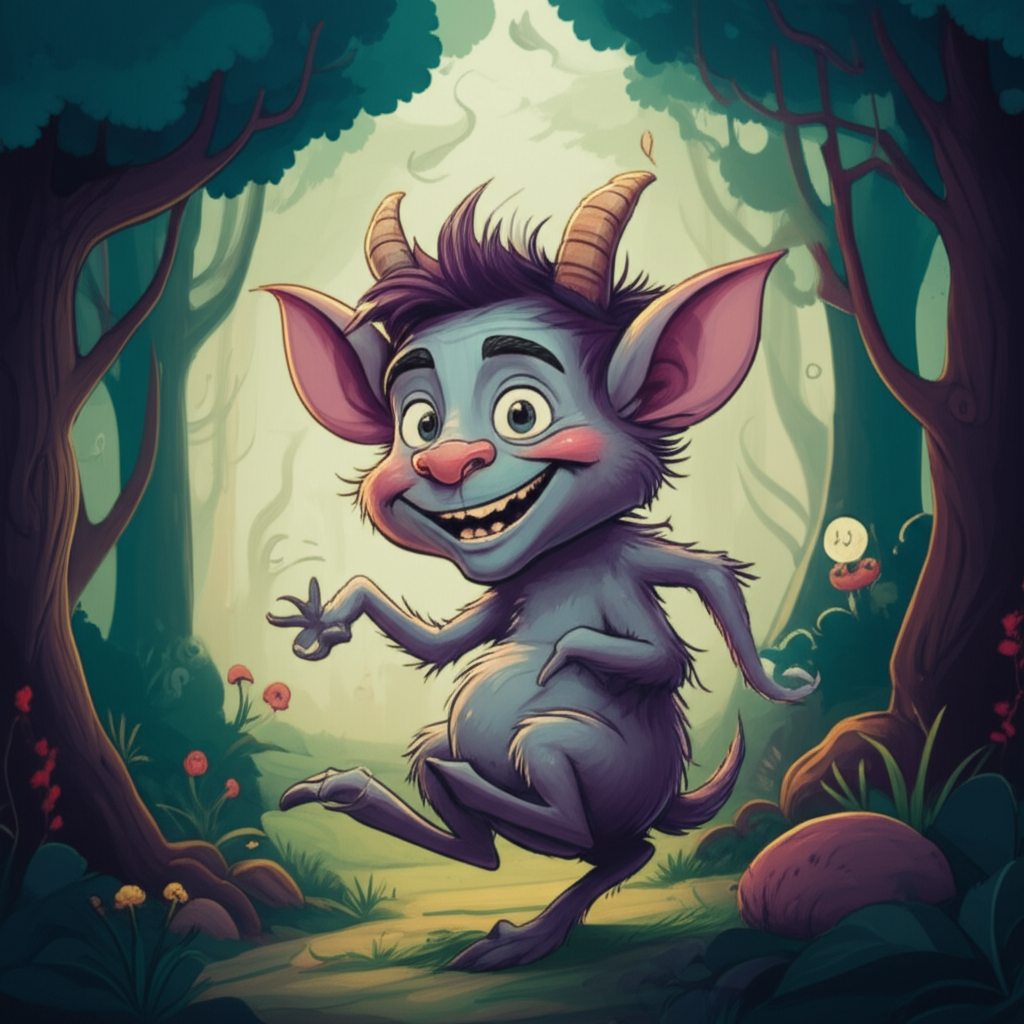
The Púca and the Forest of Shadows: A Tale from Ancient Ireland
Introduction
The legend of the Púca hails from the ancient Celtic cultures of Ireland and, to some extent, Scotland. These were not tales born of historical fact but rather the imaginative narratives spun by people in times long past, attempting to explain the mysteries of the natural world and the complexities of human experience. The Púca, in its various guises, is a creature woven from the threads of these ancient beliefs, a character in stories passed down through generations, offering glimpses into a worldview shaped by the untamed landscapes and the forces that seemed to govern them.
Origins and Cultural Background
The stories of the Púca likely emerged from a society deeply connected to the land. In early medieval Ireland, life was intrinsically linked to the cycles of nature, the bounty of the harvest, and the ever-present wildness of the forests and bogs. This was a time when the boundaries between the natural and the supernatural were perceived as more permeable. People looked to the world around them for signs and explanations, attributing agency and spirit to elements that might seem inanimate to modern eyes. The forests, in particular, were seen as places of both sustenance and danger, teeming with unseen life and potent forces. They were places where the veil between worlds could, in the imagination, be thin. The Púca, therefore, can be understood as a manifestation of these perceptions, a creature embodying the unpredictable, often capricious, nature of the wild.
Character / Creature Description
The Púca is not a creature of fixed form, and this fluidity is central to its symbolic nature. It is often described as a shape-shifter, capable of appearing as a horse, a goat, a dog, a rabbit, or even a dark human-like figure. Its appearance is frequently marked by darkness, with eyes that might glow like embers or be unnervingly deep and black. When it takes the form of a horse, it is often depicted as black, with a wild mane and a powerful build, sometimes with glowing eyes. This ability to transform and its association with the night and the wild imbue the Púca with attributes of the untamed and the unknown. It represents the capricious, the unpredictable, and the dualistic nature of forces that are beyond human control – forces that can be both helpful and harmful. The Púca’s symbolism lies not in any inherent power attributed to it as a divine entity, but rather in what it represented to the storytellers: the wild, the untamed, and the mysterious aspects of the world.
Main Story / Narrative Retelling: The Púca and the Forest of Shadows
Let us venture, in our imagination, into the Forest of Shadows, a place where ancient oaks twist like gnarled fingers towards a perpetually twilight sky, and where the air hums with an unseen energy. It is here, amidst the deep greens and the dappled gloom, that the Púca is said to roam.
Young Liam, a farmer’s son with a spirit as restless as the wind, often found himself drawn to the edge of the Forest of Shadows. His elders warned him against it, speaking in hushed tones of things that dwelled within, things that were not of the ordinary world. But Liam, eager for adventure and perhaps a little too full of youthful bravado, felt a pull he couldn’t resist.
One evening, as the last rays of the sun bled into the horizon, Liam found himself deeper within the forest than he had ever dared to go. The trees pressed in, their branches laced together, creating a canopy that swallowed the light. A hush fell over the woods, a silence so profound it seemed to hold its breath. Then, a sound – a soft whinny, followed by the rustle of leaves.
From the deepening gloom emerged a magnificent black horse. Its coat was the color of midnight, sleek and powerful. Its eyes, however, were what truly captivated Liam. They gleamed with an eerie, intelligent light, like twin embers glowing in the darkness. The horse stood still, its gaze fixed upon Liam, not with malice, but with an ancient, knowing curiosity.
Liam, though his heart beat a rapid rhythm against his ribs, felt a strange calm. He remembered the stories his grandmother told of the Púca, a creature that could offer rides to those it deemed worthy, or to those it wished to trick. This horse, he felt, was no ordinary beast.
He cautiously approached. The Púca, for he was certain it was the Púca, lowered its head slightly, as if in invitation. Driven by an impulse he couldn’t explain, Liam reached out and touched its velvety nose. The creature’s breath was warm against his hand. Without a word, Liam climbed onto its broad back.
The Púca moved with a speed that was astonishing, yet impossibly smooth. It galloped through the Forest of Shadows, not on any visible path, but as if the very air parted before it. Trees blurred into streaks of green and brown, and the moonlight, now filtering through the canopy, painted fleeting patterns on the ground. Liam held on tight, exhilarated by the wild, untamed motion.
They raced through glades where spectral flowers bloomed in the moonlight and past ancient standing stones that seemed to hum with forgotten power. The Púca seemed to know every secret of the forest, every hidden nook and every echoing hollow. At times, it would slow, allowing Liam to glimpse the intricate patterns of moss on ancient trees or the silent flight of an owl. At other times, it would surge forward, the wind whipping Liam’s hair and his cloak streaming behind him.
As the first hint of dawn began to paint the eastern sky, the Púca slowed its pace. It brought Liam back to the very edge of the Forest of Shadows, not far from his home. With a final, lingering look from its luminous eyes, the Púca turned and melted back into the deepening shadows, as silently and mysteriously as it had appeared. Liam slid off its back, his legs trembling, his mind reeling with the extraordinary journey. He had ridden with the Púca, and the Forest of Shadows, once a place of mere fear, now held for him a new layer of wonder and respect.
Symbolism and Meaning
To the ancient people who told these stories, the Púca likely symbolized several aspects of their world. Its shape-shifting nature could represent the unpredictable forces of nature – the sudden storm, the unexpected turn of fortune, the duality of life and death. The Púca’s ability to appear as a horse, a creature vital for travel and labor, but also associated with wildness and freedom, could signify the delicate balance between domestication and the untamed. Its connection to the night and dark places in the forest might have spoken to their fears of the unknown, the dangers that lurked beyond the safety of their settlements. Conversely, the Púca could also be seen as a guide, albeit a capricious one, leading people through difficult terrain or revealing hidden paths, perhaps representing moments of intuition or guidance that come from unexpected sources. The stories served as a way to acknowledge and grapple with these forces, offering explanations for the inexplicable and providing a framework for understanding the wildness of the world and the human psyche.
Modern Perspective
Today, the Púca continues to capture the imagination in various forms of modern media and cultural study. It appears in literature, often as a mischievous or enigmatic spirit, adding a touch of ancient folklore to fantasy novels. In film and television, the Púca’s shape-shifting abilities and its association with the supernatural make it a compelling character, capable of embodying both wonder and dread. In video games, it can be found as a creature to be encountered, a challenge to be overcome, or a guide within mystical landscapes. Beyond entertainment, scholars of folklore and mythology study the Púca as a valuable insight into the beliefs, anxieties, and storytelling traditions of past societies, offering a window into how people once perceived their relationship with the natural world and the unseen.
Conclusion
The legend of the Púca and the Forest of Shadows is a testament to the enduring power of human storytelling, a cultural artifact that reflects the imaginative landscape of ancient Ireland. It is a story told for its narrative richness, its ability to evoke a sense of mystery and wonder, and its insights into how our ancestors viewed the world around them. As Muslims, we recognize that only Allah (God) is the true Creator and Sustainer of all existence, the sole source of all power and truth. These ancient tales, while fascinating from a cultural and historical perspective, are creations of human imagination, not divine revelations. By understanding these myths, we not only appreciate the rich heritage of different cultures but also gain a deeper appreciation for the vast spectrum of human creativity and the timeless tradition of sharing stories. The Púca, like countless other figures from folklore, reminds us of the power of imagination to explore the depths of our understanding and the enduring human need to find meaning in the world, both seen and unseen.