fufufafa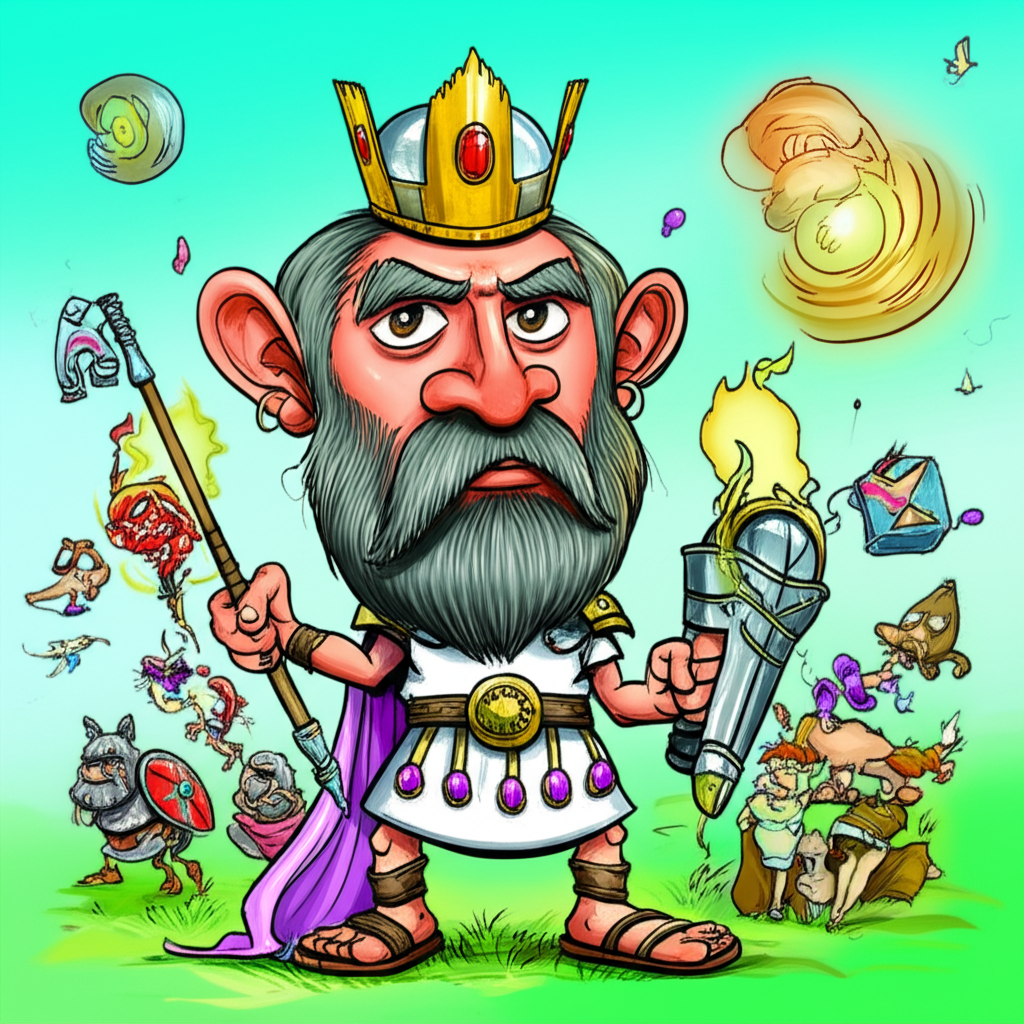
1. Introduction
Within the rich tapestry of ancient Irish folklore and mythology, tales of heroic figures, powerful beings, and epic struggles were woven to explain the world and impart wisdom. The story of Nuada and the War of Imbolc is one such narrative, originating from the vibrant Celtic culture that flourished in Ireland centuries ago. This is a traditional story, passed down through generations by ancient people, a product of their imagination and their way of understanding existence. It is important to clearly state that this account is a myth, a legend, and is not real, nor is it meant to be believed, worshipped, or practiced. Our exploration of this narrative is purely for cultural, historical, and educational understanding, appreciating the depth of human storytelling.
2. Origins and Cultural Background
The myths of Ireland, including those featuring Nuada, emerged from a pre-Christian, Iron Age society deeply connected to the land and the rhythms of nature. This was a world shaped by oral tradition, where stories were the primary means of preserving history, law, and spiritual understanding. Ancient Celtic society was typically agrarian, with communities living close to the earth, their lives dictated by the changing seasons, the fertility of the soil, and the movements of the sun and moon.
For these people, the world was alive with unseen forces and powerful entities. They viewed the natural landscape – the towering mountains, ancient forests, winding rivers, and vast seas – as imbued with spiritual significance, often home to gods, goddesses, and various supernatural beings. The veil between the human world and the Otherworld, a realm of magic and timelessness, was believed to be thin, especially at certain liminal times of the year, such as the seasonal festivals. Their worldview was polytheistic, incorporating deities who personified aspects of nature, warfare, poetry, and craftsmanship. Concepts like honor, hospitality, kingship, and heroic deeds were central to their social structure and their understanding of the divine order. It was within this vibrant, imaginative cultural context that tales like Nuada’s emerged, reflecting their hopes, fears, and aspirations.
3. Character Description: Nuada Airgetlám
At the heart of our story stands Nuada, a figure revered in Irish mythology as the first king of the Tuatha Dé Danann, a race often depicted as divine or semi-divine beings of immense power, beauty, and wisdom. Nuada is primarily known as Nuada Airgetlám, or Nuada of the Silver Hand, a title that speaks volumes about a pivotal event in his narrative.
Nuada is characterized as a wise and just leader, a formidable warrior, and a noble figurehead for his people. He embodies the ideal of kingship – not just through strength in battle, but through fair judgment, strategic thinking, and a deep concern for the welfare of his realm. Symbolically, Nuada represents sacrifice, resilience, and the cyclical nature of loss and restoration. His most distinguishing feature, the silver hand (or arm), is a powerful symbol. In ancient Celtic culture, physical perfection was often considered a prerequisite for kingship; any blemish or injury could disqualify a ruler. Nuada’s loss of his arm, and its subsequent replacement with a magically crafted silver one, symbolizes the profound challenges leaders face, the ability to overcome perceived imperfections, and the ingenuity and craft required to restore order and maintain power. He is a representation of effective, adaptive leadership, even in the face of great adversity.
4. Main Story / Narrative Retelling: The War of Imbolc
Before the dawn of recorded history, in an ancient Ireland cloaked in mist and magic, the Tuatha Dé Danann, the People of the Goddess Danu, arrived. They were a sophisticated and beautiful race, masters of art, science, and magic, seeking to establish their dominion in a land already inhabited by the ancient, monstrous Fomorians. These Fomorians were chaotic, often grotesque beings, born of the primeval depths, who held a tyrannical sway over the land, demanding harsh tributes and casting a shadow of fear over the nascent promise of the spring.
Nuada, wise and commanding, led the Tuatha Dé Danann with an unwavering hand. He understood that their claim to Ireland would not be peaceful. The land groaned under the Fomorian yoke; winter’s grip felt unusually long and cold, the promise of spring’s bounty held captive by the Fomorians’ dark magic and oppressive rule. The people whispered of a time when the very seeds in the earth refused to quicken, and the livestock remained barren, all due to the lingering blight cast by the Fomorians.
As the days slowly lengthened, and the festival of Imbolc approached – the traditional time of purification, the quickening of the earth, and the first stirring of spring’s life – Nuada sensed a crucial turning point. The Fomorians, particularly their formidable chieftain Balor of the Evil Eye, had recently intensified their demands, seizing the last stores of grain and livestock from vulnerable settlements, threatening to plunge the land into perpetual barrenness. This act, so close to the season of new life, was an unbearable insult to the land and its potential.
Nuada, recognizing the symbolic weight of the moment, declared that the time for open war had come. This would not be merely a battle for territory, but a struggle for the very soul of the land, a fight to release the trapped spirit of spring. Thus began what would be known as the War of Imbolc.
Under the cold, pale sun of late winter, Nuada marshaled his forces. The Tuatha Dé Danann, though fewer in number, were superior in skill and magic. Nuada himself, clad in shimmering armor, led the charge, his sword, Fragarach, "The Answerer," flashing like lightning. The battle was fierce, a brutal clash between the disciplined beauty of the Tuatha Dé Danann and the raw, untamed savagery of the Fomorians.
In the midst of a particularly brutal engagement to reclaim the fertile lands near the central plains, Nuada found himself confronting a hulking Fomorian champion, a creature of immense strength whose crude weapon was a bludgeon of stone and iron. The combat was ferocious, a dance of skill against brute force. Nuada fought with the grace of a seasoned warrior, but the Fomorian’s blows were relentless. In a terrible moment, as Nuada parried a crushing overhead strike, the Fomorian’s weapon glanced off his shield and slammed into his right arm, severing it at the shoulder.
A cry of anguish and shock rippled through the ranks of the Tuatha Dé Danann. Nuada fell, his arm lost, his kingship seemingly forfeit, for a king must be whole. The Fomorians, sensing victory, surged forward. But the Tuatha Dé Danann, inspired by their fallen king’s sacrifice, fought with renewed fury, pushing back the Fomorian advance. The battle raged on, a desperate struggle for survival and the promise of a new season. Though Nuada was grievously wounded, his sacrifice galvanized his people, allowing them to secure a crucial, if not decisive, victory. The Fomorians were driven back from the fertile plains, and the immediate threat to the spring’s arrival was averted.
Nuada was carried from the battlefield, his reign now in question. According to ancient law, a king must be physically perfect. With his arm lost, he could no longer rule. He temporarily abdicated, and Bres, a half-Fomorian, half-Tuatha Dé Danann prince, was reluctantly placed on the throne. However, Bres proved to be a tyrannical and unjust ruler. During this time of sorrow and injustice, Dian Cécht, the physician of the Tuatha Dé Danann, and his son Miach, crafted a magnificent replacement for Nuada’s lost limb: a fully functional arm of shining silver. With his silver arm, Nuada Airgetlám was restored to wholeness, and eventually, after the misrule of Bres, reclaimed his rightful place as king, leading his people once more, a testament to resilience and the enduring power of good leadership. The War of Imbolc thus became a pivotal moment, marking not just a battle won, but the profound transformation of a king and the enduring spirit of his people against oppression.
5. Symbolism and Meaning
The story of Nuada and the War of Imbolc is rich with symbolic meaning, offering insights into the worldview of the ancient Celts. The "War of Imbolc" itself represents the eternal struggle between the forces of order, light, and fertility (personified by the Tuatha Dé Danann and the promise of spring) against chaos, darkness, and barrenness (embodied by the Fomorians and the lingering grip of winter). The timing of the conflict around Imbolc, the festival heralding the first stirrings of spring, emphasizes this theme. It is a narrative about the triumph of life over dormancy, hope over despair, and the cyclical renewal of the earth.
Nuada’s character arc – the loss of his arm and its replacement with a silver one – is profoundly symbolic. It speaks to the ancient Celtic ideal of kingship, where physical perfection was paramount, and how the community adapts and innovates in the face of challenge. His silver arm symbolizes resilience, the ability to overcome adversity, and the power of ingenuity and craft. It also highlights the idea that true leadership transcends mere physical form; wisdom, justice, and the spirit of the leader are ultimately more crucial. The story also reflects the importance of honor, sacrifice, and the collective effort of a community in overcoming a common enemy. It is a moral tale about the consequences of tyrannical rule (Bres’s brief kingship) and the ultimate return to just leadership.
6. Modern Perspective
Today, the myths of Nuada and the Tuatha Dé Danann continue to captivate and inspire. While no longer held as religious truth, these stories are cherished as a vital part of Ireland’s cultural heritage and are studied extensively in literature, history, and cultural anthropology.
In modern literature, authors draw upon these ancient narratives to craft new fantasy worlds or retellings, often exploring themes of heroism, magic, and the human condition through a Celtic lens. J.R.R. Tolkien, for instance, was known to be influenced by Celtic mythology, and elements can be seen in the rich lore of his Middle-earth. In popular culture, echoes of Nuada’s story and the broader Irish mythological cycle can be found in movies, television series, and video games that incorporate Celtic themes, magical races, and epic battles. Academic scholarship delves into these myths to understand the psychology, social structures, and spiritual beliefs of ancient societies, providing a window into how people once made sense of their world. Furthermore, for some modern spiritual practices, often categorized under Neopaganism, these myths are seen as a source of inspiration and connection to ancient traditions, though it is important to reiterate that such interpretations are modern constructs and not a continuation of the ancient beliefs themselves.
7. Conclusion
The tale of Nuada and the War of Imbolc, like countless other myths, stands as a testament to the enduring human capacity for imagination and storytelling. It is a cultural story, a fascinating glimpse into the rich spiritual and social landscape of ancient Ireland, and not a belief system to be adopted or practiced. As Muslims, we recognize that only Allah is the true Creator and Sustainer of all existence, and our worship and devotion are directed solely to Him.
Yet, there is profound value in exploring these cultural narratives. They remind us of the universal human quest for meaning, the timeless struggle between good and evil, and the power of leadership and resilience. These stories, born from the hearts and minds of people long past, continue to connect us to our shared global heritage, reminding us that imagination, wonder, and the art of storytelling are truly universal aspects of the human experience.