fufufafa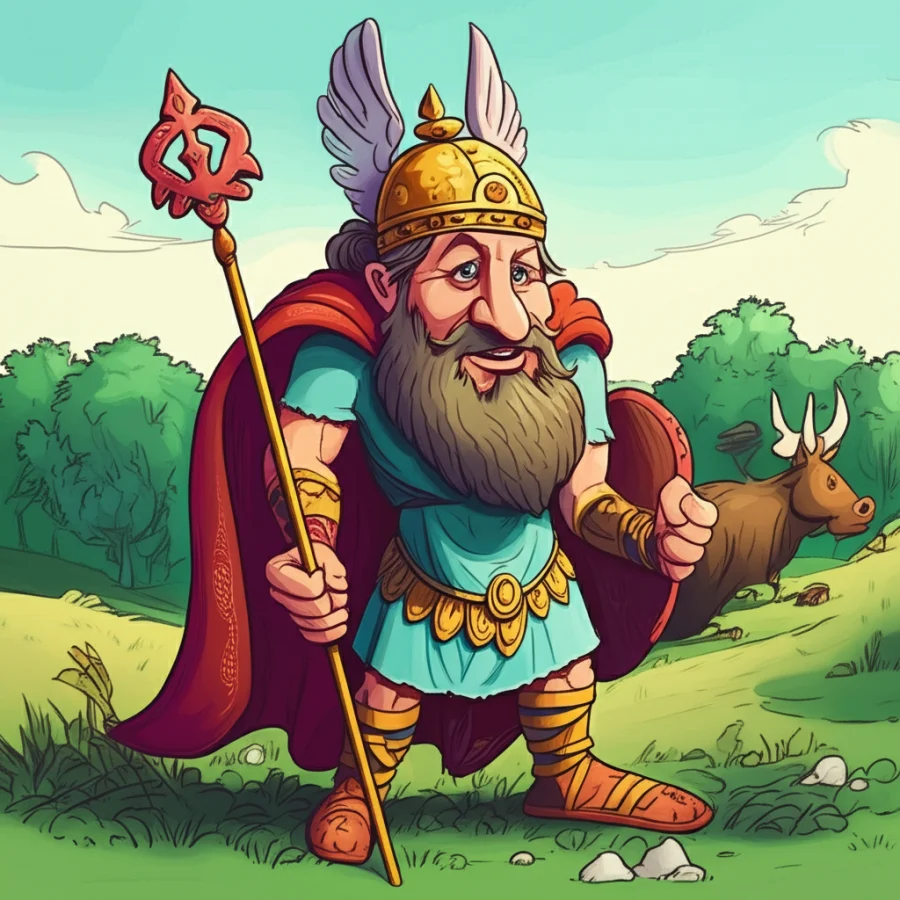
1. Introduction
The mists of ancient Ireland whisper tales of powerful beings, valiant heroes, and epic conflicts that shaped the very land and its people. Among these venerable narratives is the story of Nuada, a king of the divine Tuatha Dé Danann, whose trials and tribulations embody the profound ideals of ancient kingship. While Nuada himself belongs to the older, divine sagas, his legend resonates through the later, human-centric epics, particularly in the thematic backdrop against which the famous Táin Bó Cúailnge – the Cattle Raid of Cooley – unfolds. It is crucial to understand that these are traditional stories, passed down through generations by the ancient inhabitants of Ireland. They are not meant to be believed, worshipped, or practiced as truth, but rather presented here for their immense cultural, historical, and educational value, offering a window into the imagination and worldview of a distant past.
2. Origins and Cultural Background
These myths and legends primarily stem from the rich tapestry of Celtic mythology, specifically the Irish branch, which flourished in the pre-Christian era, roughly corresponding to Ireland’s Iron Age and early medieval periods. In this ancient society, life was intricately linked to the land, the cycles of nature, and the valor of warriors. Society was tribal, agricultural, and deeply rooted in an oral tradition where poets (filid) and storytellers (seanchaithe) were revered custodians of history, law, and myth.
The people of this time viewed the world as a vibrant, often perilous, place where the mundane and the magical were intertwined. Rivers, hills, and forests were not mere geographical features but places imbued with spirit, inhabited by gods, goddesses, and otherworldly beings. Kingship was not just a political office but a sacred trust, demanding integrity, wisdom, and physical perfection. A king’s prosperity was believed to directly influence the prosperity of his land and people, a concept known as fír flathemon or "ruler’s truth." Cattle were the primary measure of wealth and status, making raids for livestock a common, albeit often devastating, feature of inter-tribal warfare. Honor, bravery, and loyalty were paramount virtues, driving heroes to extraordinary feats and sometimes, to tragic ends.
3. Character Description: Nuada of the Silver Hand
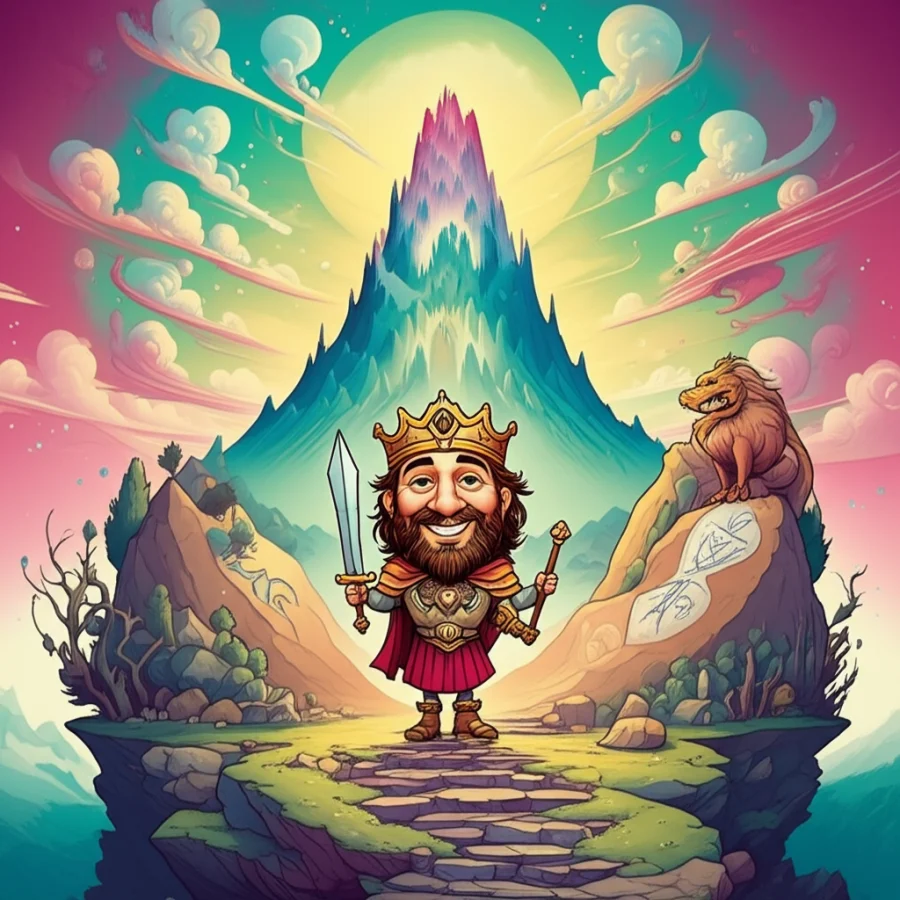
Nuada, often known as Nuada Airgetlám (Nuada of the Silver Hand), is a pivotal figure in the Mythological Cycle of Irish folklore, particularly as the king of the Tuatha Dé Danann – a race of divine beings said to have arrived in Ireland on clouds, possessing great magical skill and knowledge. He is depicted as a noble and just ruler, embodying the ideal of sacred kingship.
Symbolically, Nuada represents the core principles of leadership, sacrifice, and resilience. His most famous attribute, the silver arm, is not merely a prosthetic but a potent symbol. In ancient Celtic belief, physical perfection was often a prerequisite for kingship. When Nuada lost his arm in battle, he was rendered "unwhole" and thus, according to tradition, had to abdicate his throne. The miraculous crafting of a silver replacement by the healer Diancecht and the craftsman Creidne, and later a flesh-and-blood arm by Miach, signifies the restoration of his kingship and his inherent worth beyond mere physical form. It highlights the belief that true leadership encompasses not just strength, but also adaptability, the wisdom to accept help, and the divine right that could supersede temporary imperfection. Nuada’s story also foreshadows the often-turbulent nature of power and the challenges even divine rulers faced in maintaining their authority.
4. Main Story / Narrative Retelling
The saga of Nuada begins with the arrival of the Tuatha Dé Danann in Ireland. They were a people of immense knowledge and power, possessing four great treasures, one of which was the Sword of Light, wielded by Nuada. Their claim to Ireland was challenged by the Fomorians, monstrous and often malevolent beings who already inhabited the land. In the First Battle of Mag Tuiredh, the Tuatha Dé Danann, led by Nuada, fought valiantly against the Fomorians. It was in this brutal conflict that Nuada suffered a grievous wound, his arm severed by the Fomorian champion Sreng.
According to the sacred laws of kingship, a ruler must be physically perfect. With the loss of his arm, Nuada was deemed unfit to rule and was honorably deposed. Bres, a half-Fomorian, was chosen as a temporary king, but his oppressive rule brought hardship to the Tuatha Dé Danann. During this period, Nuada’s wound was healed. The skilled healer Diancecht fashioned a magnificent arm of gleaming silver, crafted by Creidne, and attached it to Nuada. Later, Diancecht’s son, Miach, with even greater skill, grew a new arm of flesh and blood for Nuada. With his physical perfection restored, Nuada was eligible to reclaim his throne. However, a new champion had emerged, Lugh Lámhfhada (Lugh of the Long Arm), a master of all arts. In the Second Battle of Mag Tuiredh, Nuada, though restored, ceded his leadership to Lugh, who ultimately led the Tuatha Dé Danann to victory against the Fomorians, though Nuada himself fell in this epic clash.
While Nuada, as a figure of the divine Tuatha Dé Danann, belongs to the Mythological Cycle and does not directly lead forces in the human conflict known as the Táin Bó Cúailnge (The Cattle Raid of Cooley), his story and the broader mythological context of kingship, sacrifice, and the interplay between the divine and human realms provide a rich backdrop against which the Táin unfolds. The Táin, though a human epic, is steeped in a world where such divine figures were believed to have shaped the land and its people, establishing the very ideals of heroism and sovereignty that human rulers and warriors sought to emulate.
The Táin Bó Cúailnge itself is the central epic of the Ulster Cycle, a tale of human ambition, martial prowess, and tragic conflict. It centers on Queen Medb of Connacht, a powerful and formidable ruler, and her husband, Ailill. The story begins with a bed-talk argument between Medb and Ailill about whose possessions were greater. They find their wealth is almost equal, save for Ailill’s magnificent white bull, Finnbennach. Medb, unwilling to be outmatched, learns of an even more splendid beast: the Donn Cúailnge, the Brown Bull of Cooley, owned by Dáire mac Fiachna of Ulster.
Driven by pride and a desire for parity, Medb resolves to acquire the Donn Cúailnge, initially by negotiation. However, Dáire, offended by a boastful remark from Medb’s messenger, refuses to part with his bull. Enraged, Medb declares war on Ulster, gathering a vast army from across Ireland, save for the men of Ulster themselves.
The Ulstermen, however, are afflicted by a curse (the ces noínden, or pangs of debility), rendering them helpless for a period of nine days and nights. Only their greatest hero, Cú Chulainn, the Hound of Culann, is immune to the curse due to his semi-divine lineage. It falls upon Cú Chulainn, a young warrior barely out of boyhood, to defend Ulster single-handedly against Medb’s invading host.
Cú Chulainn embarks on a series of incredible feats, engaging Medb’s warriors in single combat at fords, employing his formidable spear, the Gae Bulg, and demonstrating unparalleled bravery and skill. He holds the entire Connacht army at bay, delaying their advance, even as he suffers grievous wounds. The Táin climaxes in a series of epic battles, culminating in the final, tragic duel between Cú Chulainn and his foster-brother, Ferdiad, a fight Cú Chulainn wins but laments deeply. Eventually, the Ulstermen recover from their curse and rise to meet Medb’s army in a massive, climactic battle. Though the Donn Cúailnge is captured and brought back to Connacht, it meets its rival Finnbennach, and in a furious clash, slays the white bull before rampaging across Ireland and finally dying of exhaustion, its spirit returning to Cooley. Medb’s ambition is fulfilled, but at a tremendous cost of lives and destruction.
5. Symbolism and Meaning
Nuada’s story is rich with symbolism. His initial injury and subsequent abdication highlight the ancient Celtic concept of fír flathemon, the "ruler’s truth" or "sovereignty of the land," where the king’s physical and moral integrity directly affected the well-being of his kingdom. His silver arm symbolizes resilience, the ability to overcome adversity, and the divine craftsmanship that could restore even a lost limb. It also hints at the idea that true worth and leadership stem not just from physical perfection but from innate character and destiny. Nuada’s eventual passing of the mantle to Lugh signifies the cyclical nature of power and the emergence of new, vital leadership when needed.
The Táin Bó Cúailnge, on the other hand, is a powerful exploration of human ambition, the destructive nature of war, and the profound cost of pride. Medb’s relentless pursuit of the Donn Cúailnge, born of a petty argument over wealth, escalates into a devastating conflict, illustrating how seemingly small grievances can lead to immense suffering. Cú Chulainn embodies the archetype of the solitary hero, a defender of his land against overwhelming odds, representing courage, sacrifice, and fierce loyalty. The cattle themselves symbolize wealth, status, and the very lifeblood of the agricultural society, making their acquisition or defense a matter of honor and survival. Ultimately, the Táin reflects on the futility of war, where even victory comes at a terrible price, and the objects of desire often bring more sorrow than satisfaction. Both Nuada’s story and the Táin, in their distinct ways, speak to the ancient people’s understanding of leadership, honor, conflict, and the enduring power of human (and divine) will.
6. Modern Perspective
Today, the myths of Nuada and the Táin Bó Cúailnge continue to captivate and inspire. In literature, they have been retold and reinterpreted countless times, influencing fantasy novels and epic poetry that draw on their rich imagery and archetypal characters. Modern authors often explore the psychological depths of figures like Medb and Cú Chulainn, bringing new perspectives to their motivations and conflicts.
In popular culture, elements of Celtic mythology frequently appear in movies, television series, and video games. Characters inspired by Nuada (such as the King Nuada in Hellboy II: The Golden Army) or Cú Chulainn (who appears in various anime, manga, and video games like the Fate/stay night series) demonstrate the enduring appeal of these ancient figures. Their stories contribute to a broader understanding of heroism, tragedy, and the human condition, resonating with audiences worldwide. Academically, these myths are studied for their linguistic, historical, and sociological insights, offering invaluable data on ancient Irish society, belief systems, and storytelling traditions. They also play a significant role in defining Irish national identity and cultural heritage, both within Ireland and among the global Irish diaspora.
7. Conclusion
The narratives surrounding Nuada and the epic of the Táin Bó Cúailnge are magnificent examples of the power of storytelling, reflecting the rich cultural heritage and imaginative prowess of the ancient Irish people. It is vital to reiterate that these are cultural stories, products of human imagination and a particular historical context, not to be regarded as belief or truth. As Muslims, we recognize that only Allah (God) is the true Creator and Sustainer of all existence, and all power and majesty belong to Him alone.
These myths, however, stand as enduring testaments to the human quest for meaning, the exploration of virtues and vices, and the timeless themes of leadership, conflict, and sacrifice. They remind us of the universal human capacity for imagination, the desire to explain the world around us, and the profound importance of preserving cultural heritage through the art of storytelling, ensuring that the echoes of ancient voices continue to resonate for generations to come.