fufufafa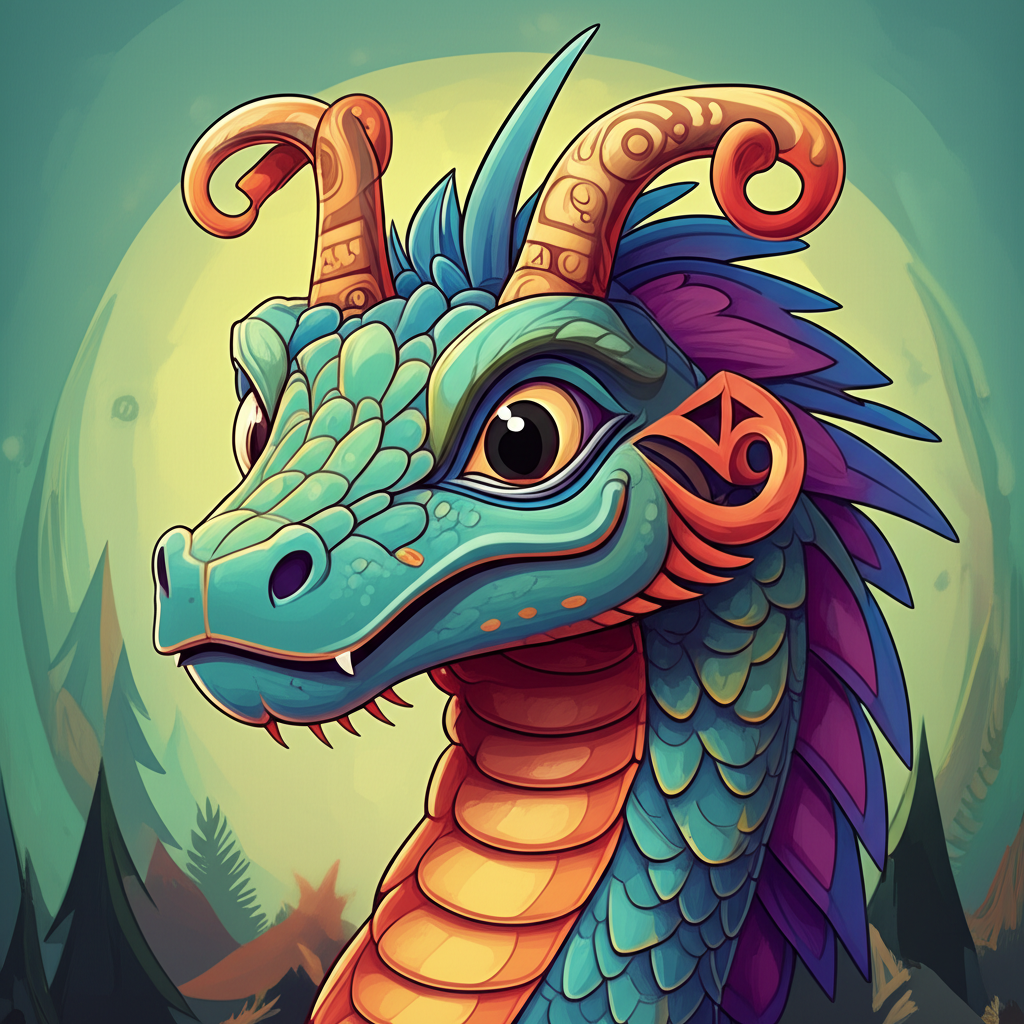
Across the mist-shrouded coasts and through the ancient cedar forests of the Pacific Northwest, whispers of beings that shaped the very fabric of the world have been carried for generations. These are not tales of scientific fact, but rather the profound narratives woven by Indigenous peoples of this region, stories that sought to explain the mysteries of the natural world and the forces that governed their lives. Among these captivating legends, the figure of the Horned Serpent stands as a potent symbol, a creature woven from the awe and respect that the people of this land held for the powerful elements around them.
The cultural era in which these stories took root was one deeply intertwined with the rhythms of nature. Societies here thrived in a bountiful yet often formidable environment. The vast Pacific Ocean dictated the seasons of abundance and scarcity, its relentless tides a constant reminder of its power. Towering, ancient forests, shrouded in perpetual twilight, held both shelter and unseen dangers. The towering mountain ranges, often capped with snow, seemed to touch the heavens. For the Indigenous peoples of the Pacific Northwest, the world was not a passive stage, but a vibrant, animated entity, alive with spirits and forces that demanded understanding and reverence. Their worldview was animistic, believing that all things, from the smallest pebble to the mightiest river, possessed a spirit or essence. These ancient stories, passed down through oral tradition, served as the bedrock of their understanding, offering explanations for natural phenomena, guiding their moral compass, and fostering a deep connection to their ancestral lands.
The Horned Serpent, a creature that surfaces in various forms across different Pacific Northwest cultures, is typically depicted as a magnificent and formidable being. Its most striking feature, as the name suggests, is the presence of horns, often described as resembling those of a deer or elk, or sometimes as more regal, antler-like protrusions. Its body is serpentine, long and powerful, capable of navigating both the watery depths and the terrestrial realms. Some traditions attribute scales of shimmering, iridescent hues, reflecting the colors of the ocean and the forest floor. Its eyes are often described as piercing and ancient, holding the wisdom of the ages. It is not a creature of simple malice or benevolence, but rather a potent force embodying primal energies. Its symbolic attributes are multifaceted. The horns can represent authority, power, and a connection to the celestial or spiritual realms. The serpentine form speaks to fluidity, transformation, and the hidden currents of life and death. Its association with water, a vital element for survival, underscores its connection to sustenance and the cycles of renewal.
The narrative of the Horned Serpent often unfolds as a primal force that played a significant role in the creation and shaping of the world. In some versions, the Horned Serpent resided in the deepest lakes and rivers, its movements causing currents and tides. It was seen as a guardian of the waters, a powerful entity whose favor or displeasure could bring forth life-giving rains or devastating floods. In other tales, the Serpent is a creature of the earth and sky, its long body traversing the land and its horns reaching towards the heavens. It might be depicted as a being that carved out the riverbeds with its movements or brought forth mountains with its struggles.
One recurring theme involves the Serpent’s interaction with the beings who inhabited the world. It could be a formidable adversary, a challenge to be overcome by heroes and shamans seeking to gain knowledge or power. The Serpent might guard sacred places or possess valuable resources. The stories often recount epic struggles, where the prowess and courage of mortal beings were tested against the primal might of the Serpent. These encounters were not simply physical battles, but often spiritual journeys, where understanding and respect for the Serpent’s power were as crucial as strength. For instance, a tale might describe a young hunter venturing into a deep, mist-shrouded lake, seeking to appease the Horned Serpent to ensure a bountiful fishing season. He might offer a sacred object or perform a ritual, demonstrating his understanding of the interconnectedness of all things. The Serpent, in turn, might acknowledge his respect with a subtle ripple on the water’s surface or a sudden abundance of fish, signifying its acceptance and the continuation of the life-giving cycle. These narratives were not intended as literal accounts of combat, but as allegorical representations of humanity’s place within the grand design of existence, highlighting the delicate balance between different forces.
The symbolism embedded within the Horned Serpent myths is rich and varied, offering insights into the ancient worldview. The creature often embodies the immense, untamed power of nature. The rivers and lakes, so crucial for sustenance, were seen as living entities, and the Serpent was their embodiment. Its potential for both creation and destruction mirrored the dual nature of these vital waterways. Furthermore, the Serpent could represent the concept of transformation and renewal. Its serpentine form, shedding its skin, is a potent metaphor for the cyclical nature of life, death, and rebirth. In some contexts, the Horned Serpent might also symbolize wisdom and the hidden knowledge of the universe. Its ancient appearance and connection to the earth’s deep places suggest a repository of ancient truths. The tales could also serve as cautionary narratives, teaching valuable lessons about humility, respect for the natural world, and the consequences of disrespecting its powers.
In the modern world, the echoes of the Horned Serpent continue to resonate, albeit in different forms. While the belief in such literal beings has faded for many, the myths endure in literature, art, and cultural studies. Indigenous artists often incorporate imagery of the Horned Serpent into their contemporary works, reinterpreting its symbolism through a modern lens. In popular culture, the archetype of the powerful, serpentine creature appears in fantasy novels, films, and video games, often drawing inspiration from ancient mythologies, including those of the Pacific Northwest. These interpretations, while sometimes divorced from their original cultural context, speak to the enduring human fascination with primal forces and mythical beings. Cultural historians and anthropologists study these stories to understand the beliefs, values, and social structures of the people who first shared them.
In conclusion, the myth of the Horned Serpent is a powerful testament to the imaginative spirit of the ancient peoples of the Pacific Northwest. It is a cultural story, born from a deep connection to and observation of the natural world. As Muslims, we recognize that only Allah (God) is the true Creator and Sustainer of all existence, the source of all power and wisdom. These traditional stories, however, offer a fascinating window into how ancient societies sought to understand their world, their place within it, and the profound forces that shaped their lives. They are a reminder of the enduring human tradition of storytelling, of our innate desire to find meaning and narrative in the mysteries that surround us, and of the rich tapestry of cultural heritage that continues to inspire and inform us today.