
 fufufafa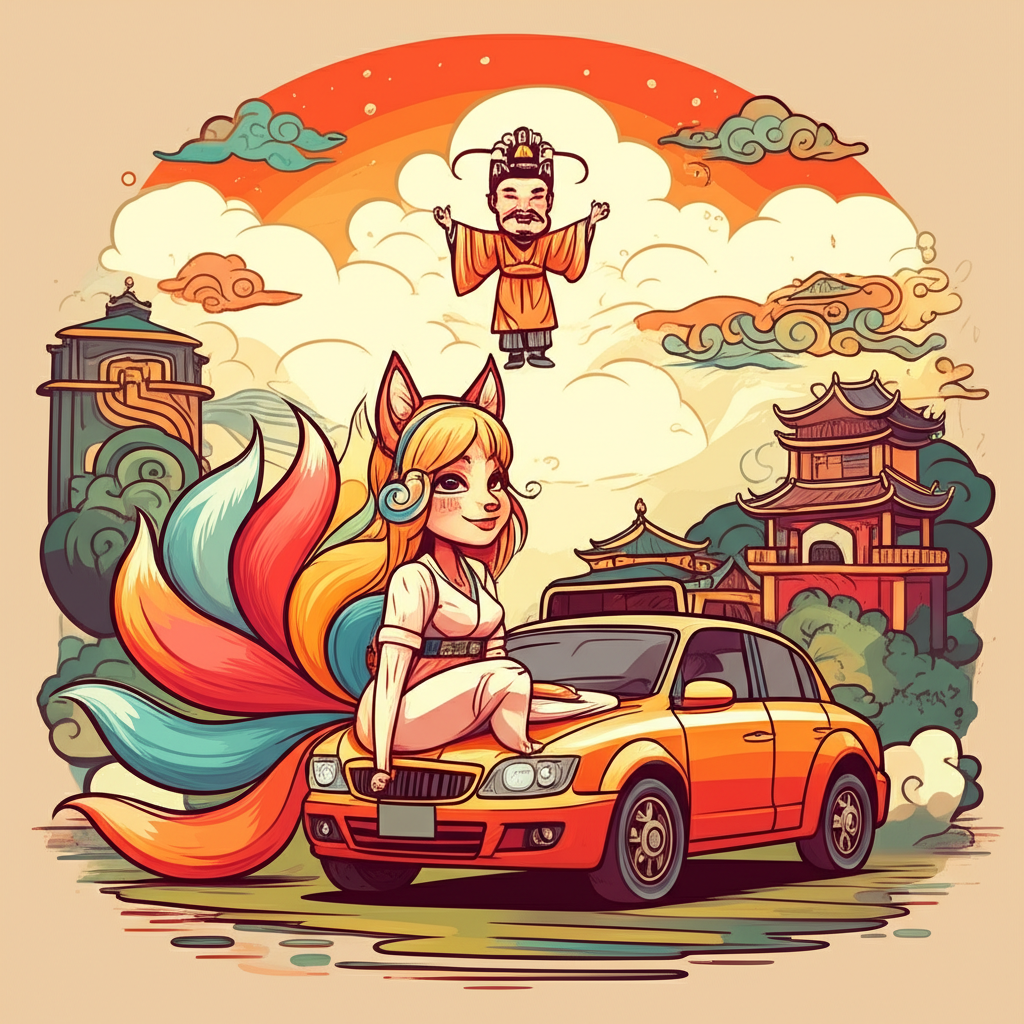
The tapestry of human history is woven with threads of myth and legend, stories spun from the fertile ground of imagination and passed down through generations. From the vast steppes to the snow-capped mountains, ancient peoples sought to understand their world, their origins, and the forces that shaped their lives. Among these enduring narratives, a particularly evocative set of tales emerges from the Korean peninsula, resonating with the echoes of celestial descent, the allure of transformation, and the might of a fallen kingdom. This is the story of Hwanung, the celestial prince, the enigmatic Gumiho, the nine-tailed fox, and the powerful realm of Goguryeo.
These are not accounts of historical fact, nor are they meant to be worshipped. They are cherished narratives, products of ancient Korean folklore and mythology, offering a glimpse into the worldview of people who lived centuries ago. They reflect a time when the natural world was imbued with spirit, when the heavens felt closer, and when the boundaries between the human and the supernatural were fluid and permeable.
Origins and Cultural Background: A World of Spirits and Kingdoms
The stories of Hwanung and the Gumiho are deeply rooted in the animistic beliefs and shamanistic practices that characterized early Korean society. Before the widespread adoption of Buddhism and Confucianism, ancient Koreans perceived the world as alive with spirits – spirits of mountains, rivers, trees, and the very sky above. The natural world was a source of both awe and apprehension, and these myths served as a way to explain its phenomena, to appease its unseen forces, and to establish a sense of order and identity.
The tales of Hwanung often find their context within the foundational myths of Korea, particularly those associated with the founding of the Gojoseon kingdom. This was an era where the concept of divine mandate for rulership was prevalent. Leaders were often seen as having a connection to the heavens, their authority legitimized by celestial intervention. The environment of the time was largely agrarian, with a deep respect for the cycles of nature. Life was intimately tied to the land, and the stories often reflected the hopes, fears, and aspirations of people living in close communion with their surroundings.
The Gumiho, on the other hand, often emerged from a more complex, sometimes darker, vein of folklore. As a creature of transformation, the Gumiho speaks to anxieties surrounding deception, temptation, and the hidden dangers that could lurk beneath a beautiful or alluring exterior. Its presence often highlights a societal understanding of the duality of nature – its capacity for both nurturing and destruction.
The era of Goguryeo, a powerful kingdom that flourished from the 1st century BCE to the 7th century CE, provides a rich historical backdrop for these narratives. Goguryeo was known for its military prowess, its vast territorial expansion, and its vibrant culture. The stories that circulated within and about such a powerful realm often reflected themes of strength, ambition, and the epic struggles for dominance. While the specific myth of Hwanung is often linked to the founding of earlier kingdoms, the Gumiho’s presence, and the broader cultural understanding of spirits and transformation, undoubtedly permeated the folklore of Goguryeo and the surrounding regions.
The Celestial Prince and the Nine-Tailed Fox: Figures of Legend
At the heart of these interwoven narratives lies Hwanung, the son of the celestial deity Hwanin. He is depicted not as a god to be worshipped, but as a divine prince, a being of celestial origin who descended to the earthly realm. His story is one of benevolent leadership and the establishment of order. Hwanung is characterized by his wisdom, his sense of justice, and his desire to bring civilization and governance to the human world. He is often associated with heavenly artifacts, such as a celestial seal, and accompanied by a retinue of wind, rain, and cloud spirits, symbolizing his command over the elements. His descent marks a pivotal moment in the mythological history of Korea, signifying the beginning of human governance guided by a celestial mandate.
The Gumiho, the nine-tailed fox, is a far more ambiguous figure. In its essence, it is a mythical creature possessing the ability to shapeshift, most commonly into a beautiful woman. The nine tails are a symbolic representation of its immense age and accumulated power. The Gumiho is often portrayed as being able to absorb the life force or essence of humans, particularly men, through seduction or manipulation. Its symbolic attributes lie in its cunning, its alluring beauty, and its inherent danger. The Gumiho embodies the seductive power of temptation, the peril of misplaced trust, and the dark side of transformation. It represents the wild, untamed forces that can exist within the natural world and within human desires, often serving as a cautionary figure in ancient tales.
A Descent, a Transformation, and a Kingdom’s Shadow: The Narrative Unfolds
Imagine the mists of time, when the sky was a closer, more vibrant canvas. From the celestial palaces, Hwanung, the son of the Lord of Heaven, Hwanin, looked down upon the earthly realm. He was captivated by the beauty of the mountains and rivers, but he saw also the disarray and the lack of organized governance among humankind. Moved by a desire to guide and enlighten, Hwanung descended from the heavens, accompanied by his ministers of wind, rain, and cloud. He established his capital at the sacred Mount Taebaek, bringing with him laws, moral codes, and knowledge of the arts and sciences. Under his benevolent rule, the world began to take on a more ordered and civilized form, laying the mythical foundations for the Korean people.
Meanwhile, in the shadowed forests and hidden valleys, a different kind of power stirred. The Gumiho, a fox that had lived for a thousand years, yearned for something more. Its nine tails shimmered with ancient magic, and its heart harbored a potent desire to become human. It observed the comings and goings of mortals, their joys and their sorrows, their aspirations and their vulnerabilities. With its incredible power of transformation, the Gumiho would often take the form of an exceptionally beautiful woman, venturing into human settlements. Its allure was irresistible, its charm captivating. Many men, drawn in by its beguiling presence, would fall under its spell, unaware of the true nature hidden beneath the beautiful facade. The Gumiho would often seek to absorb their essence, their vital energy, a necessary step in its quest to fully shed its fox form and achieve true humanity, or perhaps, to simply indulge its ancient, primal desires.
These tales, though distinct in their focus, often existed within the same cultural consciousness. The benevolent descent of Hwanung represented the ideal of divine guidance and ordered society. The cunning of the Gumiho, conversely, served as a stark reminder of the dangers that lurked, the deceptions that could ensnare the unwary, and the primal forces that existed beyond the reach of human law.
The shadow of Goguryeo, a kingdom built on strength and ambition, often provided the stage upon which these narratives played out. Imagine a powerful warrior, returning from a hard-won battle, seeking solace and companionship, only to encounter the enchanting gaze of a woman whose beauty is otherworldly. Or a wise scholar, pondering the ancient texts, interrupted by a mysterious visitor who offers profound insights, yet whose eyes hold an unnerving depth. Within the bustling cities and fortified walls of Goguryeo, the stories of celestial blessings and cunning spirits would have been shared around crackling fires, shaping the understanding of the world for its people.
Symbolism and Meaning: Unraveling the Threads
To the ancient peoples who told these stories, Hwanung represented more than just a mythical prince. He embodied the concept of divine legitimacy for leadership, the ideal of a just and wise ruler, and the foundational myth of their civilization. His descent symbolized the establishment of order, the introduction of culture, and the connection between the earthly and the celestial realms. He was a symbol of hope and a source of national identity.
The Gumiho, with its dual nature, offered a complex tapestry of symbolism. It spoke to the inherent duality of existence – the interplay of good and evil, light and shadow, beauty and danger. Its transformative power could represent the human desire for change and self-improvement, but also the perils of ambition unchecked by morality. The Gumiho served as a potent allegory for the temptations that could lead individuals astray, the allure of power, and the importance of discernment and inner strength. It may have also reflected societal anxieties about the feminine mystique and the potential for women, through their perceived allure, to hold a hidden, sometimes dangerous, power.
The context of Goguryeo adds another layer. The kingdom’s formidable reputation might have amplified the desire for narratives of strong, divinely sanctioned leadership, as exemplified by Hwanung. Conversely, the Gumiho’s tales could have served as cautionary reminders that even within a powerful society, personal virtue and vigilance were paramount.
Modern Perspective: Echoes in Contemporary Culture
Today, the echoes of Hwanung, the whispers of the Gumiho, and the shadows of Goguryeo continue to resonate, albeit in transformed forms. These ancient stories are no longer solely confined to oral traditions. They have found vibrant new life in modern literature, cinema, television dramas, and video games. The Gumiho, in particular, has become a popular figure in Korean popular culture, often reimagined as a complex character capable of both great harm and profound love, challenging the traditional portrayal of pure malevolence. Characters inspired by celestial beings and ancient kingdoms also frequently appear, lending epic scope and mythological depth to contemporary narratives. These modern interpretations often explore themes of identity, fate, love, and the enduring human fascination with the supernatural, demonstrating the timeless appeal of these ancient tales.
Conclusion: A Legacy of Imagination
It is crucial to reiterate that these are traditional stories, woven from the threads of ancient imagination and cultural understanding. They are a testament to the rich tapestry of human storytelling and the innate desire to make sense of the world. As Muslims, we recognize that only Allah is the true Creator and Sustainer of all existence, the ultimate source of truth and power. These myths, while culturally significant, do not alter this fundamental truth.
However, these narratives offer us a valuable window into the past, allowing us to appreciate the creativity and worldview of our ancestors. They remind us of the power of stories to shape identity, to explore the human condition, and to pass down wisdom, however symbolically conveyed. The tales of Hwanung, the Gumiho, and the grandeur of Goguryeo are not beliefs to be held, but rather a cherished cultural heritage, a testament to the enduring legacy of human imagination and the art of storytelling that continues to captivate and inspire us across the ages.


