fufufafa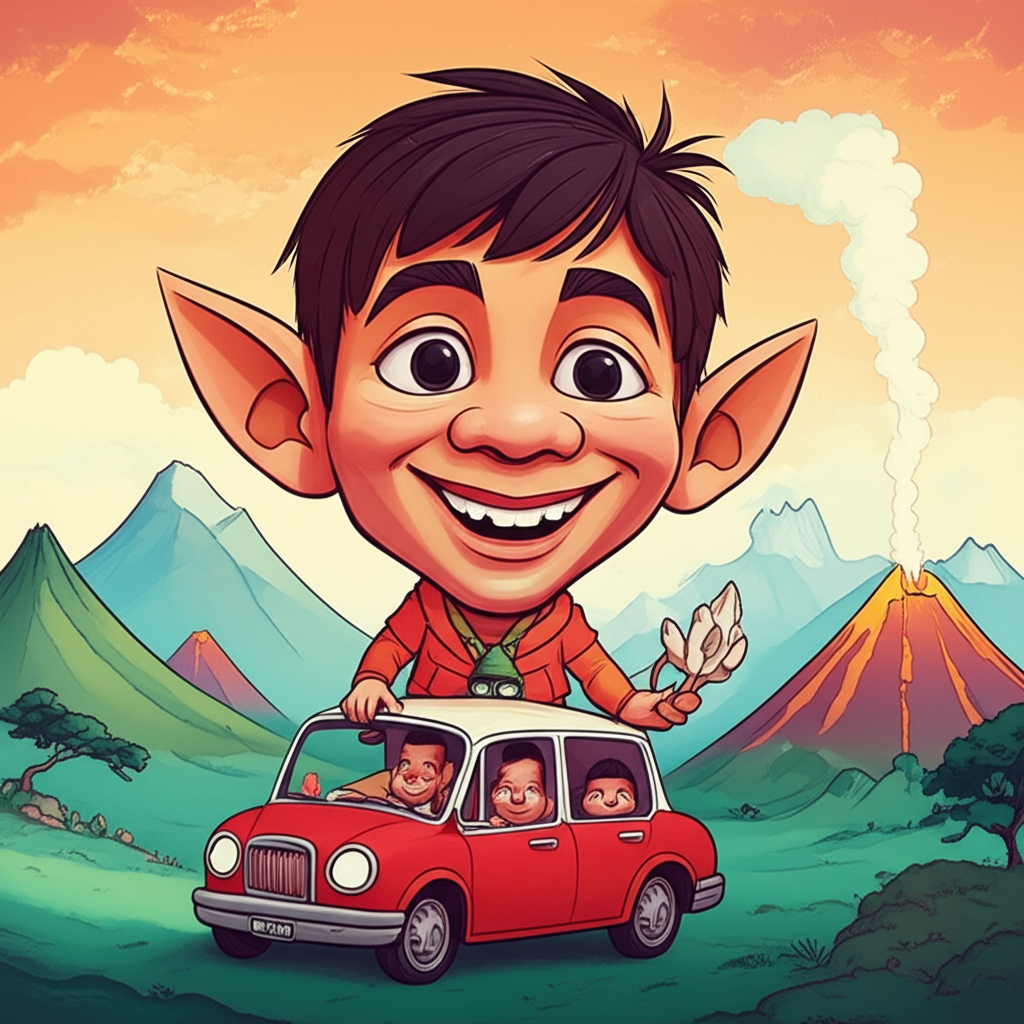
In the sun-drenched archipelago of the Philippines, where emerald islands rise from cerulean seas, a rich tapestry of myths and legends has been woven over millennia. These are the traditional stories passed down through generations by ancient communities, tales that sought to explain the wonders and terrors of their world. Among these narratives, none resonates with as much potent imagery and enduring mystery as the legends surrounding the majestic Mayon Volcano, often intertwined with powerful deities and enigmatic creatures. This particular legend, an "Echo of Amanikable," delves into the primal forces of nature, the delicate balance of life, and the unseen guardians of the earth, as perceived by the ancestors of the Bicol region. It is a testament to the vivid imagination and deep spiritual connection of a people who lived in harmony, and sometimes in fear, of their environment.
Origins and Cultural Background: A World Alive with Spirits
Long before the arrival of foreign influences, the indigenous communities of the Philippines, particularly those inhabiting the fertile plains and volcanic slopes of the Bicol peninsula, lived in a world permeated by the spiritual. Their existence was intrinsically linked to the rhythms of nature, and every mountain, river, tree, and creature was believed to possess a spirit or be home to supernatural beings. This was a pre-colonial era, characterized by an animistic worldview where the seen and unseen realms were intimately connected. Agriculture, fishing, and simple crafts formed the backbone of their society, fostering a profound respect for the earth that provided their sustenance.
The ancient Bicolanos, like many early cultures, sought explanations for the inexplicable. The rumbling earth, the torrential rains, the bountiful harvests, and the destructive eruptions were not random occurrences but manifestations of powerful spirits or deities. Life was a constant negotiation with these forces, requiring reverence, offerings, and adherence to ancient customs to maintain harmony. Mayon Volcano, with its perfect cone and unpredictable temper, was not merely a geological feature; it was a living entity, a sacred abode, and a powerful metaphor for nature’s duality—its breathtaking beauty and its terrifying capacity for destruction. It was within this spiritual landscape that tales like that of Amanikable and the Duwende took root, serving as moral compasses, warnings, and chronicles of a world alive with potent, unseen energies.
Characters and Creatures: Guardians of the Earth’s Heart
At the heart of this ancient narrative stand two pivotal figures: Amanikable and the Duwende. It is important to understand these as symbolic representations within a mythological framework, rather than beings to be believed in literally.
Amanikable, in various Philippine mythologies, is often depicted as a powerful deity or spirit, sometimes associated with the sea, hunting, or general forces of nature. In the context of Mayon Volcano, the "Echoes of Amanikable" portray him as an ancient and formidable spirit embodying the raw, untamed power of the earth’s core, the very force that shaped and continues to stir the great volcano. He is a spirit of creation and destruction, a being whose moods dictate the earth’s temperament, from fertile abundance to fiery wrath. His symbolic attributes include immense power, unpredictability, and a deep connection to the primal energies of the natural world, reminding humanity of its humble place within the grand scheme of things.
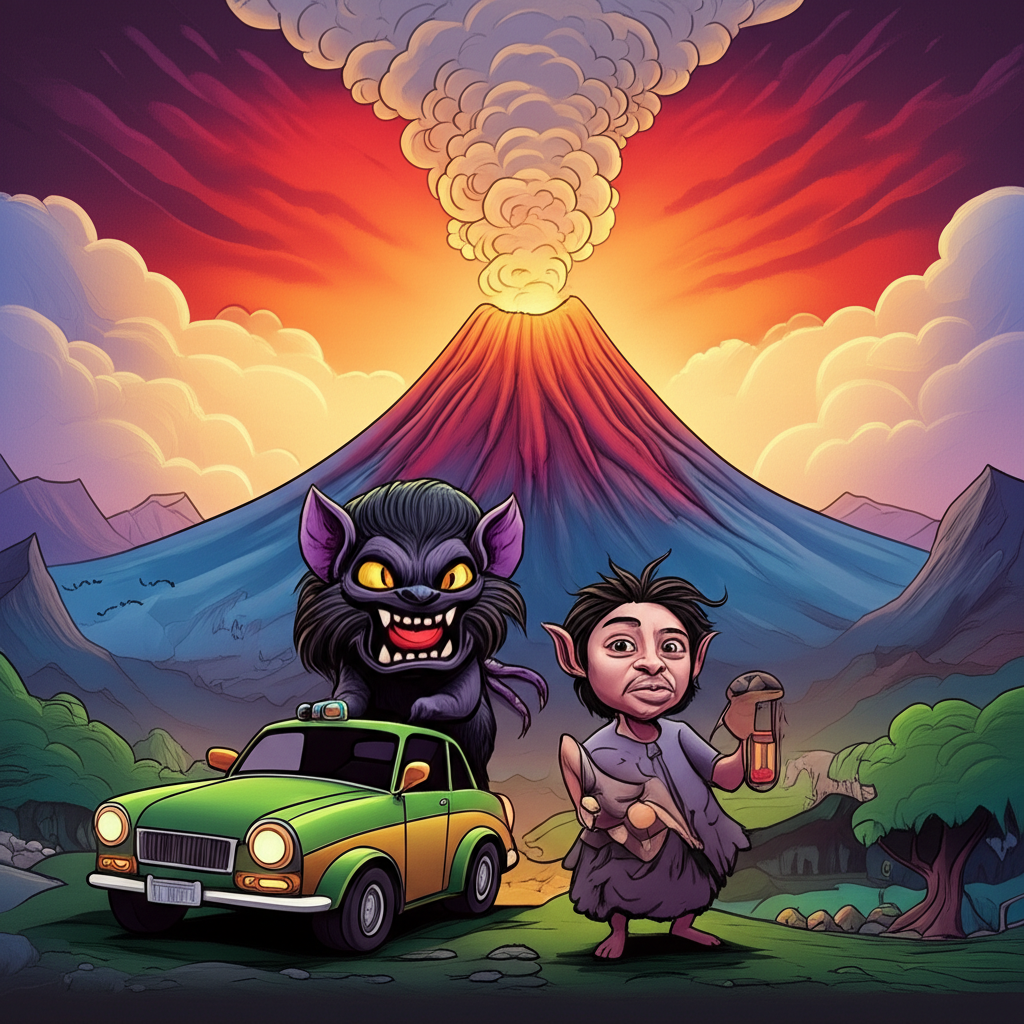
The Duwende, on the other hand, are enchanting and often elusive figures in Philippine folklore. These are small, elf-like or dwarf-like beings, believed to dwell in forests, caves, mounds, or even in the forgotten corners of human homes. In the Mayon narrative, the Duwende are depicted as ancient, watchful guardians of the land, particularly the lush forests and hidden caves at the volcano’s base. They are intricately connected to the earth, possessing an intimate knowledge of its secrets and its subtle whispers. Symbolically, the Duwende represent the smaller, intricate aspects of nature—the unseen forces that maintain ecological balance, the spirits of the trees and rocks, and the subtle warnings or blessings that nature bestows. They are often mischievous but can also be benevolent or vengeful, reflecting the unpredictable nature of the wild itself.
The Main Story: The Temper of the Fire Mountain
The story begins in a time when the slopes of Mayon were even more verdant, teeming with life and crisscrossed by clear streams. The people of the Bicol plains revered the volcano, understanding its dual nature as both provider and punisher. They lived in respectful harmony, offering prayers and small tributes at the base of the mountain, careful not to disturb its ancient spirits.
It was said that the great Mayon Volcano was the very heart of Amanikable’s power in this region. When Amanikable was content, the volcano lay dormant, its slopes green with bounty, its peak often veiled in a serene mist. The Duwende, tiny guardians with eyes like polished obsidian and skin the color of rich earth, moved silently through the undergrowth. They ensured the forest thrived, guided lost animals back to their paths, and occasionally, with a mischievous glint, led humans astray if they ventured too deeply or took more than they needed. They were the silent keepers of the balance, keenly aware of the pulse of the mountain and the shifting moods of Amanikable.
For generations, the people lived in relative peace. But as time wore on, a new generation, growing in numbers and ambition, began to push the boundaries. They felled ancient trees with less thought for replanting, dug for precious minerals deeper in the earth’s embrace, and polluted the streams that flowed from Mayon’s slopes. The respectful offerings dwindled, replaced by an unspoken sense of entitlement.
The Duwende, observing from their hidden perches, felt the growing unease. The air grew heavy, the leaves rustled with a different, more agitated sound. They saw the faint tremors that began to ripple through the earth, felt the subtle heat rising from deep within. These were the first signs of Amanikable’s discontent. His patience, boundless for centuries, was finally waning.
One day, a group of young, boastful hunters ventured high onto Mayon’s slopes, daring to hunt in a sacred grove long forbidden by their elders. They laughed at the old tales of spirits and paid no heed to the faint whispers of the wind or the rustling leaves that seemed to warn them away. They even disturbed a small, ancient mound, unknowingly disrupting a dwelling of the eldest Duwende.
The affront was too great. The earth groaned. A low, guttural rumble emanated from Mayon’s peak, a sound that vibrated through the very bones of the land. The Duwende, now openly agitated, scampered from their hiding places, their tiny voices raised in urgent, frantic warnings, though few humans could understand their pleas.
Amanikable, stirred from his ancient slumber, unleashed his fury. Not with a sudden, catastrophic burst, but with a slow, deliberate display of power. Smoke began to curl lazily from Mayon’s crater, then thickened into dark, ominous clouds. The earth trembled violently, sending streams of molten rock slowly snaking down the upper slopes, devouring everything in their path. Ash rained down, turning the vibrant green landscape into a desolate gray.
Panic gripped the villages. The elders, remembering the ancient stories, understood. Amanikable was angry, and the Duwende, who usually offered subtle guidance, were now desperately trying to lead people away from the encroaching danger, pushing them towards safer ground. The Duwende did not fight Amanikable’s wrath; they understood it was a cleansing, a reassertion of nature’s dominance. Instead, they focused on minimizing human loss, guiding those who still possessed respect for the land.
The eruption continued for days, a fiery spectacle that both terrified and humbled the people. When it finally subsided, Mayon stood transformed, its slopes scarred but also revitalized by the new earth. The forests were thinned, the streams re-routed, but a stark lesson had been imparted: respect for nature, for its spirits, and for its guardians, was paramount. The Duwende remained, watching, ensuring that the lessons learned would echo through time, alongside the dormant rumblings of Amanikable’s fiery heart within Mayon.
Symbolism and Meaning: Ancient Lessons for Modern Times
This captivating narrative, rich in imaginative detail, was more than just a story to the ancient Bicolanos; it was a profound teaching tool. The majestic Mayon Volcano symbolized the incredible power and unpredictable nature of the earth itself—its ability to nurture life with fertile soil and warm sun, but also to destroy with fiery eruptions and devastating tremors. It represented the delicate balance between creation and destruction, a constant reminder of humanity’s dependence on and vulnerability to the natural world.
Amanikable, as the embodiment of Mayon’s spirit, symbolized the unseen forces that govern the natural world. His anger, triggered by human disrespect and exploitation, represented the inevitable consequences of disrupting ecological harmony. It was a warning against hubris, a moral lesson that cautioned against taking nature’s bounty for granted. The Duwende, in their role as guardians and intermediaries, symbolized the intricate, subtle energies of the environment, the ‘little things’ that maintain balance, and the warnings that nature often provides before a catastrophe. They represented the innate wisdom and interconnectedness of the ecosystem, urging humans to listen to the whispers of the earth.
Overall, the myth impressed upon ancient people the vital importance of respect for nature, the interconnectedness of all living things, and the profound wisdom of living in harmony with one’s surroundings. It taught them about accountability, the sacredness of the land, and the eternal cycle of life, death, and renewal.
Modern Perspective: Echoes in Contemporary Culture
Today, the "Echoes of Amanikable – Duwende – Mayon Volcano" continues to resonate within Philippine culture, though its interpretation has shifted from literal belief to appreciation of its cultural and historical significance. These myths are no longer seen as divine truths but as invaluable windows into the ancestral worldview of the Filipino people.
In modern literature, these tales inspire fantasy novels and short stories, providing a rich source of characters and settings. Filipino cinema and television often draw upon folklore for themes, creating visual narratives that explore the magic and mystery of ancient beliefs. Video games and digital art platforms frequently feature characters inspired by Duwende or explore the awe-inspiring power of volcanoes, often attributing a spiritual dimension to them. Academics and cultural historians study these narratives to understand pre-colonial Philippine society, spiritual practices, and environmental ethics. The stories serve as a potent reminder of the deep connection between Filipino identity and the land, fostering a sense of heritage and national pride.
Conclusion: A Legacy of Imagination and Reverence
The myth of Amanikable, the Duwende, and the powerful Mayon Volcano stands as a profound testament to the human imagination and our timeless quest to understand the world around us. It is a traditional cultural story, not a belief system to be practiced or worshipped in the present day. As Muslims, we recognize that only Allah (God) is the true Creator and Sustainer of the universe, and all power and dominion belong solely to Him.
Nevertheless, these ancient narratives offer invaluable insights into the cultural heritage of the Filipino people. They remind us of the power of storytelling to convey complex ideas, moral lessons, and a deep-seated reverence for the natural world. The echoes of Amanikable and the Duwende, carried on the winds from Mayon’s slopes, continue to whisper through time, inviting us to reflect on our own relationship with the earth and appreciate the rich tapestry of human imagination that transcends generations and cultures.