fufufafa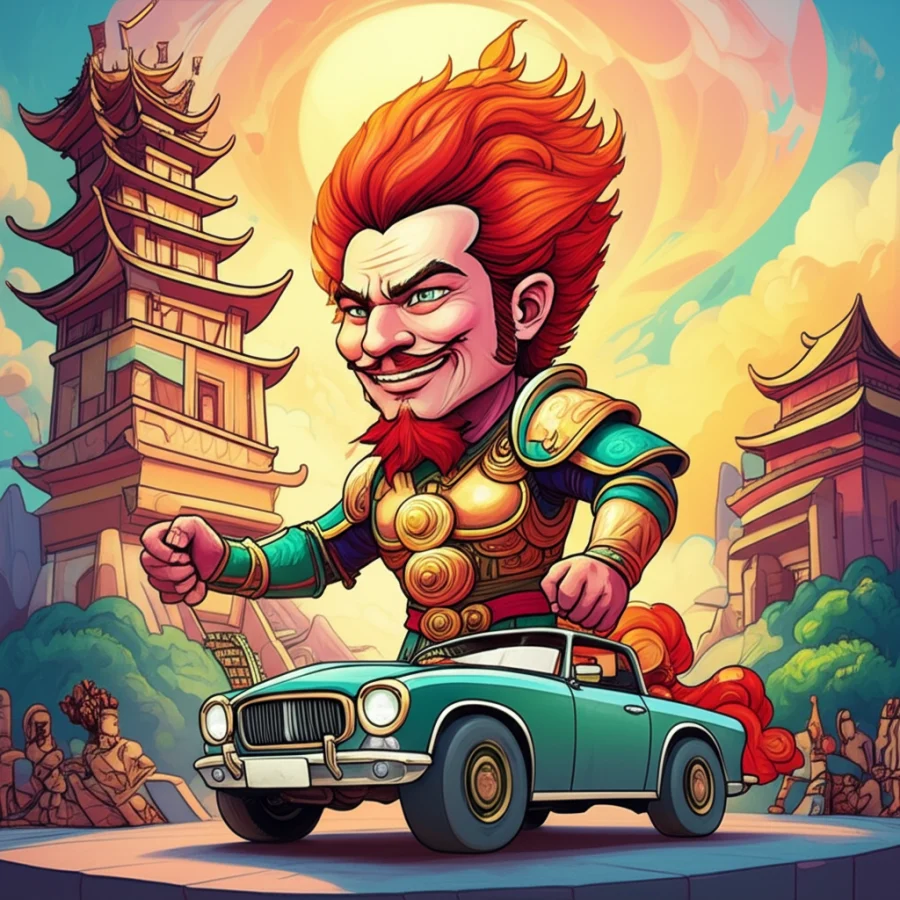
1. Introduction
Within the vast tapestry of human imagination, countless tales have been woven to explain the inexplicable, to personify the forces of nature, and to articulate the hopes and fears of ancient peoples. Among these rich traditions is "The Chronicle of Zhurong and the Eternal Temple," a captivating myth hailing from the ancient civilizations of China. This story, passed down through generations, is a traditional narrative told by the earliest inhabitants of that land, offering a glimpse into their understanding of the world and their place within it. It is presented here purely for cultural, historical, and educational understanding, recognizing it as a product of human storytelling and not as a factual account or an object of belief.
2. Origins and Cultural Background
The myth of Zhurong and the Eternal Temple finds its roots in the early periods of Chinese civilization, an era shrouded in the mists of antiquity, possibly dating back to the legendary Xia Dynasty or even earlier prehistoric times. During this period, human existence was intimately bound to the rhythms of nature. The sun’s warmth, the destructive power of floods, the life-giving rain, and the transformative force of fire were not merely phenomena but were often perceived as manifestations of powerful, sentient beings or cosmic energies.
People of that time viewed the world as a dynamic interplay between heaven, earth, and humanity, often governed by a pantheon of deities, spirits, and legendary heroes. Their cosmology was a reflection of their agricultural society, where order and harmony were paramount for survival. Myths served not only as entertainment but also as moral guides, explanations for natural events, and validations of social structures. The elements—especially fire, crucial for warmth, cooking, and metallurgy—held immense significance, often deified as a source of both comfort and terror, creation and destruction.
3. Character Description: Zhurong and the Eternal Temple
At the heart of this chronicle stands Zhurong, a prominent figure in ancient Chinese mythology. Often depicted as the God of Fire and the South, Zhurong is a striking embodiment of his elemental domain. Ancient texts and oral traditions paint him as a being of immense power and radiant presence, typically described with a fiery red complexion, sometimes riding on two dragons or a flaming chariot. He is often shown wielding a torch or a flaming weapon, his very breath capable of igniting the skies.
Symbolically, Zhurong represents the dual nature of fire itself: its capacity for both creation and destruction. He is the bringer of warmth and light, essential for life and civilization, yet also the force behind devastating infernos. To the ancients, Zhurong symbolized vitality, passion, and leadership, as well as the essential role fire played in shaping human society—from cooking food to forging tools. His presence in the myth underscores humanity’s profound relationship with this primal element.
The Eternal Temple, while perhaps less concretely described in existing lore, can be understood within this narrative as a mythical edifice of cosmic significance. It is not a physical structure to be visited, but rather a conceptual, perhaps celestial or otherworldly, sanctuary. Symbolically, the Eternal Temple represents ultimate balance, a reservoir of primordial energy, or a nexus where the fundamental forces of the cosmos are harmonized. It embodies stability, eternal truth (within the context of the myth), and perhaps a source of divine power or wisdom that Zhurong is either guarding, building, or drawing upon to fulfill his cosmic duties. It is a beacon of order in a potentially chaotic world.
4. Main Story / Narrative Retelling
In the primordial days, when the world was still finding its rhythm, chaos often threatened to unravel the delicate tapestry of existence. Humanity, fledgling and vulnerable, struggled against the encroaching darkness and the bitter cold that followed the tumultuous era of creation. The heavens and earth, though separated, often fell into disharmony, leading to cataclysms that plunged the nascent world into despair.
It was during such a time, when the sun’s warmth seemed to wane and a perpetual chill crept across the land, that the need for a stabilizing force became dire. The cosmic balance was askew, and the very flame of life flickered precariously. The ancient records speak of a chilling shadow cast over the lands, a time when the primordial fire, the very essence of warmth and light, began to diminish, threatening to plunge the world into an endless, icy night.
From the vibrant heart of the southern skies, Zhurong, the radiant God of Fire, perceived this impending catastrophe. His essence was interwoven with the fundamental heat of the cosmos, and he felt the chill as a deep ache in his fiery soul. Riding his two magnificent dragons, their scales shimmering like molten gold and their breath trailing sparks across the heavens, Zhurong descended to the troubled earth.
His quest was clear: to rekindle the dying embers of the world and to establish a sanctuary that would forever maintain the cosmic flame. This sanctuary was to be the fabled Eternal Temple. Legend says that the path to its establishment was fraught with peril. Zhurong battled against ancient, icy spirits that sought to extinguish all warmth, and he journeyed through desolate, shadow-ridden realms where hope itself seemed to freeze. His fiery aura, a beacon against the gloom, melted glaciers and banished the oppressive darkness, but the task of securing the Eternal Temple required more than brute force.
The Eternal Temple was not a structure to be merely built with hands, but a nexus forged from the very essence of cosmic harmony and primordial flame. Zhurong, through his boundless power and profound connection to the elemental forces, sought out the last vestiges of the world’s fundamental heat, drawing it together into a single, pulsating heart. He then wove into it the energies of the sun, the warmth of the earth’s core, and the spark of life itself, concentrating them into a divine forge.
With immense effort and a dazzling display of elemental power, Zhurong erected the Eternal Temple. It was not a temple of stone and mortar, but a shimmering edifice of pure, contained fire, radiating warmth and light that permeated every corner of the world. Within its core pulsed the Eternal Flame, a primordial fire that would forever burn, a testament to cosmic balance and an unending source of life-giving heat.
From that day forward, the world was blessed with a constant warmth and light. The sun resumed its steady course, and the chill of utter darkness was banished. Zhurong, the guardian of this sacred fire, watched over the lands, his presence ensuring that the Eternal Temple continued to radiate its life-sustaining energy. Humanity, now warmed and illuminated, could cultivate the land, build their homes, and thrive under the benevolent glow of the cosmic flame. The Eternal Temple became a symbol of enduring hope and the triumph of order over chaos, forever maintained by the vigilant presence of the Fire God.
5. Symbolism and Meaning
To the ancient Chinese, the Chronicle of Zhurong and the Eternal Temple offered profound insights into their world. Zhurong himself symbolized the essential role of fire in civilization, representing not just physical warmth but also the spark of human ingenuity, passion, and the divine intervention believed necessary to overcome overwhelming natural challenges. He embodies courage, the control over nature’s powerful forces, and the benevolent aspect of divine power.
The Eternal Temple, in turn, represented the ultimate ideal of order and stability. It was a conceptual space where the chaotic energies of the cosmos were harmonized, ensuring the continuity of life and light. It symbolized the sanctuary of primordial power, a sacred space where the very essence of existence was maintained. The myth conveyed the message that even amidst chaos, there existed a fundamental order, guarded by powerful beings, that ensured the world’s continued flourishing. It also reflected humanity’s reliance on these perceived higher powers for their well-being and survival, and their understanding of the cyclical nature of destruction and creation.
6. Modern Perspective
In contemporary times, the myth of Zhurong and the Eternal Temple, like many ancient narratives, continues to resonate, though its interpretation has evolved. It is no longer seen as a literal truth but as a valuable piece of cultural heritage. Zhurong, as a powerful and iconic figure, frequently appears in modern Chinese literature, fantasy novels, and particularly in video games, where he is often depicted as a formidable warrior or a wise, fiery deity. His image is also utilized in various forms of art and cultural festivals, celebrating traditional Chinese folklore.
Academically, this myth is studied for its contributions to understanding ancient Chinese cosmology, religious beliefs, and societal values. It offers insights into how ancient peoples personified natural elements and constructed narratives to make sense of their environment. For cultural enthusiasts, it’s a testament to the enduring power of human imagination and the universal desire to create compelling stories that explain the world and inspire future generations.
7. Conclusion
The Chronicle of Zhurong and the Eternal Temple stands as a testament to the rich imaginative world of ancient Chinese civilization. It is a cultural story, a product of human creativity seeking to understand and articulate the fundamental forces of nature and the human condition. It is important to reiterate that this narrative is a myth, a traditional tale from antiquity, and not a belief system to be adopted or practiced. As Muslims, we recognize that only Allah is the true Creator and Sustainer of all that exists, the One who orchestrates the universe with perfect wisdom and power, and that no created being or entity possesses divine attributes.
Nevertheless, such stories form an invaluable part of our global cultural heritage. They remind us of the diverse ways humanity has sought meaning and understanding throughout history, offering profound insights into the human spirit, its fears, its hopes, and its boundless capacity for storytelling. These chronicles, though rooted in ancient imaginations, continue to enrich our understanding of different cultures and the universal human quest to make sense of the world around us.