fufufafa
Introduction:
From the misty peaks of the Korean peninsula, carried through generations in oral tradition and eventually inscribed in ancient texts like the Samguk Yusa (Memorabilia of the Three Kingdoms), comes the legend of Dangun, the founder of the first Korean kingdom, Gojoseon. This narrative, deeply woven into Korean identity, tells a story of divine descent, transformation, and the establishment of a nation. Central to this legend are the figures of Hwanung, the son of the Lord of Heaven, and Ungnyeo, a bear who transforms into a woman. While Dangun’s tale speaks of creation and governance, interwoven with it are whispers of gwisin, spirits that inhabit the world, influencing events and representing the unseen forces of nature and the afterlife. This is a traditional story, a product of the Korean imagination, meant to explain origins and provide a framework for understanding the world, as perceived by the people of that time.
Origins and Cultural Background:
The Dangun myth likely emerged during the Bronze Age in Korea, a period of significant societal changes, including the rise of agriculture, metalworking, and the formation of tribal societies. This era, roughly from 2000 BCE to 300 BCE, was characterized by animistic beliefs and shamanistic practices. The people of this time viewed the world as populated by spirits, both benevolent and malevolent, that resided in natural objects like trees, mountains, and rivers. These spirits, the gwisin, were believed to influence human affairs, and shamans acted as intermediaries between the human and spirit realms. The concept of a "Heavenly Descent Site" – a sacred place where divine beings could interact with the earthly realm – reflected this worldview. The Taebaek Mountains, often identified as the site of Hwanung’s descent, held particular significance, embodying the power and mystery of the natural world. Leadership during this period was often associated with spiritual authority, with tribal chiefs acting as both political and religious figures. The Dangun myth, therefore, provided a narrative justification for the establishment of a ruling lineage, linking it to divine origins and reinforcing its legitimacy.
Character / Creature Description:
-
Dangun: The legendary founder and first king of Gojoseon. He is depicted as a wise and benevolent ruler, descended from divine lineage, and possessing both spiritual and political authority. He represents the ideal of a virtuous leader, embodying qualities of justice, compassion, and strength. Symbolically, Dangun represents the Korean people’s aspiration for a unified and prosperous nation, guided by wise leadership.
-
Hwanung: The son of Hwanin, the Lord of Heaven. He is portrayed as a powerful and compassionate deity who descends to Earth to bring civilization and prosperity to humankind. He embodies the divine will to improve the human condition and represents the connection between the celestial and terrestrial realms. Hwanung symbolizes the transformative power of divine intervention and the potential for human progress through knowledge and guidance.
-
Ungnyeo: A bear who yearns to become human. Through perseverance and devotion, she transforms into a woman and becomes the mother of Dangun. She represents the transformative power of faith, dedication, and the potential for even the humblest creatures to achieve greatness. Ungnyeo symbolizes the importance of perseverance and the ability to transcend limitations.
-
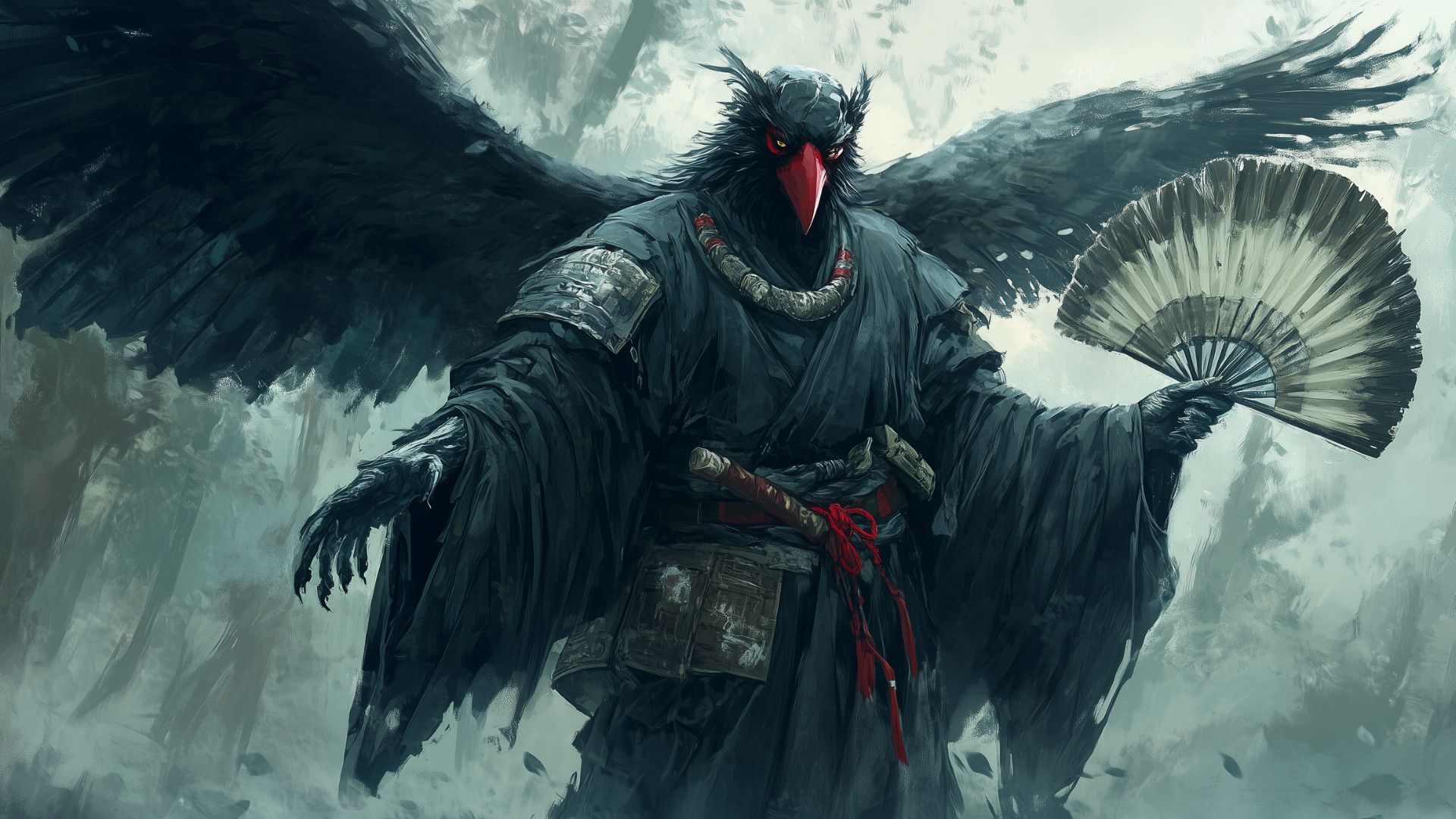
Gwisin: These are spirits, ghosts, or supernatural beings that inhabit the Korean folklore. They are not necessarily evil, but are powerful and can influence human affairs. They represent the unseen forces of nature and the spiritual realm. Some are benevolent guardians, while others are mischievous or malevolent. The gwisin represent the belief that the world is not solely governed by physical laws, but also by spiritual energies and forces beyond human comprehension.
Main Story / Narrative Retelling:
Long ago, in the realm of the Lord of Heaven, Hwanin, lived his son, Hwanung. Unlike his celestial brethren, Hwanung yearned to experience the earthly realm. He gazed down upon the Taebaek Mountains, a majestic range cloaked in mist and mystery, and felt a powerful pull. He pleaded with his father to allow him to descend and bring prosperity to the human world.
Hwanin, recognizing his son’s sincere desire, granted his wish. He bestowed upon Hwanung three Heavenly Seals, symbols of his divine authority, and dispatched him to Earth with three thousand followers. Hwanung descended to a sacred spot beneath a sandalwood tree on the Taebaek Mountains, a place that would forever be known as Shinsi, the City of God.
There, amidst the ancient forests, Hwanung established his dominion. He brought with him the arts of agriculture, medicine, and governance, teaching the primitive humans how to cultivate the land, heal their ailments, and live in harmony. He divided the tasks among his followers, entrusting them with the responsibility of overseeing various aspects of life, from the winds and clouds to the rain and harvest.
One day, a bear and a tiger approached Hwanung, pleading with him to transform them into humans. Hwanung, moved by their earnest desire, gave them a bundle of mugwort and twenty cloves of garlic, instructing them to eat only these sacred foods and remain out of the sunlight for one hundred days.
The tiger, impatient and unable to endure the darkness, soon abandoned the task. But the bear, Ungnyeo, persevered. She remained hidden in a cave, patiently consuming the mugwort and garlic. After twenty-one days, a miracle occurred. Ungnyeo transformed into a beautiful woman, her heart filled with gratitude and a longing for companionship.
Ungnyeo prayed beneath the sandalwood tree, asking for a child. Hwanung, hearing her plea, transformed himself into a mortal and took her as his wife. From their union was born Dangun Wanggeom, the founder and first king of Gojoseon, the ancient Korean kingdom. Dangun established his capital at Asadal and ruled his people with wisdom and compassion. He taught them the arts of civilization, fostering a society of peace and prosperity. He is said to have ruled for over a thousand years before ascending back to the heavens, leaving behind a legacy that would shape the Korean identity for generations to come. Around him, the gwisin danced and whispered, unseen forces shaping the destiny of the land.
Symbolism and Meaning:
The Dangun myth is rich in symbolism and provides insights into the values and beliefs of the ancient Korean people. The Heavenly Descent Site represents the connection between the divine and human realms, highlighting the belief that earthly rulers derived their authority from a higher power. The transformation of the bear into a woman symbolizes the potential for human progress and the importance of perseverance. Hwanung’s role as a bringer of civilization reflects the desire for knowledge, order, and prosperity. The mugwort and garlic represent the power of nature and the importance of discipline and self-control. Ultimately, the Dangun myth serves as a creation story, explaining the origins of the Korean people and their unique cultural identity. It also reinforces the importance of leadership, virtue, and the pursuit of a harmonious society. The presence of gwisin reinforces the belief in a world beyond the physical, a world of spiritual forces that influence human destiny.
Modern Perspective:
The Dangun myth continues to resonate in modern Korean society, serving as a powerful symbol of national identity and cultural pride. It is often referenced in literature, movies, and video games, particularly those that explore themes of Korean history and mythology. While the myth is not taken literally by most modern Koreans, it remains an important part of their cultural heritage, representing the values and aspirations of their ancestors. In academic circles, the Dangun myth is studied as a valuable source of information about the beliefs and social structures of ancient Korea. It is analyzed through the lens of anthropology, history, and folklore, providing insights into the cultural evolution of the Korean peninsula. The concept of the Heavenly Descent Site, though rooted in ancient beliefs, continues to inspire a sense of connection to the land and a reverence for the natural world.
Conclusion:
The legend of Dangun, with its echoes of gwisin and the sacred Heavenly Descent Site, is a testament to the power of storytelling and the human imagination. It is a cultural story, a product of the ancient Korean worldview, and should be understood as such. It provides a glimpse into the beliefs, values, and aspirations of the people who shaped the early history of the Korean peninsula.
As Muslims, we recognize that only Allah is the true Creator and Sustainer of the universe. We understand that the Dangun myth is a product of human culture and imagination, not a reflection of divine truth. However, we can still appreciate the story for its cultural significance and its contribution to the rich tapestry of human history. Let us reflect on the cultural heritage, the imagination, and the storytelling tradition that gave rise to this enduring legend. Let us also remember that all praise and glory belong to Allah alone, the ultimate source of all creation and knowledge.