fufufafa
The world, as we understand it today, is a place of scientific inquiry and empirical evidence. Yet, woven into the fabric of human history are countless tales, born from the imaginations of our ancestors, stories that sought to explain the unexplainable, to give form to the fears and wonders of their lives. Among these rich tapestries of folklore, the Slavic lands hold a particular fascination with the elemental forces of nature, and in their legends, no entity embodies the alluring yet perilous spirit of water quite like the Rusalka. This is a story, passed down through generations, of a hypothetical encounter with such a being, a narrative not to be taken as truth, but as a window into the ancient worldview.
Echoes from the Slavic Hearth: Origins and Cultural Background
The myth of the Rusalka finds its roots in the vast and often untamed landscapes of Eastern Europe, particularly in the regions inhabited by Slavic peoples. Imagine a time, perhaps centuries ago, when life was intimately tied to the rhythms of the land and the water. Villages clustered along the banks of meandering rivers, relied on their bounty for sustenance, and feared their unpredictable power. In these societies, the world was alive with spirits. Every rustling leaf, every gurgling stream, every towering tree could be animated by an unseen force.
The natural world was not merely a backdrop to human existence; it was a partner, a source of both life and potential destruction. The harsh winters, the sudden floods, the bountiful harvests – all were attributed to the favor or displeasure of these spirits. People navigated their lives with a deep respect, and often a healthy dose of fear, for the forces beyond their direct control. It was within this context of animism and a profound connection to nature that tales of beings like the Rusalka emerged, offering explanations and cautionary tales for the mysteries of the water.
The Weaver of the Water’s Veil: Character Description
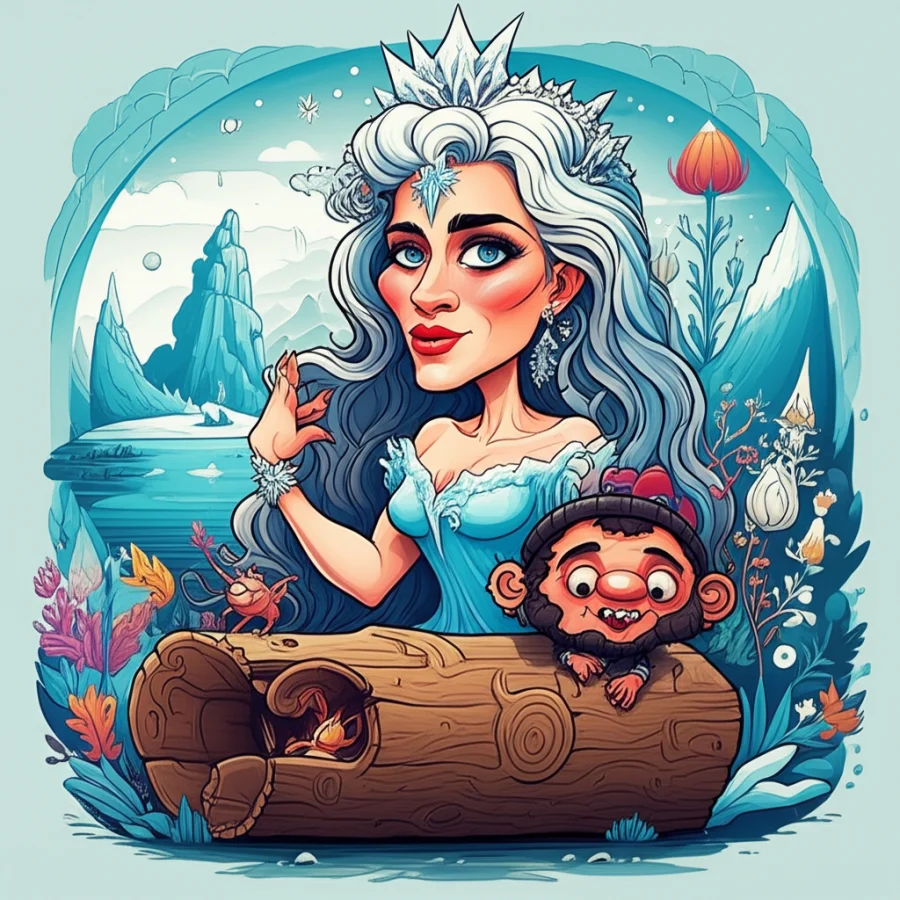
The Rusalka, as depicted in these ancient stories, is not a singular entity but rather a type of water spirit, often associated with rivers, lakes, and even sometimes damp forests. Her form is typically described as ethereally beautiful, with long, flowing hair that can be the color of moonlight on water or the deep green of river weeds. Her eyes are said to hold the shimmering depth of a hidden pool, capable of captivating any who gaze too long.
Symbolically, the Rusalka represents the dual nature of water itself. It is the source of life, providing nourishment and a means of transport. Yet, it can also be a treacherous force, capable of drowning, of pulling unsuspecting souls into its depths. Her beauty is a lure, a siren song that draws individuals closer, mirroring the irresistible allure of the water’s surface. Her connection to the unseen world beneath the waves signifies the mysteries that lie hidden, the unknown depths of existence. She is the embodiment of the wild, untamed, and often dangerous beauty of the natural world, a reminder of humanity’s vulnerability in the face of its power.
The Moonlit Dance: A Narrative Retelling
Young Ivan, a farmer’s son with a spirit as restless as the river that bordered his village, found himself drawn to the water’s edge on a night when the moon hung like a pearl in the inky sky. The air was thick with the scent of damp earth and wild mint, and the river, usually a gentle murmur, seemed to hum with a strange, enchanting melody. He had heard the elders’ hushed warnings of the Rusalka, tales of her captivating song and her fatal embrace, but on this night, curiosity and a touch of youthful bravado had outweighed his caution.
As he sat on a moss-covered stone, the moonbeams painted a silver path across the water. Then, he heard it – a voice, pure and clear, rising from the river’s surface. It was a song that spoke of forgotten dreams, of moonlit dances, and of an eternal peace found beneath the water’s cool caress. Ivan’s heart pounded, not with fear, but with an irresistible pull.
Slowly, a figure began to emerge from the shimmering veil of moonlight on the water. It was a woman, or so it seemed, her form shimmering and indistinct, as if woven from mist and starlight. Her hair, long and dark, cascaded around her shoulders, catching the moonlight like spun obsidian. Her eyes, he could not make out clearly, but he felt their gaze, a gentle, probing warmth that seemed to understand every unspoken thought within him.
She did not speak words Ivan could comprehend, but her song intensified, each note a silken thread weaving itself around his senses. He felt an overwhelming urge to step into the water, to join her in her luminous dance. The river, which he had always known as a familiar friend, now seemed to beckon him with an ancient, primal invitation. He saw himself wading in, the cool water embracing him, and then, sinking deeper, finding a tranquility he had never known.
But then, a flicker of memory. His mother’s face, etched with worry. The warmth of the hearth fire. The laughter of his friends. These anchors to his world, to his humanity, tugged at him, a faint but persistent resistance against the Rusalka’s seductive song. He realized, with a sudden, chilling clarity, that the peace she offered was an oblivion, a surrender of his very self.
With a Herculean effort, Ivan tore his gaze away from the captivating vision. He scrambled back from the riverbank, his breath coming in ragged gasps. The song, which had moments before been so enchanting, now sounded hollow, a hollow promise. He did not look back as he fled, the image of the luminous figure and the haunting melody etched into his memory, a stark reminder of the seductive power of the unknown and the deep-seated instinct for survival.
The Whisper of Caution: Symbolism and Meaning
To the ancient Slavs, the Rusalka likely served as a potent symbol. Her allure and destructive potential could represent the untamed power of nature, particularly the rivers and lakes that were essential for life but also capable of sudden and devastating floods. The tale might have been a cautionary one, warning young men, especially, against the dangers of venturing too close to the water’s edge when the moon was high, a time when spirits were believed to be most active.
Furthermore, the Rusalka could symbolize the seductive dangers of vanity and unchecked desire. Her beauty and song might have represented the temptations that could lead individuals astray from their responsibilities and their communities. The story could also reflect a deeper understanding of the liminal spaces in life – the twilight hours, the edges of the known world – where the veil between the human and the supernatural was thin, and where caution was paramount.
Echoes in Modern Storytelling
Today, the Rusalka, like many figures from ancient folklore, continues to capture the imagination. She appears in literature, often as a tragic or alluring figure, a symbol of unattainable beauty and the melancholic allure of the past. In modern fantasy games and media, she can be depicted as a formidable antagonist, a creature of immense power and unpredictable nature, or as a misunderstood entity tied to the natural world. These modern interpretations often explore themes of environmentalism, the clash between humanity and nature, and the enduring power of myth in shaping our understanding of the world.
A Legacy of Stories, Not Belief
It is crucial to reiterate that the tale of the Rusalka is a product of human storytelling, a reflection of the beliefs and anxieties of ancient peoples. As Muslims, we recognize that only Allah (God) is the true Creator and Sustainer of all existence, the sole source of power and authority. These ancient myths, while rich in cultural significance, do not hold divine truth.
However, these stories offer us a valuable glimpse into the cultural heritage of our ancestors. They speak to our shared human need to understand our place in the world, to confront the unknown, and to find meaning in the natural forces that surround us. The Rusalka, in her spectral beauty and perilous allure, remains a testament to the enduring power of human imagination and the rich tradition of storytelling that connects us to the past, reminding us of the diverse ways in which humanity has sought to comprehend the mysteries of existence.