
 fufufafa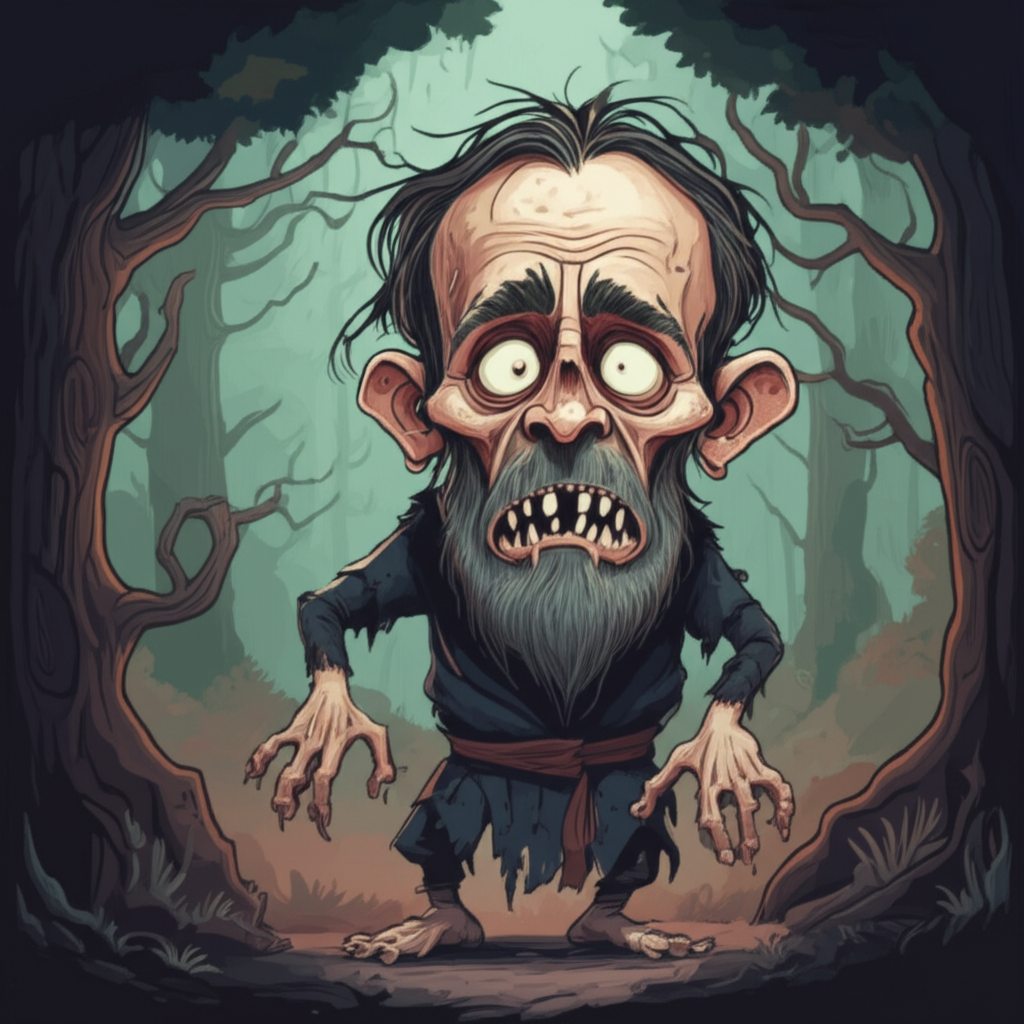
The wind, a relentless sculptor of ice and bone, howls through the ancient Norse lands, carrying tales as old as the glaciers that carved their fjords. Among these stories, whispered around crackling hearths during the long, unforgiving winters, is the legend of the Draugr and the dread that clings to the Forest of Shadows. These are not mere fables; they are echoes of a time when the world was a wilder, more mysterious place, and the line between the living and the departed was a fragile thing, easily blurred by fear and reverence for the unknown.
Echoes from a Harsh Land: Origins and Cultural Background
The myths of the Draugr and their shadowed haunts stem from the Norse people, a culture that flourished in the rugged, unforgiving landscapes of Scandinavia during the Viking Age (roughly 8th to 11th centuries CE). Life was a constant struggle against the elements, against scarcity, and often, against each other. Their world was permeated by a deep respect for nature’s immense power – the fury of storms, the vastness of the ocean, the impenetrable darkness of the deep forests.
The ancient Norse viewed the world as a complex tapestry woven with the threads of gods, giants, elves, and spirits. Death was not an end but a transition, and the realm of the dead, Hel, was a place of chilling finality for many, but not for all. Those who died ignominiously, or who were bound by powerful curses or unfinished business, could, in the stories, linger, their spirits tethered to the mortal world. This worldview fostered a keen awareness of the precariousness of life and the enduring presence of forces beyond human comprehension. The natural world, particularly its darker, more untamed aspects, was seen as teeming with unseen life and potent energies.
The Lingering Shade: The Draugr
The Draugr, as depicted in these ancient narratives, is a formidable and terrifying figure. It is not a gentle ghost but a reanimated corpse, a creature of immense strength and malevolent will. Imagine a figure clad in the tattered remnants of their burial shroud, their flesh cold and leathery, their eyes glowing with an unholy light, like embers in a dying fire. Their bodies might be swollen and discolored, bearing the marks of their demise, yet animated by an unnatural, unyielding life force.
Symbolically, the Draugr represents more than just a walking dead body. It embodies the lingering resentment of the deceased, the stubborn refusal to accept their fate, or the corruption that can befall even the mightiest when their earthly attachments or ambitions remain unfulfilled. They are often depicted as guardians of their buried treasures, their greed and possessiveness extending beyond the grave. Their strength is unnatural, their endurance boundless, and their touch is said to bring a chilling sickness. They are the embodiment of the fear of the grave, of the violation of death, and of the ultimate consequence of a life lived with malice or an unshakeable earthly tie.
Beneath the Canopy of Night: The Forest of Shadows
The Forest of Shadows, in these tales, is more than just a dense collection of trees. It is a place where sunlight struggles to penetrate, where ancient roots twist like skeletal fingers, and where an oppressive silence often reigns, broken only by the unsettling creak of branches or the distant cry of an unseen creature. It is a liminal space, a boundary between the known and the unknown, a realm where the veil between worlds thins.
Within this perpetually twilight realm, the Draugr are said to hold dominion. They might reside in ancient burial mounds, their spectral forms emerging from the earth to patrol their territory. The very air within the Forest of Shadows is depicted as heavy with a palpable dread, a chilling aura that saps the courage of any who dare to trespass. The trees themselves might seem to watch, their gnarled forms taking on menacing shapes in the periphery of vision. This forest serves as a physical manifestation of the fear of the unknown, of the wild places that humanity cannot fully conquer or understand, and of the lingering darkness that can exist even after life has departed.
A Tale of Trespass and Terror
Let us imagine, then, a traveler, perhaps a young warrior seeking glory or a desperate villager searching for lost livestock, who finds themselves lost as dusk descends upon the edges of the dreaded Forest of Shadows. The sun, a pale disc behind a thick shroud of clouds, offers little warmth. The path, once discernible, has vanished, swallowed by moss-covered stones and encroaching undergrowth. A gnawing unease begins to settle in the traveler’s gut.
As the darkness deepens, the wind begins to whisper, not with the familiar rustle of leaves, but with a sibilant, almost guttural sound. The trees, once silent sentinels, now seem to lean in, their branches like skeletal arms reaching out. The traveler quickens their pace, their heart pounding a frantic rhythm against their ribs. They hear a sound, a low groan, like the earth itself sighing in pain.
Suddenly, from the gnarled roots of an ancient, twisted oak, a figure begins to rise. It is a Draugr. Its form is gaunt, its skin stretched taut over bone, the color of old parchment. Patches of its burial shroud cling to its desiccated form, fluttering in the unnatural breeze. Its eyes, sunk deep within their sockets, gleam with a cold, blue luminescence, fixed upon the trespasser. A faint, foul odor, like stagnant water and grave soil, emanates from it.
The Draugr raises a hand, its fingers long and skeletal, tipped with yellowed, brittle nails. It moves with an unnerving, jerky gait, yet possesses a speed that belies its apparent decay. The traveler, paralyzed by a primal terror, can only stare as another figure emerges from a nearby burial mound, and then another. They are drawn by the scent of the living, by the violation of their slumber.
The Draugr speaks, its voice a dry, rasping whisper that seems to scrape against the very soul. It speaks not in coherent words, but in a series of moans and hisses, a language of the undead, a lament and a threat intertwined. It demands the traveler leave its domain, to return the silence and the darkness to its rightful place.
The traveler, summoning a desperate courage born of sheer survival instinct, turns and flees. The Draugr, with its unnatural strength, pursues. The sounds of its lumbering pursuit echo through the trees, the rustling of its shroud a chilling accompaniment to its labored groans. The forest itself seems to conspire against the traveler, roots tripping their feet, branches snagging their clothes. The very shadows appear to writhe, to take on the shapes of their pursuers.
If the traveler is fortunate, they might escape the clutches of the Draugr, bursting from the oppressive darkness of the Forest of Shadows into the relative safety of the open land, forever marked by the terrifying encounter. But for those who are not so lucky, their fate is to become another lost soul, their flesh to be claimed by the earth, their spirit to be bound, perhaps, to join the ranks of the Draugr, forever guarding the secrets of the Forest of Shadows.
Echoes of Meaning: Symbolism and Significance
To the ancient Norse, stories like these served a multitude of purposes. The Draugr and their shadowy domains likely represented a profound fear of death and the unknown that lay beyond it. They were a warning against disrespecting the dead, against disturbing ancient graves, and against the dangers of the untamed wilderness. The Draugr’s insatiable greed could also be seen as a commentary on the corrupting influence of wealth and earthly possessions.
Furthermore, these tales may have reinforced social order. Stories of the Draugr could serve as cautionary tales for those who strayed from the accepted norms of society or who harbored ill will, suggesting that such actions could lead to a tormented existence even after death. The overwhelming power of the Draugr, often depicted as overcoming even the strongest warriors, highlighted the humbling power of death and the forces that governed the natural and supernatural worlds. The Forest of Shadows, as a symbol, represented the primal fears associated with the dark, the wild, and the unseen, places where human dominion ended and the mysteries of existence began.
Modern Resonance: From Lore to Lens
In contemporary times, the allure of the Draugr and their eerie haunts has not diminished; it has simply transformed. These ancient myths have found new life in literature, film, and video games. From the chilling depictions of animated corpses in fantasy novels to the terrifying encounters with undead guardians in adventure games, the Draugr continues to capture the imagination. They are often reimagined as formidable adversaries, their spectral nature and supernatural strength providing a potent source of conflict and suspense. In cultural studies, the Draugr serves as a fascinating subject for understanding the enduring human fascination with death, the supernatural, and the deep-seated anxieties that have shaped our collective consciousness for millennia.
A Legacy of Storytelling
It is crucial to remember that the legends of the Draugr and the Forest of Shadows are traditional stories, woven from the fabric of ancient beliefs and cultural perspectives. As Muslims, we recognize that only Allah (God) is the true Creator and Sustainer of all existence. Our understanding of the world is grounded in the divine revelation and the teachings of Islam, which affirm the absolute oneness of Allah and the reality of His creation.
These ancient myths, however, offer us a valuable window into the minds and hearts of people who lived in a vastly different time. They speak to our shared human experience of wonder, fear, and the enduring need to make sense of the world around us. The power of these stories lies not in their literal truth, but in their ability to evoke emotion, to spark imagination, and to remind us of the rich tapestry of human heritage and the timeless tradition of storytelling that connects us across generations. They are a testament to the enduring power of narrative to explore the depths of human experience, even as we hold fast to our faith and our understanding of the one true God.


