fufufafa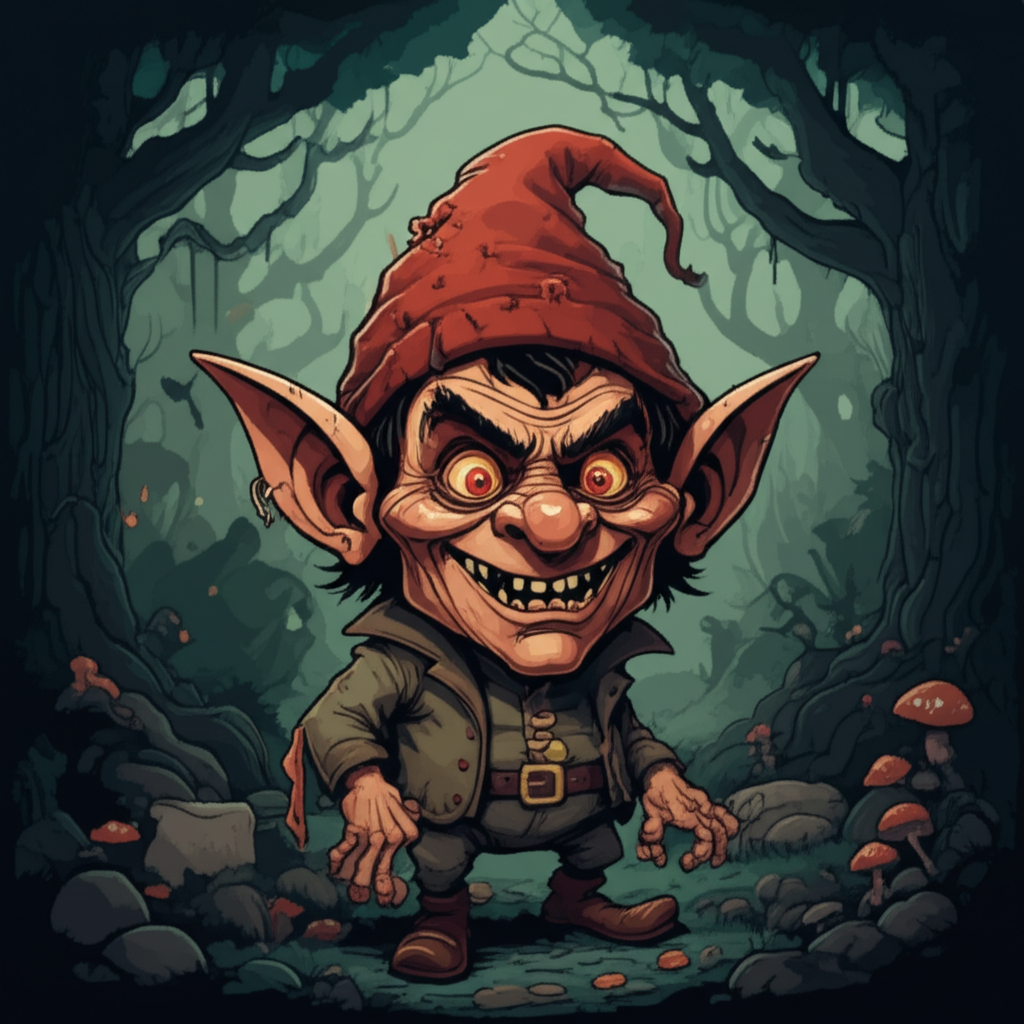
In the mist-shrouded landscapes of the British Isles, particularly among the ancient folk of the Scottish Borders and Northern England, tales have long been spun of creatures that lurk in the liminal spaces between the known and the unknown. Among these spectral inhabitants, the Redcap stands as a particularly chilling figure, a being woven into the fabric of folklore, a testament to the deep-seated anxieties and primal fears of a bygone era. This is not a chronicle of divinity or a guide to unseen forces, but rather a narrative passed down through generations, a cultural artifact of how our ancestors grappled with the mysteries of the world around them.
The stories of the Redcap emerge from a time when the natural world held a far more potent and immediate sway over human lives. Imagine a landscape of rugged moors, dense, ancient forests, and isolated farmsteads, where the veil between the physical and the spiritual felt thinner. This was a world where the harsh realities of survival—the unpredictable weather, the threat of wild animals, and the ever-present specter of illness and conflict—were met with a rich tapestry of myth and legend. For people living in such environments, the world was alive with unseen forces, often capricious and demanding. The forests, in particular, were places of profound mystery, both a source of sustenance and a potential realm of danger. It was within these shadowy, untamed expanses that the Redcap found its home, a cautionary figure born from a profound respect, and perhaps a healthy fear, of the wild.
The Redcap, as depicted in these traditional tales, is a creature of grim aspect and malevolent intent. Its most distinguishing feature, and the source of its name, is the crimson cap it is said to wear. This cap is not merely an adornment; folklore suggests it is perpetually stained with the blood of its victims. Descriptions often paint the Redcap as a diminutive, wizened figure, hunched and gnarled, with sharp claws or talons and piercing, often red, eyes that gleam with a predatory light. It is a being associated with places of historical violence or tragedy – old battlefields, ruined castles, or desolate stretches of moorland where bloodshed has occurred. The symbolic attribute of its blood-soaked cap speaks to a primal association with violence and death, a chilling reminder of the fragility of life and the potential for lingering echoes of past atrocities. Its appearance is meant to evoke a sense of dread, a physical manifestation of the fear of encountering something ancient and inherently hostile.
The narrative of the Redcap typically unfolds as a stark warning, a story designed to keep the unwary from straying too far into dangerous territories. Imagine a young shepherd, perhaps named Ewan, whose flock has wandered too close to the edge of the notorious Forest of Shadows. This forest, whispered about in hushed tones, was a place where the trees grew unnaturally close, their branches intertwining to create a perpetual twilight, and where strange sounds seemed to emanate from the very earth. Ewan, eager to retrieve his lost sheep and perhaps a little too proud to admit his fear, ventures into the gloom. As he pushes deeper, the familiar sounds of the moor recede, replaced by an unsettling silence punctuated by the rustling of unseen things. He spots a flicker of movement, a dark shape darting between the ancient trunks. Then, he sees it – a small, hunched figure with a dark, blood-red cap pulled low over its eyes. The Redcap emerges from the shadows, its eyes fixing on Ewan with an unnerving intensity. The air grows cold, and a low growl, like stones grinding together, emanates from the creature. Ewan, his heart pounding, remembers the old tales: the Redcap feeds on fear and violence. He knows he must not show terror, nor should he engage in any act that might spill blood. Instead, he forces himself to stand his ground, his gaze steady, though his insides churn. He mutters a prayer, not of supplication to the creature, but of solace for himself. The Redcap, sensing perhaps a lack of the sustenance it craves, or maybe deterred by the unseen protection Ewan invokes, lets out a guttural hiss and melts back into the deepening shadows of the forest, leaving Ewan trembling but unharmed, with a profound respect for the boundaries between the known and the fearsome unknown.
This story, and others like it, served multiple purposes for the communities that told them. The Redcap could be seen as a personification of the dangers inherent in the wild, a way to explain the unsettling occurrences that befell those who ventured unprepared into the untamed. It represented the primal fear of the unknown, the lurking dangers that lay beyond the safety of the hearth. The blood-red cap, in particular, might symbolize the lingering violence of history, the idea that certain places are marked by past tragedies, and that these echoes can manifest in spectral forms. The creature’s reliance on fear and bloodshed could also be interpreted as a cautionary tale about the consequences of succumbing to one’s baser instincts or engaging in acts of violence. It was a way to instill a sense of caution, respect for nature, and a moral compass in the young.
In modern times, the Redcap, like many figures from folklore, has found new life in the realm of imagination and storytelling. It has been reimagined in literature, often as a formidable antagonist in fantasy novels set in dark, atmospheric landscapes. In video games, its menacing presence might be utilized to create challenging encounters or to imbue a virtual world with a sense of ancient peril. Cultural studies scholars analyze these myths as windows into the beliefs, anxieties, and social structures of past societies. The Redcap, stripped of its supposed supernatural agency, becomes a valuable artifact for understanding the human psyche and the enduring power of narrative.
It is crucial to reiterate that the Redcap is a product of folklore and imagination, a traditional story passed down through the ages. It is not a being to be believed in, worshipped, or sought after. As Muslims, we recognize that only Allah (God) is the true Creator and Sustainer of all existence, the One in whom all power and dominion reside. These ancient tales, while fascinating from a cultural and historical perspective, do not diminish the absolute truth of Tawhid, the oneness of God.
The enduring appeal of the Redcap lies in its ability to tap into universal human emotions: the fear of the dark, the respect for the power of nature, and the fascination with the unknown. The narrative of the Redcap, like countless other myths and legends, is a testament to the rich tapestry of human storytelling, a tradition that allows us to explore our fears, understand our past, and marvel at the boundless creativity of the human imagination. These stories, though born of ancient whispers and shadowed glades, continue to resonate, reminding us of the enduring power of narrative and the diverse ways in which humanity has sought to make sense of the world.