
 fufufafa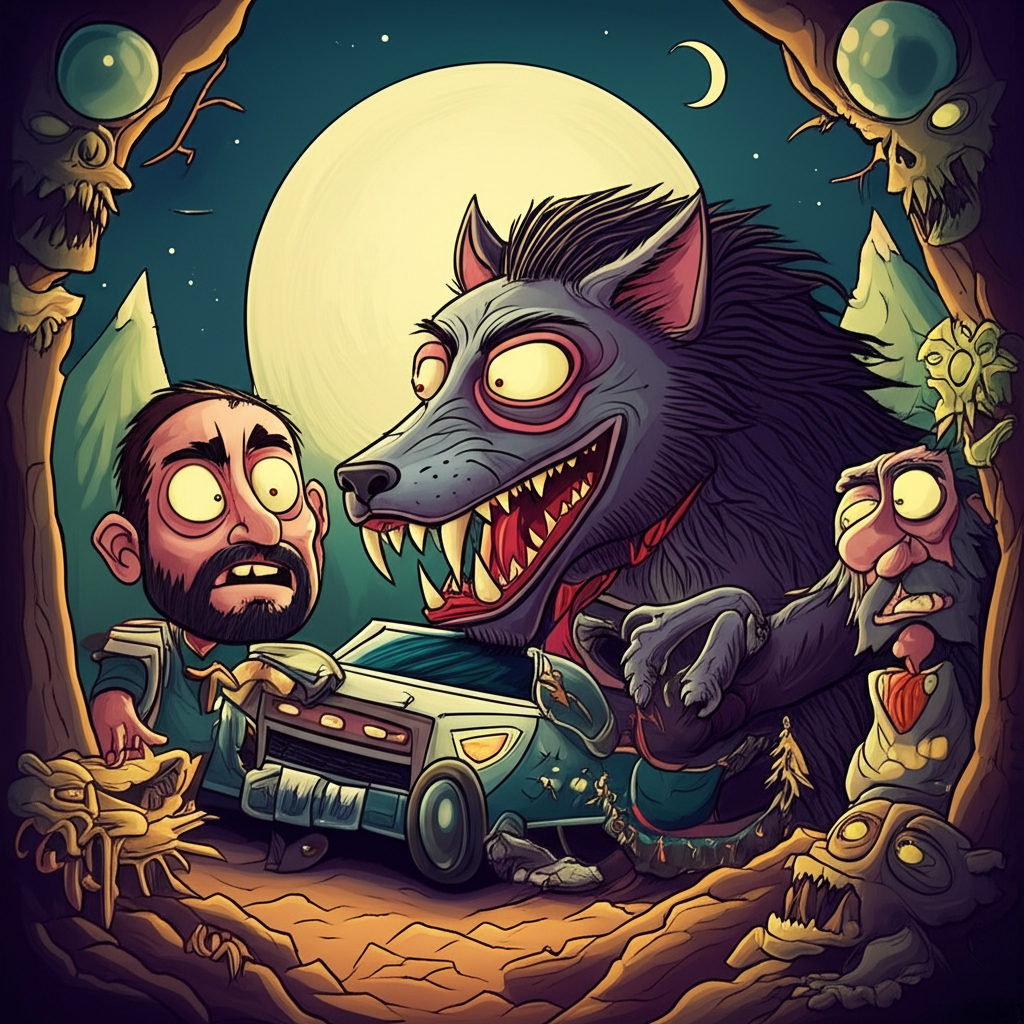
Introduction: Echoes from the North
Deep within the frost-bitten sagas and poetic Eddas of ancient Scandinavia lies a tapestry of myths, legends, and heroic tales that once shaped the worldview of a formidable people. This article delves into one such powerful narrative: the binding of Fenrir, the monstrous wolf, and the profound, far-reaching consequences that ripple through the very fabric of the Norse cosmos, touching upon the grim domain of Helheim itself. It is crucial to understand from the outset that this is a traditional story, a product of human imagination from a bygone era, told by ancient people to make sense of their world, their fears, and their destinies. These tales are not meant to be believed, worshipped, or practiced as truth, but rather studied for their immense cultural, historical, and educational value.
Origins and Cultural Background: A World Forged in Ice and Fire
The myths surrounding figures like Fenrir emerged from the pre-Christian societies of ancient Scandinavia, primarily during the Viking Age (roughly 8th to 11th centuries CE). This was a period defined by harsh northern climes, seafaring voyages, and a warrior culture that valued strength, courage, and a pragmatic acceptance of fate. For these people, the world was a dynamic, often perilous place, alive with both benevolent and malevolent forces. Their cosmology was intricate, envisioning nine distinct realms connected by the colossal ash tree, Yggdrasil.
Life was viewed as a constant struggle against the untamed forces of nature and chaos, often personified by the Jotnar (giants) and monstrous beings. The gods, the Æsir and Vanir, were powerful but not infallible; they too were bound by the threads of fate, or wyrd, which dictated an inevitable cycle of creation, destruction, and rebirth – a grand finale known as Ragnarök. These stories provided not just entertainment, but also moral guidance, explanations for natural phenomena, and a framework for understanding their place in a vast, often unforgiving universe. They reflected a society intimately connected to the raw power of the wilderness, where a lone wolf or a sudden storm could spell doom.
Fenrir: The Embodiment of Unchecked Chaos
At the heart of our tale stands Fenrir, a creature of chilling renown. Fenrir is not merely a large wolf; he is a primal force, a symbol of untamed, destructive power. Born of the trickster god Loki and the giantess Angrboda, Fenrir is one of three monstrous siblings, alongside Jörmungandr, the Midgard Serpent, and Hel, the ruler of the underworld realm of Helheim. Each of Loki’s children represented a profound threat to the established order of the cosmos, destined to play a pivotal role in its ultimate downfall.
From his earliest days, Fenrir grew at an alarming rate, his size and ferocity surpassing any known beast. The gods of Asgard, particularly Odin, observed his growth with growing unease. He was not just a predator; he was an embodiment of the chaotic, entropic forces that perpetually threatened the ordered cosmos. His very existence was a harbinger of the end, a living prophecy of the destruction that awaited the gods during Ragnarök. He symbolized the ultimate, uncontrollable threat, a manifestation of the fear of the wild, the inevitable, and the consequences of unchecked power. The binding of Fenrir, therefore, was not merely an act of containment but a desperate attempt to delay the inevitable, a symbolic struggle against the very fabric of destiny.
The Binding of Fenrir: A Desperate Act and its Ripple Effect
The narrative of Fenrir’s binding is a testament to the gods’ foresight and their desperate measures to preserve their reign. As Fenrir grew to an immense size, his jaws capable of swallowing the sun, the Æsir became increasingly concerned. Prophecies whispered of his destiny to devour Odin himself during Ragnarök, sealing the doom of the chief god.
Initially, the gods attempted to bind Fenrir with chains of immense strength, challenging him to test his might against them. Twice, they forged mighty fetters: Læding and then Drómi, each thicker and more formidable than the last. With deceptive ease and a grin that stretched his massive jaws, Fenrir snapped both chains, demonstrating a power that sent shivers down the gods’ spines. Their attempts to physically overpower him had failed, confirming their worst fears.
Desperate, Odin dispatched messengers to the dark elves and dwarves in the subterranean realm of Svartalfheim, renowned for their unparalleled craftsmanship and arcane knowledge. He commissioned them to forge a bond that could hold the unholdable. The dwarves, masters of impossible creations, crafted Gleipnir. It was a ribbon, thin and silken, yet endowed with an unimaginable strength derived from six mythical ingredients: the sound of a cat’s footfall, the beard of a woman, the roots of a mountain, the sinews of a bear, the breath of a fish, and the spittle of a bird. These are things that do not exist, making Gleipnir a bond woven from the non-existent, and thus unbreakable by any earthly force.
The gods then lured Fenrir to the island of Lyngvi in the great lake Ámsvartnir, under the pretense of another test of strength. Fenrir, ever proud, sensed the trickery in the seemingly fragile ribbon. He refused to be bound unless one of the gods would place their hand in his mouth as a pledge of good faith. Only Týr, the brave and honorable god of war and justice, dared to step forward. With a grim resolve, he placed his right hand into the wolf’s cavernous maw.
As Gleipnir was fastened around Fenrir, the more he struggled, the tighter and stronger the bond became. The gods rejoiced, but Fenrir, realizing the deceit, clamped his jaws shut, severing Týr’s hand at the wrist. Týr’s sacrifice was immense, a testament to the cost of containing such a primordial threat. Fenrir was then tethered to a rock, Gioll, deep within the earth, and a sword was thrust into his mouth to keep his jaws perpetually agape, preventing him from biting. From his throat issued a never-ending howl, a chilling promise of the doom he would unleash when he finally broke free.
The binding of Fenrir, while a temporary victory for the Æsir, set in motion a chain of irreversible consequences that extended far beyond the immediate moment. It solidified the gods’ deep-seated fear of Loki’s progeny, a fear that had already led to the casting of Jörmungandr into the sea and the banishment of Hel to rule over the eponymous realm of Helheim. This series of actions – the isolation of Hel, the casting out of Jörmungandr, and the brutal binding of Fenrir – were all desperate attempts to control the forces of chaos and postpone the prophesied end. Yet, these very acts cultivated a profound resentment among Loki and his children, fueling the inevitable conflict of Ragnarök. The "Aftermath of Helheim," in this context, refers not to events directly from Helheim, but to the broader, interconnected consequences stemming from the gods’ dealings with Loki’s monstrous offspring, of whom Hel is a key figure. The binding of Fenrir was a part of this larger narrative of preemptive strikes against destiny, ultimately contributing to the bitterness and the path towards the final cosmic battle, where Fenrir would indeed break his bonds, devour Odin, and exact his terrible revenge. The silence of the gods, after Týr’s sacrifice, was a heavy one, pregnant with the knowledge that this was merely a reprieve, not a solution.
Symbolism and Meaning: A Primal Struggle
To the ancient Norse, the myth of Fenrir’s binding was rich with symbolism. It represented humanity’s enduring struggle against the forces of chaos and destruction that constantly threaten to overwhelm order. Fenrir embodies the untamed, primal aspects of nature, the destructive potential that lies beyond human control. His inevitable breaking free symbolized the acceptance of fate – that even the gods could not ultimately escape their destiny.
Týr’s sacrifice, the deliberate loss of his hand, represents the high cost of maintaining order and peace. It speaks to the idea that great good often requires great personal sacrifice. The gods’ use of trickery and deceit, though successful, also carries a moral weight, highlighting the difficult choices leaders face when confronting overwhelming threats. Furthermore, the myth explores the theme of prophecy and the futility of trying to defy a predetermined fate, for Fenrir is destined to break free and play his role in Ragnarök, despite the gods’ best efforts. It’s a powerful narrative about the cyclical nature of existence, where even triumph is shadowed by the certainty of eventual downfall and renewal.
Modern Perspective: The Wolf’s Enduring Howl
Today, the myth of Fenrir continues to captivate and resonate across various cultural platforms. In modern literature, he serves as an archetypal monstrous antagonist, a symbol of overwhelming power and the dark side of nature. Hollywood blockbusters, particularly within the Marvel Cinematic Universe, have drawn heavily from Norse mythology, reinterpreting Fenrir as a formidable beast that challenges heroes. Video games, such as the God of War series, reimagine these ancient sagas, placing players in the shoes of gods confronting these legendary creatures, often exploring deeper themes of fatherhood, fate, and rebellion.
Academically, the myth is studied for its insights into ancient Norse worldview, psychology, and societal values. It offers a lens through which to understand human fears of the unknown, the inevitable, and the consequences of political maneuvering. Fenrir’s story, far from being forgotten, has transcended its origins, evolving into a timeless tale that continues to inspire and provoke thought about destiny, sacrifice, and the enduring power of chaos.
Conclusion: A Legacy of Imagination
The binding of Fenrir, and the wider narrative encompassing the "Aftermath of Helheim" and the fate of Loki’s children, stands as a powerful testament to the human imagination. These ancient Norse myths, with their vibrant characters and dramatic conflicts, offer invaluable insights into the cultural heritage of a bygone era. They are not historical accounts in the factual sense, nor are they divine revelations, but rather profound cultural stories crafted by people seeking to understand the world around them.
As Muslims, we recognize that true worship and belief are reserved for Allah alone, the One True Creator and Sustainer of the heavens and the earth, who is beyond all comparison and human conception. These mythological tales, however, serve a different, yet equally important, purpose: they enrich our understanding of diverse human cultures, showcasing the universal human impulse to narrate, to explain, and to find meaning through storytelling. The enduring legacy of Fenrir, a creature of myth, continues to howl through the ages, reminding us of the timeless power of imagination and the rich tapestry of human cultural heritage.


