
 fufufafa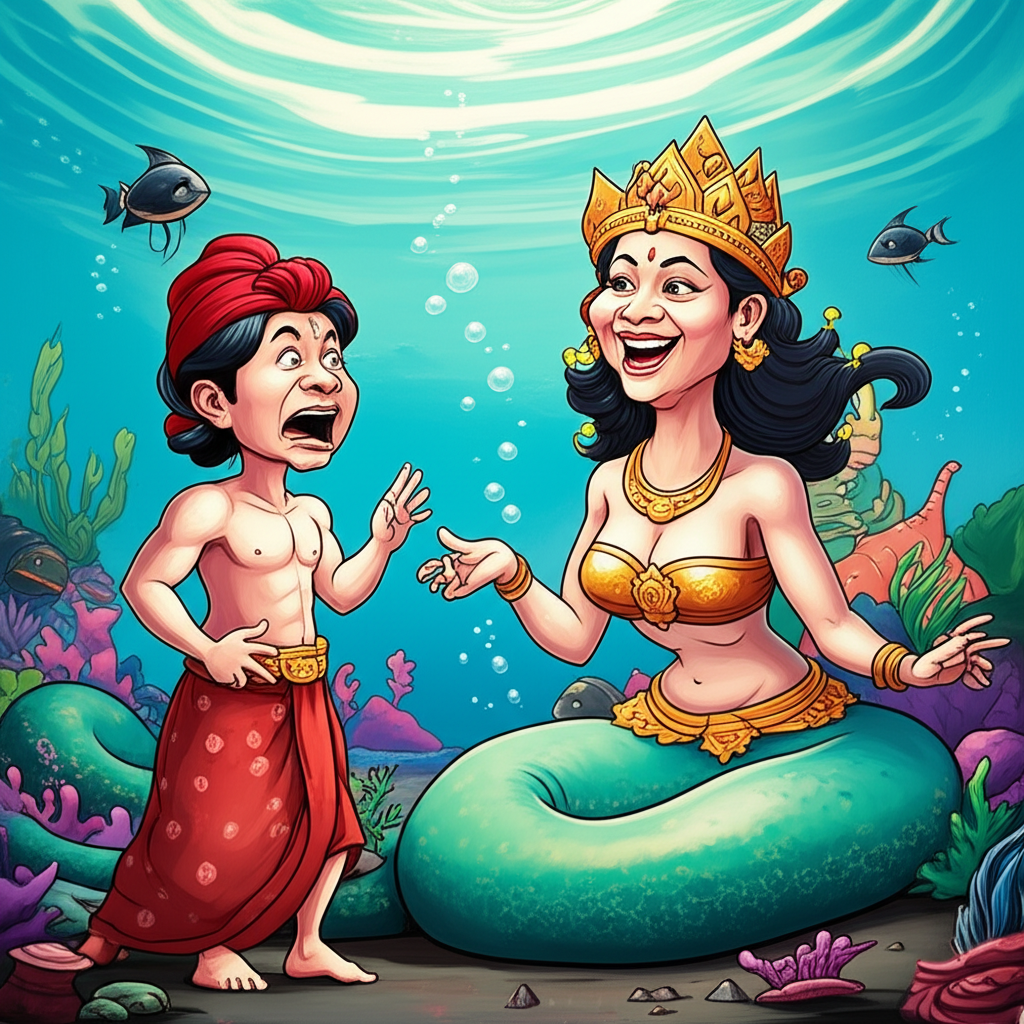
Introduction:
The tale of Nyai Blorong, the Serpent Queen of the Southern Sea, is a captivating legend deeply rooted in the folklore of Java, an island in the Indonesian archipelago. Passed down through generations, this story, like all myths, is a product of ancient storytelling and cultural understanding. It offers a window into the beliefs, anxieties, and values of the Javanese people. This narrative, a product of human imagination, should be understood as a cultural artifact, not as a reflection of reality or a call to worship. It’s a story woven from the threads of history, environment, and the human need to explain the mysteries of the world.
Origins and Cultural Background:
The era in which the legend of Nyai Blorong flourished was one of kingdoms, mysticism, and a deep connection to the natural world. This was a time when the boundaries between the seen and unseen were blurred, when spirits and deities were believed to inhabit the earth, the sea, and the sky. The Javanese of this period, often living in close proximity to the volatile and powerful forces of nature – volcanoes, earthquakes, and the vast, unpredictable ocean – held a worldview profoundly influenced by animism and ancestor worship. They believed in the presence of dhanyang (spirits) residing in natural places, the sacredness of certain objects, and the importance of maintaining harmony with the spiritual realm. The southern coast of Java, with its treacherous waves and unpredictable currents, was particularly feared and revered. It was seen as a place of immense power, a gateway to the unknown, and a domain ruled by powerful entities. This environment shaped their understanding of the world, fostering a sense of respect for the forces they could not control and a reliance on stories and rituals to navigate the uncertainties of life.
Character / Creature Description:
Nyai Blorong, as the name suggests ( Nyai meaning “Lady” or “Madam” and Blorong referring to the “striped” or “spotted” scales of a snake), is typically depicted as a beautiful woman with the lower body of a serpent. Her beauty is often described as captivating, almost otherworldly, capable of both enchanting and terrifying those who behold her. Her skin is said to shimmer like polished gold, and her eyes possess a hypnotic power. The serpentine part of her form signifies a connection to the earth, to the depths of the ocean, and to the primal forces of nature. She is often associated with wealth, as gold and jewels are frequently depicted in her surroundings, representing the riches she holds within her watery realm. However, this wealth is often linked to misfortune, serving as a cautionary tale against greed and temptation. The serpent form itself symbolizes transformation, power, and the cyclical nature of life and death. Symbolically, Nyai Blorong is a representation of the untamed power of the ocean, the seductive allure of wealth, and the unpredictable nature of fate. She is a reminder of the forces that lie beyond human control and the consequences of violating the natural order.
Main Story / Narrative Retelling:
The tale of Nyai Blorong often begins with a fisherman, a farmer, or a merchant, seeking wealth or adventure. Driven by greed or desperation, they might venture too close to the Southern Sea, known as the abode of the serpent queen.
In one version, a fisherman, driven by the desire to escape poverty, casts his nets into the turbulent waters, ignoring the warnings of the villagers. One day, his nets begin to bulge with an unusual catch, shimmering gold coins and precious jewels. Overjoyed, he begins to take the treasures, ignoring a whispering voice in the wind, a voice warning him of a price he must pay. Soon, a vision appears before him: a radiant woman with a serpentine lower body, Nyai Blorong herself. She demands a sacrifice in return for her gifts, usually a promise of loyalty or the life of a loved one.
Tempted by riches, the fisherman agrees. He returns to his village a wealthy man, his life transformed. But the agreement with Nyai Blorong casts a shadow over his happiness. He grows paranoid, fearing the inevitable reckoning. The serpent queen begins to claim her due. The fisherman might lose his fortune, his family, or even his life. In other versions, the hero might be a young man, lured by Nyai Blorong’s beauty. He falls deeply in love with her, only to discover the true, monstrous nature of his beloved, and the tragic consequences of his infatuation. Another story speaks of a king who, in a time of great need, seeks Nyai Blorong’s help. He promises her anything in return for victory in battle. After winning, he finds himself bound to the serpent queen, trapped by his own promises. These stories vary, but they all share a common thread: the encounter with Nyai Blorong serves as a cautionary tale, warning against the dangers of greed, pride, and the allure of forbidden power.
Symbolism and Meaning:
The story of Nyai Blorong served multiple functions within Javanese society. Firstly, it offered an explanation for the unpredictable nature of the Southern Sea. The ocean, with its powerful currents, sudden storms, and mysterious depths, was a source of both sustenance and fear. Nyai Blorong personified this power, providing a narrative framework for understanding the dangers of the sea and the consequences of disrespecting it.
Secondly, the myth served as a moral compass. The fisherman’s downfall, the young man’s heartbreak, and the king’s imprisonment all served as cautionary tales, warning against the dangers of greed, ambition, and breaking promises. Nyai Blorong became a symbol of temptation, highlighting the importance of humility, integrity, and the consequences of pursuing wealth or power at any cost.
Thirdly, the story could also reflect societal anxieties and social hierarchies. The association of Nyai Blorong with wealth and power could be a reflection of the inequalities present in Javanese society, where access to resources was often unevenly distributed. The serpent queen could represent the allure and danger of the elite, the potential for corruption, and the consequences for those who sought to climb the social ladder through illicit means.
Modern Perspective:
Today, the legend of Nyai Blorong continues to resonate in Indonesian culture. She appears in numerous forms, from traditional wayang kulit (shadow puppet) performances to modern novels, movies, and video games. The story is often adapted to reflect contemporary social issues. Some interpretations focus on the environmental message, highlighting the importance of protecting the ocean and its resources. Others explore the themes of female empowerment, interpreting Nyai Blorong as a symbol of female power and independence. In literature, Nyai Blorong can be a tragic figure, a victim of circumstance, or a complex antagonist. In movies and games, she often becomes a visually striking character, a representation of both beauty and danger. The enduring popularity of the myth demonstrates its continued relevance and the enduring power of storytelling in shaping cultural understanding.
Conclusion:
The legend of Nyai Blorong is a vibrant thread in the rich tapestry of Javanese cultural heritage. It is a story born from the imaginations of ancient people, crafted to explain the world around them, impart moral lessons, and explore the complexities of human nature. This tale, like all myths, should be understood as a cultural artifact, a product of human creativity and the enduring power of storytelling.
As Muslims, we recognize that the ultimate source of all creation and power rests solely with Allah, the One God. The stories of Nyai Blorong, while fascinating and culturally significant, do not represent our beliefs. They are a reflection of a different time, a different understanding of the world. By studying these narratives, we gain insight into the diverse expressions of human imagination and the power of stories to shape our understanding of the world. We celebrate the beauty of cultural heritage, the power of imagination, and the enduring human need to create narratives that connect us to the past, the present, and the mysteries of life itself.


