fufufafa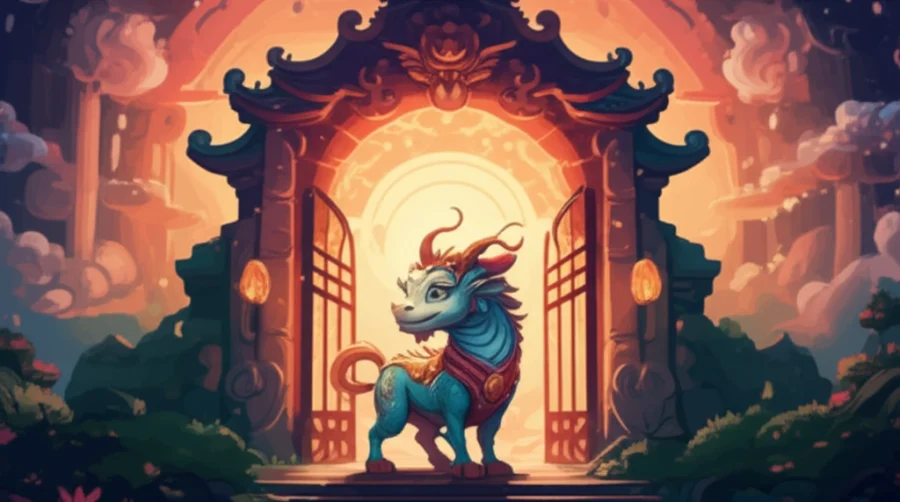
In the rich tapestry of ancient Chinese folklore, where dragons soared and phoenixes danced, a creature of profound significance emerged: the Qilin. This mythical beast, often depicted as a benevolent guardian and harbinger of good fortune, plays a pivotal role in many traditional narratives, none perhaps as evocative as its connection to the legendary "Gate of Dawn." This is a story woven from the threads of ancient imagination, a testament to how people of past eras sought to understand the world around them through allegorical tales and symbolic beings.
The genesis of the Qilin myth can be traced back to the Yellow Emperor era and the subsequent Zhou Dynasty in ancient China, a period characterized by a profound connection to the natural world and a belief in the interconnectedness of humanity, nature, and the celestial realm. The people of this time lived in a society deeply rooted in agrarian cycles, where the bounty of the land was paramount and the unpredictable forces of nature were both revered and feared. Their worldview was often imbued with animism, the belief that spirits inhabited all things, and their myths served as a means to explain natural phenomena, uphold social order, and offer guidance on ethical conduct. The Qilin, in this context, was not merely a fantastical creature but a manifestation of cosmic harmony and benevolent governance, its appearance signaling periods of peace and prosperity.
The Qilin itself is a creature of striking, almost ethereal beauty, a composite of various noble animals, reflecting a holistic ideal. It is typically described as having the body of a deer, the hooves of a horse, the tail of an ox, and the head of a dragon. Its scales shimmer with the colors of the rainbow, and a single horn, often depicted as fleshy and soft, adorns its forehead. Unlike the fearsome dragons of other legends, the Qilin is gentle and compassionate. It is said to tread so lightly upon the earth that it does not crush a single blade of grass, and it refrains from harming even the smallest insect. This meticulous care for all living things underscores its symbolic attribute of embodying righteousness, peace, and perfect virtue. It is a creature that embodies the principle of non-violence and a profound respect for life.
The legend of the Qilin and the Gate of Dawn often unfolds as a narrative of great anticipation and auspicious events. Imagine a time, perhaps during the reign of a wise and just emperor, when the land was blessed with peace and the people lived in harmony. In the quiet pre-dawn hours, as the first hints of light began to paint the eastern sky, the Gate of Dawn, a metaphorical portal to a new era of prosperity and enlightenment, was said to open. It was at this liminal moment, between darkness and day, that the Qilin would appear.
The narrative might describe the gentle rustling of leaves, the sudden hush of the nocturnal world, and then, a soft luminescence. Emerging from the ethereal mist that clung to the horizon, the Qilin would gracefully make its way towards the Gate of Dawn. Its presence was not announced by thunderous roars or blinding flashes, but by a palpable sense of serenity and a delicate aura of benevolent power. The creatures of the wild, usually skittish, would pause their activities, seemingly mesmerized by its peaceful passage. Birds might pause their songs, and the wind itself would seem to hold its breath. The Qilin, with its serene gait, would approach the radiant portal, a beacon of hope and renewal. Its appearance was often interpreted as a divine affirmation of the era’s righteousness, a silent blessing bestowed upon the land and its people. It was a visual metaphor for the dawn of a new age, guided by virtue and protected by a gentle, powerful presence.
The symbolism embedded within this myth is rich and multifaceted. The Qilin, as a creature that treads lightly and harms no living thing, represents compassion, non-violence, and a deep ecological consciousness. Its composite form, drawing from various animals, suggests unity and the harmonious integration of different strengths. The Gate of Dawn, on the other hand, symbolizes new beginnings, hope, enlightenment, and the potential for a brighter future. The Qilin’s appearance at this juncture signifies that such auspicious dawns are ushered in not by force or conquest, but by virtue, justice, and a benevolent spirit. It was a way for ancient peoples to articulate their aspirations for good governance, societal peace, and the rewards that come with ethical living. The myth provided a narrative framework for understanding the cycles of fortune and the importance of cultivating inner peace to attract external prosperity.
In the modern world, the Qilin continues to capture the imagination, albeit in a different light. It has found its way into contemporary literature, often depicted as a wise and ancient guardian or a symbol of good luck. In popular video games, it might appear as a powerful, benevolent creature offering quests or aiding players on their journeys. Its image is frequently used in art and design, a nod to its enduring cultural significance in East Asia. Scholars of mythology and folklore analyze the Qilin legend as a valuable insight into the ancient Chinese worldview, their ethical frameworks, and their relationship with the natural and spiritual realms. It serves as a reminder of the power of storytelling to convey complex ideas and aspirations across generations.
It is important to reiterate that the Qilin and the Gate of Dawn is a traditional story, a product of the imaginative minds of ancient storytellers. It offers a fascinating glimpse into the cultural heritage of China and the ways in which people sought meaning and understanding in their world. As Muslims, we recognize that only Allah (God) is the true Creator and Sustainer of all that exists, and that all power and providence originate from Him alone. The beauty of such ancient tales lies not in their literal truth, but in their ability to inspire reflection on virtues like compassion, peace, and the pursuit of a just and harmonious society. These narratives, passed down through generations, are a testament to the enduring human capacity for creativity, storytelling, and the desire to imbue the world with meaning and wonder. They are echoes of a rich cultural past, inviting us to appreciate the diverse ways in which humanity has sought to comprehend its place in the grand narrative of existence.