fufufafa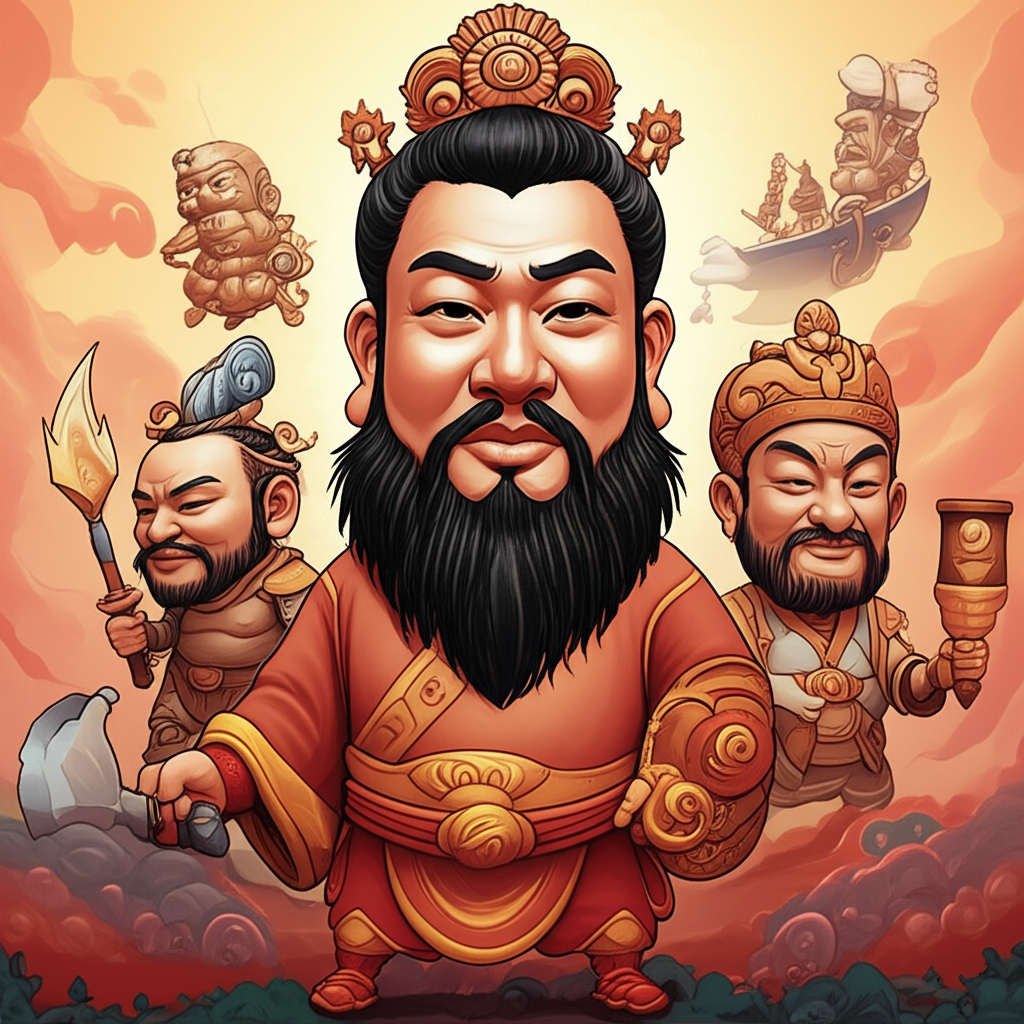
The legend of Zhurong, and the Heavenly Axe he wielded, echoes from the mists of ancient Chinese mythology. This is a story passed down through generations, a vibrant tapestry woven from the threads of folklore, designed to explain the world and humanity’s place within it. It’s a narrative rich in symbolism and cultural significance, a testament to the imaginative power of the people who first told it. This account is presented for cultural and historical understanding only, recognizing that it is a traditional story and not a statement of fact.
Origins and Cultural Background:
The myth of Zhurong originates in ancient China, likely taking root during the formative periods of Chinese civilization, perhaps even predating the Xia Dynasty (c. 2070-1600 BCE), although specific dating is difficult. The society that birthed this legend was deeply connected to the natural world, their lives intrinsically linked to the cycles of agriculture and the unpredictable forces of weather. They lived in a world where the boundaries between the physical and spiritual were blurred, where mountains could house gods and rivers could be pathways to other realms.
The ancient Chinese held a polytheistic worldview, believing in a vast pantheon of deities, spirits, and ancestors that influenced every aspect of their lives. Natural phenomena like fire, water, wind, and thunder were often personified as powerful gods or spirits, each with their own domain and responsibilities. This pantheon wasn’t necessarily seen as all-powerful or benevolent; rather, they were figures to be respected, appeased, and sometimes feared. Understanding the will of these deities was crucial for ensuring a prosperous harvest, avoiding natural disasters, and maintaining harmony within the community. The Zhurong myth, therefore, reflects this deep-seated belief in the power of nature and the existence of supernatural beings that shaped the world.
Character Description:
Zhurong is often depicted as the god of fire and the south, a powerful figure associated with light, warmth, and civilization. He is not merely a destructive force; fire, in ancient Chinese thought, was also seen as essential for cooking, crafting, and illuminating the darkness. Zhurong, therefore, represents both the potential for destruction and the life-giving properties of fire.
His appearance varies across different accounts, but he is generally described as a formidable warrior, often adorned in red armor and wielding a magnificent axe. This axe, the Heavenly Axe, is no ordinary weapon. It is an artifact of immense power, capable of cleaving mountains, summoning storms, and controlling the very essence of fire. The axe symbolizes Zhurong’s authority, his ability to command the elements, and his role as a protector of his domain. The color red, prominently associated with him, represents not only fire but also auspiciousness, prosperity, and good fortune in Chinese culture.
Symbolically, Zhurong embodies traits such as courage, strength, and leadership. He is seen as a figure who brought fire to humanity, enabling them to cook food, forge tools, and defend themselves against the wild. He is also associated with the southern direction, which in Chinese cosmology is linked to summer, growth, and abundance.
Main Story / Narrative Retelling:
In the dawn of time, when the world was still young and shrouded in darkness, humanity struggled to survive. They huddled in caves, shivering in the cold, and ate raw food, constantly threatened by wild beasts. The gods, observing their plight, felt a sense of pity. Among them was Zhurong, a valiant and compassionate deity.
Seeing the misery of the humans, Zhurong descended from the heavens, carrying with him the Heavenly Axe. He traveled south, towards a region perpetually enveloped in twilight. There, he found a vast, untamed forest filled with towering trees and dangerous creatures. With a mighty swing of the Heavenly Axe, Zhurong struck the earth. Sparks flew, and a great conflagration erupted, the first fire to grace the world.
The flames spread rapidly, illuminating the darkness and driving away the beasts. The humans, initially terrified, soon realized the power of the fire. They gathered around it, feeling its warmth and watching in amazement as Zhurong taught them how to control it. He showed them how to cook food, making it more palatable and nutritious. He taught them how to forge tools, enabling them to hunt and build shelters.
However, Zhurong’s gift was not without its dangers. He warned the humans to respect the fire, to use it wisely, and to never take it for granted. He told them that if they abused its power, it would turn against them, consuming everything in its path.
Zhurong remained with humanity for a time, guiding them and helping them to build a better life. He then ascended back to the heavens, leaving behind the legacy of fire and the responsibility of wielding its power wisely. The Heavenly Axe, however, remained a symbol of his presence, a reminder of the gift he had bestowed upon humanity.
Symbolism and Meaning:
The myth of Zhurong and the Heavenly Axe carries profound symbolic weight. The gift of fire represents the dawn of civilization, the moment when humanity gained control over its environment and began to shape its own destiny. It symbolizes progress, innovation, and the ability to overcome adversity.
The Heavenly Axe represents the power to transform the world, but also the responsibility that comes with such power. It serves as a reminder that even the most beneficial forces can be destructive if misused. The story emphasizes the importance of balance, respect for nature, and the ethical use of knowledge and technology.
For the ancient Chinese, the myth of Zhurong also served as a way to explain the natural world. It provided a narrative framework for understanding the origins of fire, the dangers of uncontrolled flames, and the importance of respecting the elements. It also reinforced the values of courage, leadership, and compassion, embodied by the figure of Zhurong himself.
Modern Perspective:
The legend of Zhurong continues to resonate in modern culture, albeit in different forms. He appears in various video games, often as a powerful fire-based character or boss. His story is retold in children’s books and animated series, introducing new generations to the rich tapestry of Chinese mythology.
In literature and cultural studies, Zhurong serves as a subject of academic inquiry, offering insights into the beliefs, values, and worldview of ancient Chinese society. Scholars analyze the myth for its symbolic content, its historical context, and its enduring relevance to contemporary issues such as environmental stewardship and the ethical use of technology.
Furthermore, the image of Zhurong and the Heavenly Axe has become a popular motif in Chinese art and design, appearing on everything from traditional paintings to modern graphic designs. This demonstrates the enduring appeal of the myth and its continued influence on Chinese cultural identity.
Conclusion:
The tale of Zhurong and the Heavenly Axe is a captivating glimpse into the world of ancient Chinese mythology. It is a story filled with symbolism, cultural significance, and enduring lessons about the power of fire, the responsibility of wielding that power, and the importance of respecting the natural world. This is a story meant to be understood as a cultural artifact, not a statement of religious belief. As Muslims, we recognize that only Allah is the true Creator and Sustainer of the universe.
The legend of Zhurong serves as a reminder of the power of imagination, the richness of cultural heritage, and the enduring tradition of storytelling that connects us to the past. It is a testament to the human capacity to create narratives that explain the world, inspire courage, and transmit values across generations. The echoes of the Heavenly Axe still resonate, reminding us of the enduring power of myth and legend.