
 fufufafa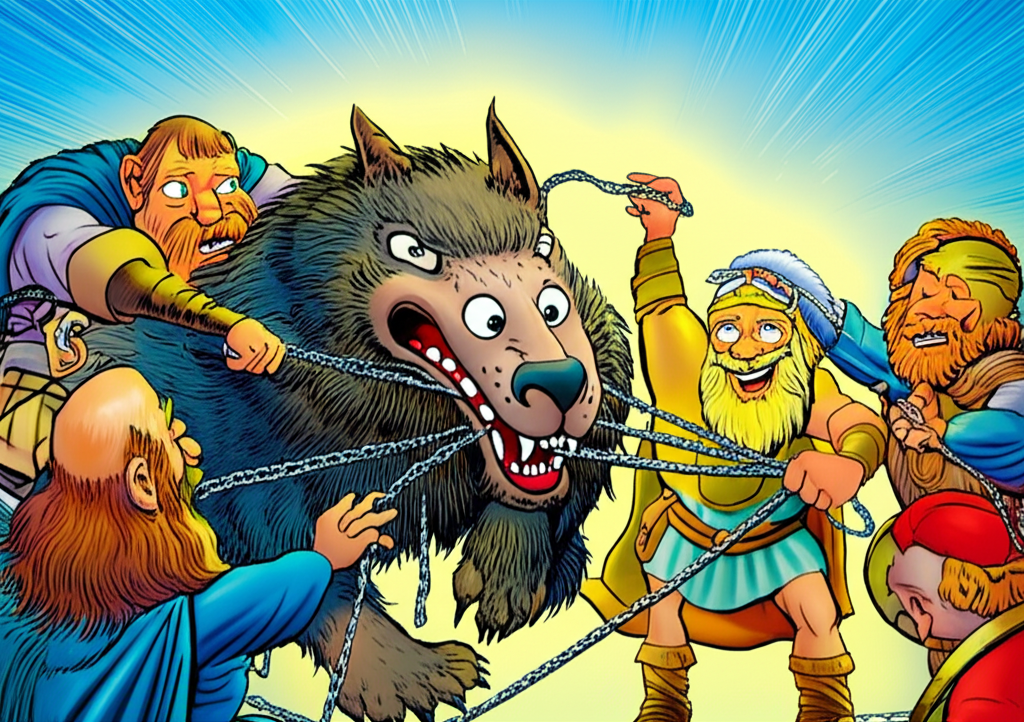
Introduction:
The story of Baldr, the radiant god of light and beauty, and the formidable wolf Fenrir, chained to the earth, is a cornerstone of Norse mythology. Passed down through generations by the peoples of Scandinavia, primarily in what is now modern-day Norway, Sweden, Denmark, and Iceland, these tales were a way of understanding the world, its forces, and the human condition. This is not a story of divine truth, but a glimpse into the rich cultural heritage and imaginative storytelling of the ancient Norse. It’s a tale of gods and giants, of fate and courage, and of the inevitable cycle of creation and destruction, a story told by people who sought to make sense of the cosmos through powerful narratives.
Origins and Cultural Background:
The Norse sagas, the primary source for this myth, emerged during the Viking Age (roughly 8th to 11th centuries CE). This was a period of exploration, conquest, and societal upheaval. The harsh environment of Scandinavia, with its long, dark winters and unpredictable seas, shaped the Norse worldview. Life was a constant struggle against the elements, and this struggle permeated their beliefs.
Their society was largely agrarian, with a strong emphasis on kinship, honor, and courage. The Norse believed in a pantheon of gods and goddesses who controlled the various aspects of the world, from the weather to the harvests. These deities were not seen as all-powerful or perfect; they were often depicted as flawed, prone to human-like emotions like jealousy, anger, and love. The Norse believed in wyrd or fate, a preordained destiny that even the gods could not fully escape. This sense of fate, coupled with the ever-present threat of death, created a culture that valued bravery in the face of adversity and the importance of leaving a lasting legacy.
Their understanding of the world was animistic, meaning they saw spirits and forces in nature. They revered the elements, especially the power of fire and water, and believed in a cosmology of nine realms, connected by the world tree, Yggdrasil. The stories of their gods served as a way to understand the world around them, to explain natural phenomena, and to teach moral lessons about courage, loyalty, and the importance of upholding one’s word.
Character / Creature Description:
- Baldr: Baldr, the shining god, embodied purity, beauty, and light. He was often described as the most beloved of the gods, his very presence bringing joy and tranquility. He was associated with innocence, peace, and the spring season. He was also, crucially, fated to die – a symbolic representation of the fleeting nature of beauty and the inevitability of change. Baldr’s association with light and goodness provided a stark contrast to the darkness and chaos that threatened the cosmos.
- Fenrir: Fenrir was a monstrous wolf, the offspring of Loki, the trickster god, and the giantess Angrboða. He was of such immense size and strength that he posed a direct threat to the gods. Fenrir was a symbol of untamed chaos, of raw power and the destructive forces that lay hidden within the world. His insatiable hunger and violent nature reflected the Norse fear of the wild and the untamed aspects of nature. He was destined to play a crucial role in Ragnarök, the apocalyptic battle that would end the world.
Main Story / Narrative Retelling:
The tale begins with Baldr, plagued by unsettling dreams foretelling his death. Frigg, his mother and the queen of the gods, deeply loved her son and sought to protect him. She traveled throughout the nine realms, extracting an oath from every object, plant, and animal that they would not harm Baldr. With this assurance, the gods believed Baldr was safe.
However, Loki, ever the trickster, saw an opportunity to sow discord. He discovered that Frigg had overlooked one small thing: the mistletoe. It was deemed too insignificant to swear an oath. Loki, disguised as an old woman, learned this secret.
At a gathering of the gods, the immortals amused themselves by throwing weapons at Baldr, who was unharmed by every projectile. Seeing this, the other gods delighted in their invulnerability, except for the blind god Höðr, Baldr’s brother. Loki, sensing his chance, gave Höðr a mistletoe dart and guided his hand, thus striking and killing Baldr.
The death of Baldr plunged the gods into mourning and grief. They attempted to bring him back from the underworld, but the goddess Hel, who ruled the realm of the dead, demanded that everything in the world weep for Baldr as a condition of his return. All things did, save one giantess, who was, in fact, Loki in disguise. This ensured that Baldr remained in Helheim, a realm of the dead.
Meanwhile, the gods had to deal with Fenrir, whose immense size and uncontrollable power was a growing threat. They knew that if left unchecked, he would bring about Ragnarök, the end of the world. They tried to bind him, but his strength was such that he shattered every chain they forged. First, they crafted a strong chain called Læding, but Fenrir broke it easily. Next, they tried Dromi, which was even stronger, but Fenrir still burst through it.
Finally, they sought the help of the dwarves, the master craftspeople of the Norse world. The dwarves forged a chain called Gleipnir, which was made of six impossible things: the sound of a cat’s footfall, the beard of a woman, the roots of a mountain, the sinews of a bear, the breath of a fish, and the spittle of a bird. Gleipnir was so smooth and slender that it appeared almost invisible.
When the gods presented Gleipnir to Fenrir, he suspected a trick. He agreed to be bound, but only if one of the gods would place their hand in his mouth as a pledge of good faith. Only Tyr, the god of war and justice, was brave enough to make the sacrifice. When Fenrir found he could not break the chain, he bit off Tyr’s hand. Fenrir was then bound to a rock, where he would remain until Ragnarök, constantly howling and causing the earth to tremble.
Symbolism and Meaning:
The story of Baldr and Fenrir is rich in symbolism. Baldr’s death can be seen as representing the loss of innocence, the end of an era of peace, and the inevitability of death. It could also symbolize the transition from the golden age to the age of strife and conflict. Fenrir’s binding, on the other hand, represents the attempt to contain chaos and control the destructive forces of nature. The sacrifice of Tyr underscores the importance of sacrifice, honour, and bravery in the face of overwhelming odds. The entire narrative explores themes of fate, free will, the struggle between order and chaos, and the cyclical nature of life and death.
Modern Perspective:
The myths of Baldr and Fenrir continue to fascinate and inspire. They appear in countless modern works of fiction, including novels, movies, and video games. Baldr is often portrayed as a symbol of hope and light, while Fenrir embodies untamed power and the threat of destruction. These characters and their stories are reinterpreted and adapted to fit modern audiences, often exploring themes of good versus evil, the consequences of unchecked power, and the importance of balance. Norse mythology, as a whole, has found new life in the 21st century, with its themes of heroism, sacrifice, and the struggle against fate resonating with contemporary audiences.
Conclusion:
The tale of Baldr and the binding of Fenrir is a powerful example of the rich storytelling tradition of the Norse people. It is a cultural narrative, a way of understanding the world and the human experience. It is not meant to be taken as a factual account of events, nor should it be seen as a basis for religious practice. As Muslims, we recognize that only Allah is the true Creator and Sustainer of all things.
Yet, this story, with its themes of light and darkness, order and chaos, reminds us of the power of imagination and the enduring human need to create narratives that explain our world. It speaks of sacrifice, of courage, and the ever-present dance between creation and destruction. It is a reminder of our shared cultural heritage, of the stories that have shaped us, and the enduring power of storytelling.


