fufufafa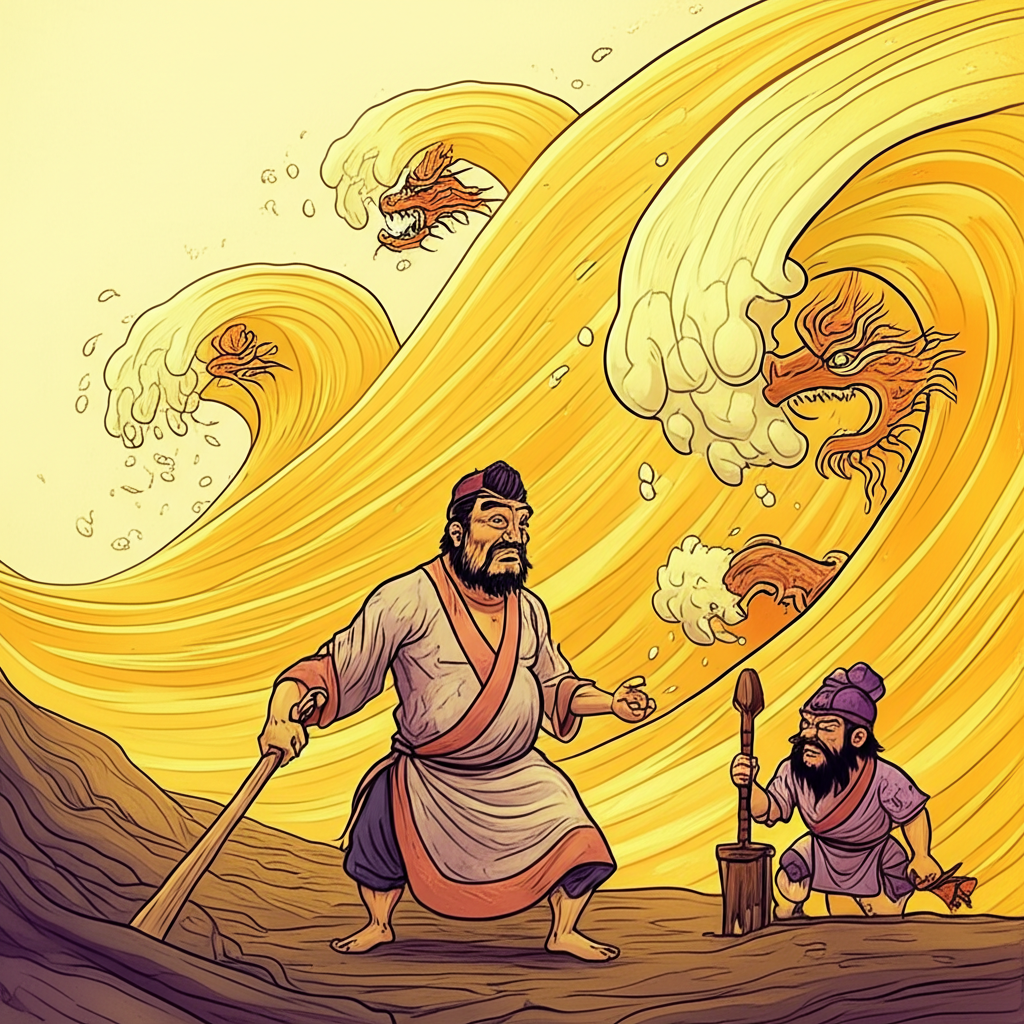
Introduction:
The tale of Gun and Yu and the Great Flood is a cornerstone of Chinese mythology, a story passed down through generations of the Han Chinese people. It is a traditional narrative, a tapestry woven from the threads of ancient beliefs and the landscape of the Yellow River valley. This is a story told by our ancestors, a reflection of their understanding of the world and their struggles against the forces of nature. We recount it now not as a matter of faith, but as a window into a rich and complex cultural heritage.
Origins and Cultural Background:
The myth likely took root during the Neolithic period, blossoming into its fuller form during the Bronze Age, the time of the Xia Dynasty, which, although debated by historians, holds a significant place in Chinese cultural identity. The people of this era lived in a world where the power of nature was both revered and feared. They were primarily agrarian, their livelihoods inextricably linked to the cycles of the seasons and the capricious moods of the Yellow River, known as the "Mother River" and often referred to as the "River of Sorrow" for its devastating floods.
Their worldview was shaped by animism, a belief system that saw spirits inhabiting natural phenomena – mountains, rivers, trees, and even the wind and rain. The cosmos was understood as a vast, ordered system governed by powerful deities and ancestral spirits. Floods, droughts, and famines were not mere natural disasters; they were seen as expressions of divine displeasure or the consequences of moral failings. The struggle to survive in such an environment fostered a strong sense of community, respect for tradition, and a deep-seated desire for harmony between humanity and the natural world.
Character/Creature Description:
The central figures in this myth are Gun and his son, Yu. Gun is often depicted as a strong, capable, but ultimately flawed individual. He is associated with the act of damming and controlling the waters. While specific physical descriptions are less important than his symbolic role, he represents a heroic figure who tries to overcome a seemingly insurmountable obstacle.
Yu, Gun’s son, embodies the ideal of a wise and virtuous leader. He is often depicted as tireless and compassionate, dedicating his life to the welfare of his people. Unlike his father, Yu is known for his ability to work with the water, rather than against it. He is credited with taming the flood and establishing a stable civilization. He is also linked with the concept of the “Nine Provinces,” a division of the land that helped organize governance and resource allocation.
The flood itself is personified as a relentless, untamed force of nature. It is a symbol of chaos, destruction, and the potential for the world to return to its original, undifferentiated state. The mythical creatures or beings involved are less prominent than the forces of nature they represent.
Main Story/Narrative Retelling:
In the ancient times, when the Yellow River, swollen by relentless rains, raged through the land, a devastating flood engulfed the fertile valleys. The waters, a churning mass of brown fury, devoured villages, swept away crops, and threatened to drown the entire world. The Emperor, recognizing the gravity of the situation, tasked Gun with the monumental task of controlling the flood.
Gun, a man of great strength and determination, sought a solution. He appealed to the gods, hoping to find a method to stem the tide. He was granted Xirang (息壤), a miraculous, self-growing earth. If he could use this earth to dam the river, he believed he could stop the waters from flooding. Gun stole this earth from the gods and, without much planning, started building dams. His plan, though, was flawed. He built walls and barriers to contain the water. However, the floodwaters were relentless, rising higher and higher, eventually overwhelming Gun’s efforts. His dams, unable to withstand the relentless pressure, collapsed again and again, leaving the people with no relief.
For nine long years, Gun labored in vain, and the flood continued to rage. The Emperor, seeing the futility of Gun’s methods and believing his failure to control the flood reflected his own lack of virtue, ordered his execution. After Gun’s death, the flood still ravaged the land. But then, a miracle happened. From Gun’s corpse, a son was born – Yu.
Yu, unlike his father, understood that the key to controlling the flood was not simply to block the water, but to channel it, to guide it, and to work in harmony with its power. He was wise enough to study the water, to understand its flow, and to devise a new approach.
Yu, armed with his knowledge, and guided by the dragon, spent thirteen years tirelessly working to alleviate the suffering of his people. He traveled the land, mapping the rivers, digging canals, and dredging channels. He understood the importance of drainage and used his knowledge to guide the water towards the sea. He led his people to carve out channels through mountains and construct dikes to manage the water flow. He lived a life of selflessness, often eating and sleeping outdoors, neglecting his own comforts in service to his people. He even bypassed his own home three times during his long project.
Eventually, Yu’s efforts proved successful. The floodwaters receded, the land dried, and the people could rebuild their homes and plant their crops. The Yellow River, though still powerful, was now tamed, flowing within its banks and providing sustenance rather than destruction. Yu was hailed as a hero, a wise ruler, and the founder of the Xia Dynasty. He taught the people how to live in harmony with the water and established a society built on order, cooperation, and respect for nature.
Symbolism and Meaning:
The Flood of Gun and Yu is rich with symbolic meaning. The flood itself represents chaos, the untamed forces of nature, and the potential for destruction. Gun’s failure symbolizes the limitations of human efforts when they are based on a narrow, inflexible approach. His use of stolen earth could be interpreted as a cautionary tale against selfish ambition and disregard for divine authority.
Yu’s success, on the other hand, represents the triumph of wisdom, perseverance, and collaboration. His method of channeling the water instead of fighting it symbolizes the importance of understanding and working with nature, rather than trying to dominate it. His dedication to his people reflects the values of selfless leadership and the importance of community.
The story also reflects the Chinese understanding of the cyclical nature of life. The flood represents a period of destruction, but it also paves the way for renewal and the opportunity to rebuild. The creation of the Xia Dynasty, with Yu as its founder, marks a new beginning, a period of order and prosperity. The story reflects the concept of the “Mandate of Heaven,” which meant the ruler had to act in the best interest of the people.
Modern Perspective:
The tale of Gun and Yu continues to resonate in modern Chinese culture. It is frequently referenced in literature, movies, and video games. The story is a recurring theme in Chinese art, depicting the struggle of humans against the forces of nature, the virtue of selfless leadership, and the enduring human spirit. It is a source of national pride, reminding people of their ancestors’ resilience and their ability to overcome adversity. In cultural studies, the story provides valuable insights into the values, beliefs, and worldview of ancient China. It highlights themes of environmental responsibility, the importance of leadership, and the enduring power of human ingenuity.
Conclusion:
The story of the Flood of Gun and Yu is a captivating example of the rich storytelling tradition of the Chinese people. It is a narrative that speaks of the struggles of humanity, the forces of nature, and the importance of wisdom, perseverance, and community. We recognize this as a cultural story, a product of a specific time and place.
As Muslims, we acknowledge that Allah is the one and only Creator and Sustainer of the universe, and we give thanks to Him for all His blessings. We find in this story a celebration of human ingenuity and resilience. Through this myth, we can appreciate the beauty of cultural heritage, the power of imagination, and the enduring appeal of storytelling traditions. It reminds us of our shared humanity and the value of learning from the past to build a better future.