fufufafa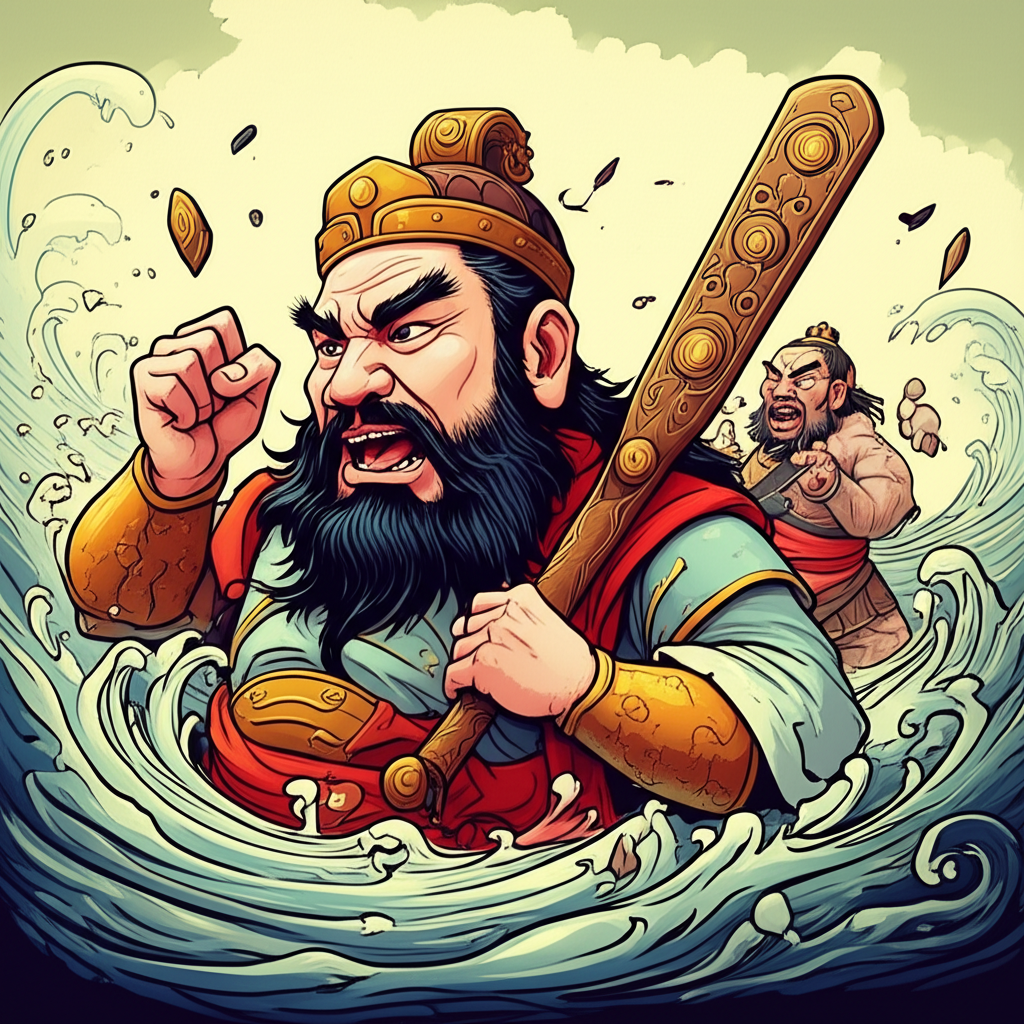
Introduction:
The story of the Great Flood and the efforts to control it is a cornerstone of Chinese mythology, a tale passed down through generations to explain the world’s origins and the relationship between humans and the heavens. This is a traditional story, a product of ancient Chinese oral traditions, told by people who lived long ago, grappling with the mysteries of their environment and seeking to understand the forces that shaped their lives. It is a story filled with gods, heroes, floods, and the enduring human spirit, a testament to the power of imagination and the need to make sense of the world. This narrative, like many myths, serves as a window into the past, offering insight into the beliefs, values, and concerns of the people who first told it.
Origins and Cultural Background:
The myth of the Flood of Gun and Yu finds its roots in ancient China, during a period often referred to as the legendary Three Sovereigns and Five Emperors (around 2600-2100 BCE). This was a time before written history, a period reconstructed through archaeological findings and the written accounts compiled later. The society was primarily agrarian, relying heavily on the land for sustenance. The Yellow River, known as "the cradle of Chinese civilization," was both a life-giving force and a source of constant threat. The river’s unpredictable flooding could devastate entire communities, destroying crops, homes, and lives.
The people of this era viewed the world through a lens of animism and ancestor worship. They believed that natural phenomena, such as rivers, mountains, and the sky, were inhabited by spirits and deities. The emperor, considered the "Son of Heaven," acted as an intermediary between the earthly realm and the celestial court, mediating divine favor and ensuring the well-being of the people. Society was hierarchical, with a strong emphasis on social order, filial piety (respect for elders and ancestors), and harmony with nature. The cycles of nature – the seasons, the floods, the droughts – were seen as reflections of the will of the gods and goddesses.
Character / Creature Description:
The central figures in this myth are Gun and Yu. Gun, in some versions, is a descendant of the Yellow Emperor, a legendary ancestor of the Chinese people. He is depicted as a strong, capable figure, driven by a desire to help his people. He represents ambition and the willingness to defy the established order.
Yu, Gun’s son, embodies the opposite: humility, perseverance, and a deep understanding of nature. He is often depicted as a diligent, resourceful leader, deeply concerned for the welfare of his people. He embodies the Confucian ideals of duty, selflessness, and the importance of serving the common good.
The Heavenly Court, the abode of the gods, is a symbolic representation of the forces of order and control. The Emperor of Heaven, the supreme deity, holds ultimate authority. The gods and goddesses within the court represent various aspects of nature and human experience, and their actions reflect the cosmic balance. The flood itself is not a creature, but a powerful force of nature, a consequence of the gods’ displeasure, or perhaps, a natural event that tested humanity.
Main Story / Narrative Retelling:
In the ancient times, before dynasties and empires, a great flood ravaged the land. The waters swelled, overflowing the banks of the rivers and inundating the valleys. The people suffered, their homes destroyed, their crops ruined. The Emperor of Heaven, witnessing the suffering of his children, decreed that the flood must be contained.
Gun, a man of great strength and ambition, volunteered to tame the waters. He journeyed to the Heavenly Court and stole the Xirang, the "breathing earth," a magical, self-expanding soil capable of stopping the flood. With the Xirang, Gun built dams and dykes, hoping to contain the rising waters. However, his efforts proved ultimately futile. The Xirang was a treasure that was not to be used by mere mortals. It grew too quickly, unable to contain the overwhelming power of the flood. Gun’s methods, his ambition, and perhaps his defiance of the heavenly decree, angered the gods. They punished him, either by executing him or by letting him die in the flood’s aftermath.
After Gun’s death, the flood continued. His son, Yu, was tasked with completing his father’s work. Yu, unlike Gun, understood the importance of patience, planning, and working with nature, not against it. He spent thirteen years traveling the land, studying the waterways, and understanding the flow of the rivers. He was tireless in his dedication, even passing by his home three times without entering, focused on his duty to his people.
Yu’s method was not to build dams, but to dredge channels, guide the waters, and allow them to flow freely. He divided the land into nine provinces, establishing a system of drainage that controlled the flood’s power. He worked tirelessly, using his own body as a tool to measure and shape the waterways. With the help of dragons and turtles, who are believed to have assisted in the creation, Yu carved out the land, creating the landscapes we see today.
Through his perseverance, his wisdom, and his commitment to the well-being of the people, Yu finally succeeded. The flood receded, the land dried, and the people were able to rebuild their lives. Yu, hailed as the Great Yu, was honored as a hero and a wise leader. He went on to found the Xia Dynasty, the first dynasty of China, solidifying his place as a legendary figure who not only saved his people but also established the foundations of Chinese civilization.
Symbolism and Meaning:
The Flood of Gun and Yu is rich with symbolic meaning. The flood itself represents chaos, destruction, and the forces of nature that can overwhelm humanity. Gun’s failed attempt represents the dangers of ambition, the limitations of human power, and the consequences of disregarding the divine order. His actions show that sometimes even good intentions are not enough to do the right thing, because he was not allowed to use the material by the Heavenly Court.
Yu’s success symbolizes the triumph of wisdom, patience, perseverance, and cooperation with nature. His dredging of the channels shows the importance of understanding the environment and working in harmony with its forces. Yu’s devotion to his people underscores the values of leadership, selflessness, and the importance of public service. The story can also be interpreted as a reflection of the challenges of governance, the struggle to control natural forces, and the importance of adapting to changing circumstances.
Modern Perspective:
The story of the Flood of Gun and Yu continues to resonate in modern China and around the world. It is a recurring theme in literature, movies, and video games, often reinterpreted to reflect contemporary concerns. The myth is used to explore themes of environmentalism, leadership, the impact of natural disasters, and the enduring human spirit. In cultural studies, the story is analyzed for its symbolic meaning, its reflections of ancient beliefs, and its contribution to Chinese identity. It also serves as a reminder of the need for preparedness and adaptation in the face of climate change and other environmental challenges.
Conclusion:
The tale of the Flood of Gun and Yu is a cultural treasure, a story that encapsulates the hopes, fears, and aspirations of the ancient Chinese people. It is a story told to entertain and to educate, to offer guidance and to impart wisdom. It should be understood as a product of human imagination, a testament to the power of storytelling.
As Muslims, we acknowledge that Allah is the one true Creator, the source of all existence, and the ultimate power. We believe in the One God and His infinite wisdom, mercy, and power.
The story of the Flood of Gun and Yu, like all cultural heritage, enriches our understanding of the world. It inspires imagination, encourages reflection, and fosters appreciation for the diverse tapestry of human experience. It serves as a reminder of the enduring power of storytelling and the value of passing down knowledge through generations.