
 fufufafa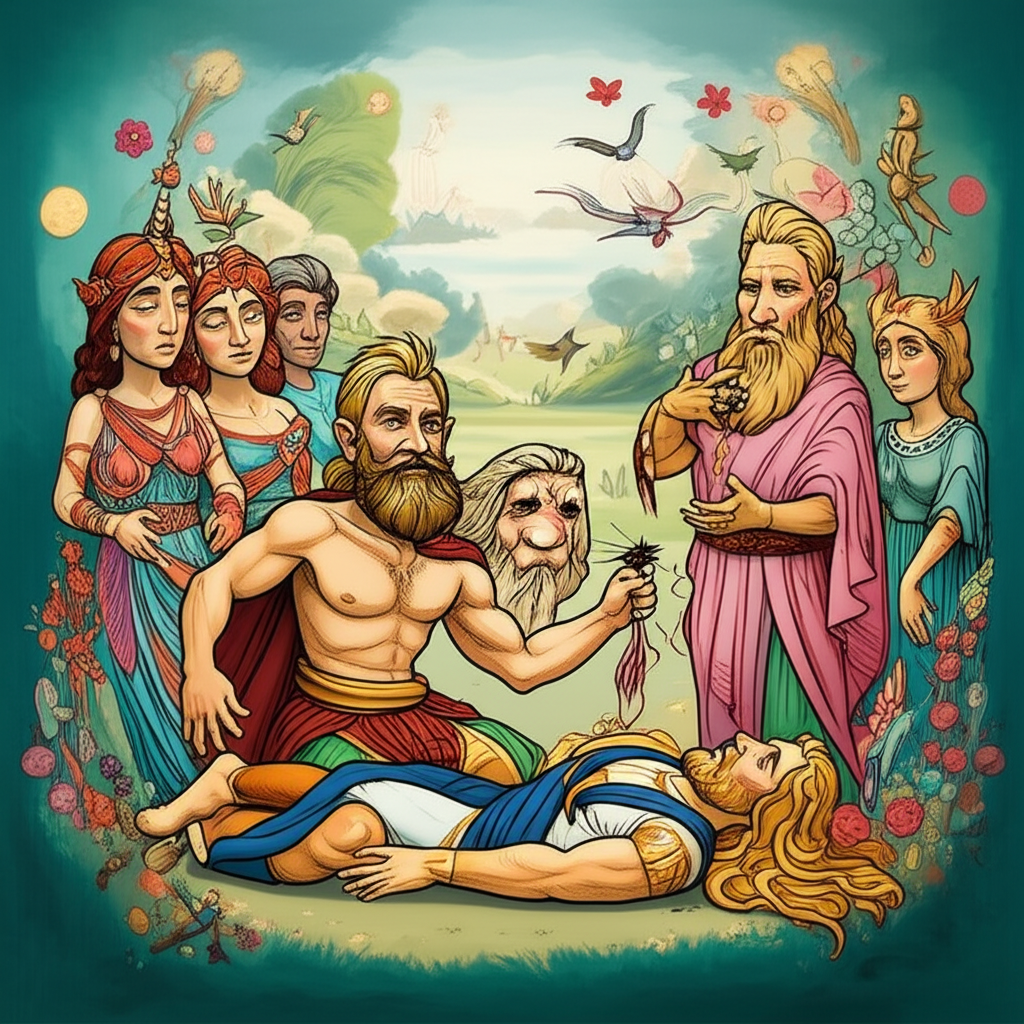
This is a story from the ancient Norse tradition, a tale spun by the Viking peoples of Scandinavia, whose world was shaped by icy landscapes, fierce storms, and a deep connection to the natural world. We present this narrative as a window into their culture, their beliefs, and their way of understanding the world, recognizing that it is a product of human imagination and not a statement of truth or divine reality.
Origins and Cultural Background
The Norse myths flourished during the Viking Age, roughly from the late 8th to the mid-11th centuries. This was a time of exploration, trade, and raiding, when Scandinavian seafarers ventured far and wide, leaving their mark on the coasts of Europe and beyond. Their society was hierarchical, built on kinship, loyalty, and prowess in battle. The Norse people believed in a pantheon of gods and goddesses who lived in Asgard, a realm high above the mortal world of Midgard. These deities were not all-powerful or immortal in the way we often think of gods; they were subject to fate and faced their own struggles and eventual doom in the prophesied Ragnarok, the twilight of the gods.
The Norse worldview was deeply intertwined with nature. The changing seasons, the power of the sea, the harshness of the winters – all these elements were personified in their myths and legends. They saw the world as a cyclical process of creation, destruction, and renewal, a cycle reflected in the stories they told about the gods and the cosmos. The myths were not just entertainment; they were a way of explaining the world around them, of understanding their place within it, and of passing down their values and traditions from one generation to the next. They were transmitted orally for centuries before being written down in texts like the Poetic Edda and the Prose Edda, compiled in Iceland during the 13th century.
Character Description: Baldr
Baldr, son of Odin and Frigg, was considered the fairest, wisest, and most beloved of all the gods. He was associated with light, beauty, and innocence. He was so radiant that light seemed to emanate from him. Symbolically, Baldr could be seen as representing the summer sun, the promise of warmth and growth, and the ideal of youthful perfection. He was not a warrior like Thor or a cunning trickster like Loki; his strength lay in his inherent goodness and his ability to inspire love and admiration. His death, therefore, represents the loss of innocence, the fading of light, and the introduction of darkness into the world.
The Narrative: The Death of Baldr and the Genesis of Vanaheim
Baldr began to have nightmares, terrifying visions of his own death. These dreams cast a shadow over Asgard, for Baldr was so loved that his demise threatened to plunge the realm into despair. Frigg, his protective mother, desperate to shield her son from harm, traveled throughout the nine realms, extracting promises from every creature, plant, and object that they would not harm Baldr. From the highest mountain peaks to the deepest ocean trenches, she secured their oaths.
When Frigg returned to Asgard, the gods rejoiced. To test the efficacy of her protection, they gathered in a field and began to hurl objects at Baldr. Stones bounced harmlessly off him, arrows fell short, and swords shattered against his skin. Baldr stood unharmed, a beacon of invulnerability.
Loki, the trickster god, watched this display with growing envy. He resented Baldr’s popularity and his seemingly unassailable position. Disguised as an old woman, Loki approached Frigg and inquired about the protection she had secured for her son. Frigg, believing she had accounted for everything, admitted that she had overlooked one small detail: the mistletoe. It was so young and insignificant, she had thought it posed no threat.
Loki, seizing his opportunity, sought out the mistletoe and fashioned it into a dart. He found Hodr, Baldr’s blind brother, standing on the edge of the crowd, unable to participate in the game. Loki placed the mistletoe dart in Hodr’s hand and, guiding his aim, encouraged him to throw it at Baldr.
Hodr, wanting to join in the fun, obliged. The mistletoe dart flew through the air and struck Baldr. The fair god fell to the ground, lifeless.
Grief engulfed Asgard. The gods were paralyzed with sorrow, unable to comprehend the loss of their beloved Baldr. Odin, his father, grieved silently, knowing that this event was a harbinger of Ragnarok.
Hermod, another son of Odin, volunteered to ride to Hel, the realm of the dead, to plead with Hel, the goddess of the underworld, to release Baldr. Hermod rode Sleipnir, Odin’s eight-legged horse, through the dark valleys and across the icy rivers that led to Hel’s domain.
Hel agreed to release Baldr, but on one condition: all of creation had to weep for him. If a single creature refused to shed a tear, Baldr would remain in Hel.
The gods sent messengers throughout the realms, and indeed, everything wept for Baldr. But when the messengers reached a giantess named Thokk (suspected to be Loki in disguise), she refused to weep, stating that Baldr had never done anything for her.
And so, Baldr remained in Hel, and darkness settled over Asgard.
Now, while the story of Baldr’s death is central, the link to Vanaheim is more subtle and less directly stated. Vanaheim is the home of the Vanir, a different tribe of gods than the Aesir who dwell in Asgard. The Vanir are associated with fertility, magic, and prophecy. While Baldr’s death doesn’t directly cause the creation of Vanaheim, the consequences of his death—the growing darkness, the simmering resentment, and the eventual Ragnarok—are often interpreted as exacerbating the existing tensions between the Aesir and the Vanir, leading to a more pronounced separation and distinct identity for the Vanir. The loss of Baldr, the epitome of goodness and harmony, perhaps symbolized a fracturing within the divine order, pushing the Vanir to further embrace their own unique strengths and domain. The absence of light and peace in Asgard might have prompted a strengthening of the Vanir’s focus on fertility and growth in their own realm, Vanaheim, as a counterpoint to the increasing doom hanging over Asgard.
Symbolism and Meaning
The death of Baldr is a powerful myth laden with symbolism. It represents the vulnerability of even the most beautiful and virtuous beings. It speaks to the ever-present threat of chaos and the inevitability of loss. The mistletoe, the seemingly insignificant object that brings about Baldr’s demise, symbolizes the hidden dangers that can lurk in unexpected places. Loki represents envy, malice, and the destructive power of unchecked ambition. The myth also explores themes of fate, sacrifice, and the cyclical nature of life and death. To the Norse people, this story might have served as a reminder of the fragility of peace and the importance of vigilance against evil.
Modern Perspective
The myth of Baldr’s death continues to resonate in modern culture. It appears in literature, such as Neil Gaiman’s "Norse Mythology," where it is retold with a contemporary voice. It influences fantasy novels and video games, often serving as inspiration for characters, plotlines, and world-building. The story’s themes of loss, betrayal, and the struggle against fate continue to captivate audiences. Baldr himself is often depicted as a tragic hero, a symbol of innocence destroyed by malice.
Conclusion
The story of Baldr’s death is a powerful and enduring myth from the Norse tradition. It offers a glimpse into the beliefs, values, and worldview of the Viking peoples. It is a testament to the power of storytelling and the enduring human fascination with myths and legends.
As Muslims, we recognize that these are cultural stories, products of human imagination, and not statements of divine truth. We believe that only Allah is the true Creator and Sustainer of the universe. However, we can still appreciate the richness and complexity of these cultural narratives and learn from the insights they offer into the human condition. These stories are part of our shared human heritage, reminders of the power of imagination and the enduring tradition of storytelling.


