
 fufufafa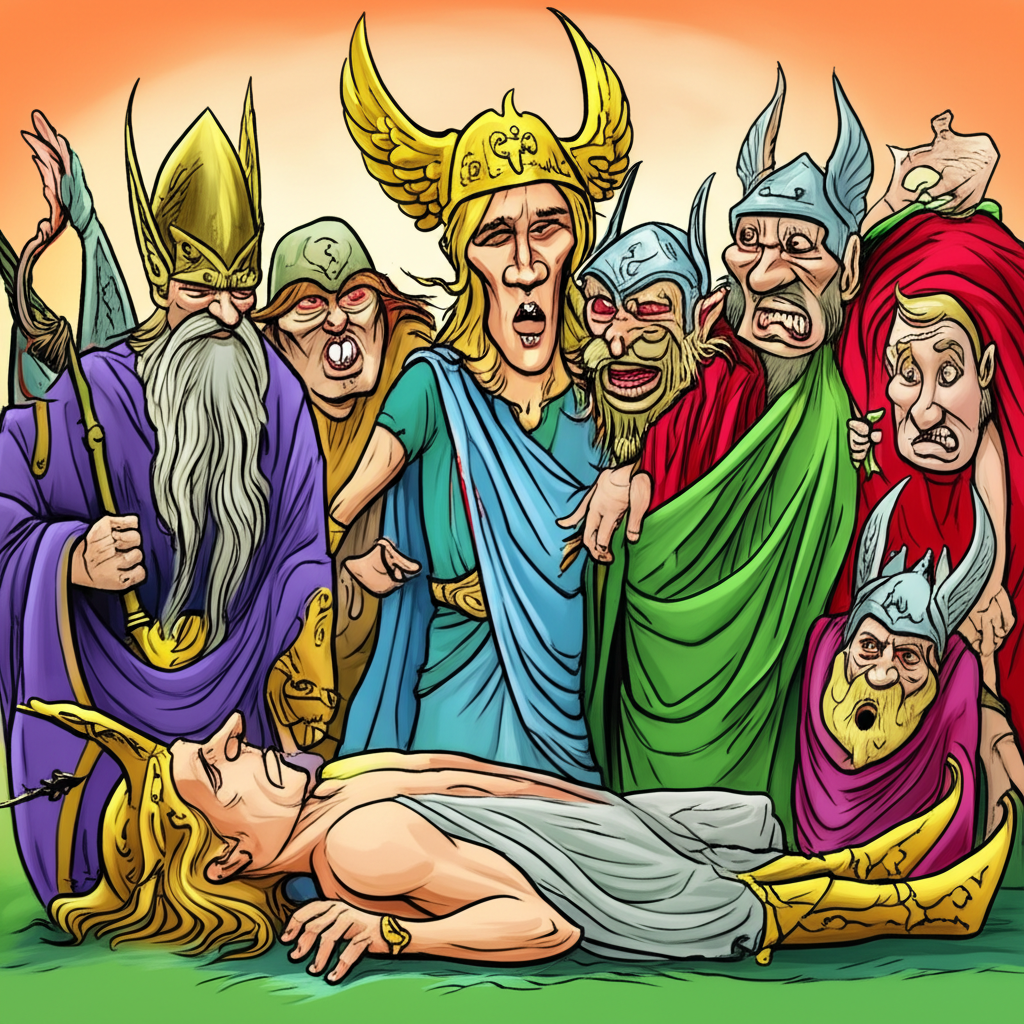
Introduction:
The tale of Baldr’s demise, a tragedy woven into the fabric of Norse mythology, originates from the cold, dramatic landscapes of Scandinavia. These stories, passed down through generations of oral tradition and eventually recorded in the Prose Edda and Poetic Edda during the medieval period, served as a cornerstone of the Viking worldview. It’s crucial to remember that this is a traditional story, a product of human imagination and cultural expression, offering a glimpse into the beliefs and fears of ancient people. It is not presented here as a divine truth, but as a fascinating window into a bygone era.
Origins and Cultural Background:
The era in which these myths flourished, roughly from the Viking Age (c. 8th to 11th centuries CE) and slightly beyond, was characterized by a society deeply connected to the natural world. The harsh Scandinavian climate, with its long winters and dramatic seasons, profoundly influenced their perspective. The Vikings, skilled seafarers and traders, were also fierce warriors who built their lives on raiding and exploring. Their world was populated by a pantheon of gods and goddesses, powerful beings who controlled the elements, shaped human destiny, and interacted with mortals. Life was seen as a constant struggle against the forces of nature, against chaos and disorder. Death, therefore, was a pervasive presence, a constant reminder of the fragility of existence. The Norse people viewed the world through a lens of fate, where even the gods were subject to a preordained destiny, culminating in the prophesied Ragnarök, the twilight of the gods. This belief system fueled their bravery in battle, their respect for the natural world, and their complex understanding of life and death.
Character/Creature Description: Baldr, the Shining One
Baldr, the son of Odin, the Allfather, and Frigg, the goddess of motherhood and prophecy, was considered the most beloved of the gods. He was portrayed as a figure of radiant beauty, innocence, and light. His name, derived from the Old Norse baldr, meaning "brave" or "bold," often suggests a radiant quality, reflecting his association with the sun and summer. Baldr’s skin was said to be so luminous that he radiated light, and his presence brought joy and peace to Asgard, the realm of the gods. He was often depicted as kind, gentle, and wise. This symbolism underscores his role as an embodiment of purity, goodness, and the promise of life. His vulnerability, as the myth unfolds, highlights the precariousness of even the most cherished aspects of existence in the face of inevitable fate.
Main Story / Narrative Retelling:
The story begins with a dark premonition. Frigg, deeply concerned for her beloved son Baldr, dreamt of his impending death. Driven by maternal love and the unsettling nature of her vision, she traveled throughout the cosmos, extracting an oath from every object, plant, and creature that it would not harm Baldr. This act of protection ensured that Baldr was seemingly invulnerable. The other gods, amused by his apparent immortality, began a game of throwing weapons at him, reveling in the fact that nothing could touch him.
Loki, the trickster god, known for his cunning and his envy, saw an opportunity to sow discord. Disguised as an old woman, Loki visited Frigg and, through subtle questioning, discovered that she had overlooked one thing – the mistletoe, a seemingly insignificant plant that grew on trees. Frigg explained that mistletoe was deemed too young and harmless to pose any threat.
Loki, seizing his chance, fashioned an arrow from mistletoe and presented it to Hodr, Baldr’s blind brother. He guided Hodr’s hand, and the arrow struck Baldr, piercing his heart. The radiant god fell, and his death plunged Asgard into profound sorrow and darkness. The world felt the loss; the sun dimmed, and all life seemed to mourn.
The gods, heartbroken, attempted to bring Baldr back from the realm of the dead, Hel, ruled by the goddess of the same name. Odin sent his son Hermóðr to plead for Baldr’s return. Hel agreed to release Baldr, on the condition that everything in the world wept for him. All things did weep, except for the giantess Þökk (who was, in fact, Loki in disguise), and so Baldr was condemned to remain in the underworld.
The death of Baldr was a pivotal event, a harbinger of the impending Ragnarök, the final battle that would bring about the destruction of the world and the gods. The betrayal, the loss of innocence, and the ensuing grief cast a long shadow over Asgard, marking the beginning of the end.
Symbolism and Meaning:
The Death of Baldr is rich in symbolic meaning. Baldr himself represents the sun, summer, and the ideals of beauty, innocence, and purity. His death signifies the inevitable cycle of life and death, the triumph of darkness over light, and the fragility of even the most cherished aspects of existence. The story also explores themes of betrayal, envy, and the consequences of unchecked ambition, as embodied by Loki. The mistletoe, the seemingly innocuous object that brings about Baldr’s demise, symbolizes the small, unforeseen vulnerabilities that can lead to downfall. The grief of the gods highlights the emotional impact of loss, and the attempt to bring Baldr back underscores the human desire to overcome death. The story also foreshadows Ragnarök, the end of the world, emphasizing the cyclical nature of time and the eventual demise of even the gods themselves.
Modern Perspective:
The myth of Baldr’s death continues to resonate today. It is a recurring theme in literature, from the works of J.R.R. Tolkien, who drew heavily from Norse mythology, to contemporary fantasy novels and graphic novels. The story has been adapted into video games, such as God of War, which reinterpret the Norse pantheon and the tragedy of Baldr. The themes of betrayal, loss, and the conflict between good and evil are universally relatable. Scholars of cultural studies analyze the myth to understand the values, fears, and worldview of the Viking Age. The story offers a compelling narrative about human nature, the inevitability of change, and the enduring power of storytelling.
Conclusion:
The tale of Baldr’s death, a cornerstone of Norse mythology, is a powerful and poignant story. It is a cultural artifact, born from the imaginations of people who lived in a world filled with both wonder and hardship. It is not presented here as a literal truth, but as a window into the past, offering valuable insights into the beliefs and values of the Vikings. As Muslims, we recognize that Allah, the One God, is the true Creator and Sustainer of all things. We acknowledge the beauty of storytelling and the enduring power of human creativity. The myths of the past serve as a testament to the human spirit’s capacity to grapple with life’s profound questions, and to find meaning and solace in the face of the unknown. They remind us of our shared cultural heritage, the importance of imagination, and the enduring tradition of storytelling.


