
 fufufafa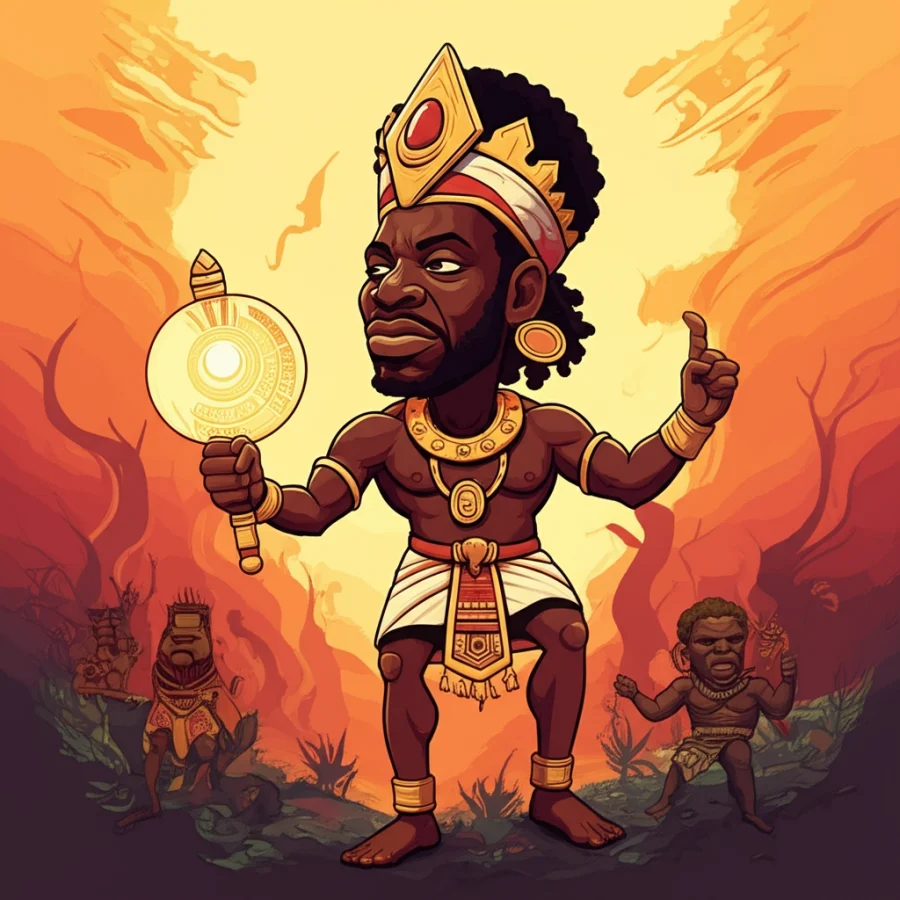
Deep within the vibrant heart of West Africa, a tapestry of stories has been woven over centuries, resonating with the rhythm of drums and the whisper of ancient forests. These are the tales of the Yoruba people, a rich and complex culture that stretches across Nigeria, Benin, and Togo. Among their many deities and heroes, one figure stands out with a fiery presence: Shango, the god of thunder, lightning, and justice. This is not a declaration of faith, but a glimpse into the cultural heritage of a people, a traditional story passed down through generations, capturing their understanding of the world and the forces that shaped their lives.
Origins and Cultural Background
The Yoruba civilization flourished long before European contact, with its roots tracing back to the ancient city of Ile-Ife, considered the cradle of Yoruba culture. Their societal structure was complex, centered around kingdoms and city-states, each ruled by an Oba (king) who held both political and spiritual authority. The Yoruba worldview was deeply intertwined with their environment. They lived in close proximity to nature, respecting its power and seeking to understand its mysteries. Their religion, a complex system of beliefs and practices, reflected this connection, with numerous Orishas (deities) representing different aspects of nature and human experience. These Orishas were not seen as distant, unreachable gods, but as powerful forces that could influence their lives and with whom they could interact through rituals, prayers, and offerings. The oral tradition was paramount; stories were the lifeblood of their culture, carrying history, morality, and wisdom from one generation to the next. The world was seen as a dynamic place, where the spiritual and physical realms were closely connected, and where the actions of humans could have profound consequences.
Character Description: Shango, the Fiery King
Shango, in the Yoruba pantheon, is often depicted as a powerful and charismatic king, a warrior, and a magician. He is typically portrayed with a double-headed axe, known as an Oshe, symbolizing his authority and power to cut through falsehood and injustice. He is also associated with fire, thunderstones (believed to be lightning strikes buried in the earth), and the color red, representing his fiery nature and passion. He is not a divine being to be worshipped, but a figure in a story; his attributes are symbolic rather than divine. The double-headed axe might represent his ability to see both sides of a situation, his fiery nature representing courage and strength, and the thunderstones representing his connection to the raw power of nature. He is said to have been the fourth king of Oyo, a powerful Yoruba kingdom, before his deification. This blending of historical figure and mythical archetype makes him a compelling character, embodying both human strengths and weaknesses. He is not perfect; he is known for his temper and impulsiveness, but also for his justice and unwavering commitment to his people.
Main Story: The Fall and Rise of the Thunder King
In the ancient city of Oyo, Shango ruled with both wisdom and an iron fist. He was a formidable warrior, leading his armies to victory and expanding the kingdom’s territory. But his reign was not without its challenges. Two powerful war chiefs, Timi and Gbonka, constantly vied for his favor, their rivalry threatening to destabilize the kingdom. Shango, in an attempt to resolve the conflict, ordered a contest between the two. Gbonka, known for his immense strength and mastery of magic, easily defeated Timi. However, Shango, fearing Gbonka’s growing power, ordered him to be burned alive. But Gbonka, using his magic, survived the fire, further increasing his reputation and influence.
The people, impressed by Gbonka’s power and weary of Shango’s increasingly unpredictable temper, began to question his leadership. Rumors and whispers spread throughout the kingdom, fueled by Shango’s political enemies. Eventually, facing mounting pressure and fearing a rebellion, Shango decided to leave Oyo. Accompanied by his loyal wife, Oya, the goddess of the Niger River, and a few trusted followers, he retreated into the forest.
Despair and shame weighed heavily on Shango. He felt he had failed his people and brought dishonor to his lineage. Overwhelmed by grief, he hanged himself from an Ayon tree. However, Oya, witnessing his tragic end, cried out in anguish, invoking the power of her river and the spirits of the forest. She declared that Shango had not truly died, but had ascended to the heavens, becoming the god of thunder and lightning.
When Shango’s followers returned to Oyo, they found the city engulfed in flames, struck by a powerful lightning storm. The people, terrified and remorseful, interpreted this as a sign of Shango’s divine wrath. They began to appease his spirit, offering sacrifices and chanting his praises. From that day forward, Shango was revered as a powerful Orisha, a protector of justice and a force of nature to be reckoned with. The tale concludes not with divine truth, but with an explanation of how a historical figure transformed into a mythic one.
Symbolism and Meaning
The story of Shango is rich with symbolism, reflecting the Yoruba understanding of power, leadership, and the forces of nature. His control over thunder and lightning could be interpreted as a representation of the unpredictable and often destructive power of nature, a force that could both sustain and destroy. His struggle with his war chiefs and his eventual downfall could symbolize the challenges of leadership, the dangers of unchecked power, and the importance of maintaining balance and justice. His death and subsequent deification could represent the cyclical nature of life and death, and the belief that even in death, one’s legacy can continue to influence the world. The tale may have served as a cautionary tale for rulers, reminding them of the importance of humility, justice, and the consequences of their actions. It also provided a framework for understanding and coping with the unpredictable forces of nature, transforming fear into reverence and respect.
Modern Perspective
Today, the myth of Shango continues to resonate in various forms of art, literature, and popular culture. He appears in numerous books, films, and video games, often portrayed as a powerful and charismatic figure. In cultural studies, Shango is a valuable lens through which to examine Yoruba culture, religion, and history. His story is analyzed for its insights into themes of power, justice, and the human relationship with the natural world. While the traditional religious practices associated with Shango may have declined in some areas, his image and his stories continue to be celebrated as a vital part of Yoruba cultural heritage. He is not an object of worship, but a figure of cultural significance.
Conclusion
The tale of Shango is a testament to the power of storytelling, a window into the world of the ancient Yoruba people and their understanding of the world around them. It is a cultural story, a myth that speaks to universal themes of power, justice, and the human condition.
As Muslims, we recognize that only Allah is the true Creator and Sustainer of the universe. We understand that the stories of Shango are part of a rich cultural heritage, born from imagination and passed down through generations. These stories serve as a reminder of the diverse ways in which people have sought to understand their world and make sense of their existence, celebrating the art of storytelling and its ability to connect us to the past.


 admin
admin
 rifanmuazin



