
 fufufafa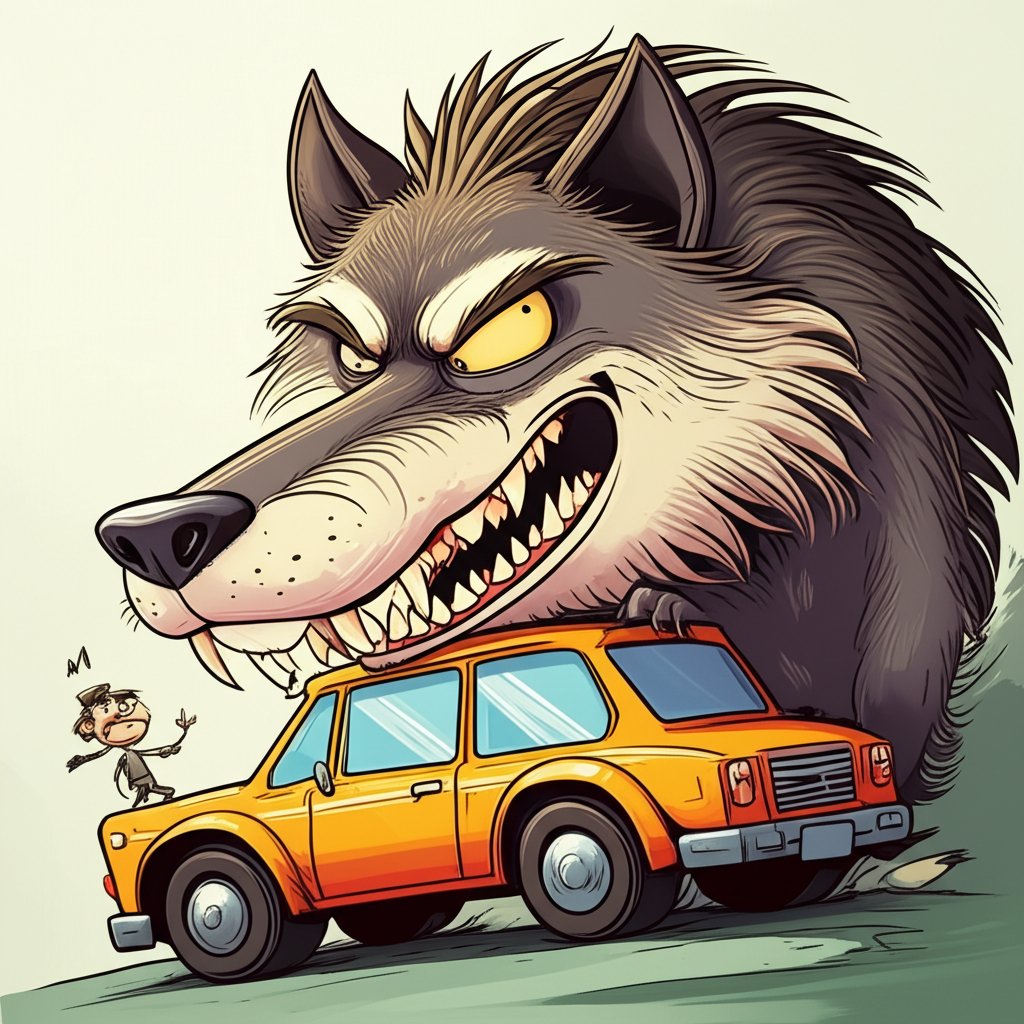
Disclaimer: The following article explores a story from Norse mythology for cultural, historical, and educational purposes. The characters, beings, and events described are part of a traditional folklore system and are not real. This narrative is not intended for belief, worship, or practice.
Introduction
From the windswept fjords and dense, dark forests of ancient Scandinavia, a collection of powerful myths emerged, carried on the tongues of skalds and whispered around the hearths of longhouses. These were the stories of the Norse people, known to us today as the Vikings. Their tales, recorded centuries later in texts like the Poetic Edda and Prose Edda, painted a picture of a cosmos teeming with gods, giants, and formidable beasts. This was not a world of simple good and evil, but one of complex destinies, inevitable doom, and the constant struggle between order and chaos. Within this epic saga, few figures loom as large or as terrifying as Fenrir, the great wolf whose fate is inextricably bound to the end of the world. This is a retelling of an encounter, not with the bound wolf of legend, but with the raw, untamed essence of his power, imagined against the fiery backdrop of Muspelheim, the realm of primordial fire.
Origins and Cultural Background
The Viking Age, spanning roughly from the 8th to the 11th centuries, was a period of immense change, exploration, and conflict. The people who told these stories lived in a world governed by the harsh realities of nature. They navigated treacherous seas, endured brutal winters, and carved out a life from a challenging landscape. Their worldview reflected this environment. They saw the cosmos as the Nine Worlds, a series of distinct realms connected by the great world tree, Yggdrasil. Asgard was the home of the Æsir gods, Midgard was the realm of humans, and Jotunheim was the land of the giants.
Central to their belief system was the concept of Wyrd, or fate. Destiny was a powerful, unchangeable force that even the gods could not escape. This fatalism culminated in the prophecy of Ragnarök, the "Twilight of the Gods," a cataclysmic final battle where the world would be consumed by fire and flood before being reborn. The stories of figures like Fenrir were not just monster tales; they were allegories for this worldview, embodying the ever-present threat of chaos and the knowledge that all things, no matter how mighty, must eventually come to an end.
The Creature of Chaos
Fenrir, also known as the Fenris Wolf, is one of the most fearsome beings in Norse mythology. He is the son of the trickster god Loki and the giantess Angrboða, and his siblings are Jörmungandr, the World Serpent, and Hel, the ruler of the underworld of the same name. From his birth, the gods of Asgard recognized the immense danger he posed. A prophecy foretold that he would be responsible for the death of Odin, the Allfather, during Ragnarök.
Fenrir is described as a wolf of unimaginable size and strength. As a pup, he grew so rapidly that the gods became terrified. His physical form is symbolic of his nature: he represents untamed wilderness, primal fury, and the destructive forces that civilization constantly seeks to contain. His fur was said to be the color of storm clouds and soot, his eyes burned with the embers of a dying star, and his fangs were like sharpened iron crags. More than just a physical threat, Fenrir was a living embodiment of inescapable doom—a walking, breathing prophecy of destruction that the gods themselves had to confront.
The Narrative: A Vision in the Embers
Imagine a Norse warrior, Hrolf, his beard braided with iron rings, his axe heavy in his hand. He lies wounded on a battlefield, his lifeblood seeping into the frozen earth as the winter sky darkens above. His vision blurs, the world of Midgard fades, and his spirit is pulled not toward the golden halls of Valhalla, but sideways, into a place of suffocating heat and endless twilight.
He stands on a plain of cracked obsidian under a sky the color of a fresh wound, glowing with a malevolent, crimson light. The air is thick with sulfur and ash, and in the distance, rivers of molten rock carve fiery paths through the desolate landscape. This is not a world of men or gods. It is an echo of Muspelheim, the primordial realm of fire, the forge of the cosmos where the fire giant Surtr waits for the end of days.
A low growl, deeper than thunder, vibrates through the soles of Hrolf’s feet, shaking the very ground. He turns, and there, silhouetted against a geyser of flame, is a sight that freezes his warrior’s heart. It is a wolf, but a wolf beyond all comprehension. Its shoulders are as high as mountains, its fur a shifting tapestry of shadow and smoldering embers. This is not the bound Fenrir, chained and waiting on a lonely island. This is a vision of his potential, his true essence, wreathed in the destructive fire of the world’s end.
The great wolf’s eyes, two burning coals in the endless night of its face, fix upon him. Hrolf is no more significant than a mouse before a serpent. The creature’s breath is a physical force, a wave of superheated air that scorches his skin and makes the air shimmer. When its colossal jaws part, Hrolf sees not just teeth like jagged peaks, but a gaping maw that seems to be a void, a gateway to utter nonexistence. The sound that escapes is not a howl but the grinding of continents, the shriek of a dying world.
In that moment, Hrolf understands. He understands the fear of the gods. He sees why they resorted to trickery to bind this creature, why the noble god Týr willingly sacrificed his hand to chain this apocalypse. This beast was not merely an animal; it was an engine of cosmic destruction. It was chaos given form, entropy made flesh. The flames of Muspelheim that danced upon its fur were not just a reflection; they were its destiny. This wolf and the fire giant’s sword were two parts of the same final song.
The vision shatters. Hrolf awakens with a gasp, the cold sting of a healer’s cloth on his brow. He has survived the battle, but the image of the fire-wreathed wolf is burned into his soul. He now carries a skald’s tale, a story not of glorious battle, but of the terrifying, inevitable darkness that waits at the edge of the world.
Symbolism and Meaning
To the ancient Norse people, the story of Fenrir was a profound exploration of their deepest anxieties.
- Order vs. Chaos: Fenrir is the ultimate symbol of chaos. The gods of Asgard, who built walls and established laws, represent order and civilization. Their struggle to bind Fenrir is the mythological parallel to humanity’s own struggle to control the wild, unpredictable forces of nature and society.
- The Inevitability of Fate: Despite their power, the gods could not kill Fenrir or prevent the prophecy. Their actions to bind him only ensure his rage and guarantee his role in their destruction. This speaks to the Norse belief in an inescapable destiny, where even the most powerful beings are just actors in a pre-written drama.
- The Price of Security: The story of Týr placing his hand in Fenrir’s mouth is a powerful moral lesson. It suggests that maintaining order and safety requires great sacrifice. Týr, the god of law and justice, pays a personal price to protect the collective, symbolizing that leadership and responsibility come at a cost.
Modern Perspective
Today, Fenrir has broken free from the pages of the Eddas and charged into modern popular culture. He is a recurring figure in literature, movies, and video games, often portrayed as a symbol of raw power and apocalyptic might.
- In Literature: Authors like Neil Gaiman in Norse Mythology and Rick Riordan in the Magnus Chase series have reintroduced Fenrir to a new generation, staying largely true to his mythological roots while adapting him for contemporary audiences.
- In Video Games: Fenrir appears as a formidable boss or a key plot element in titles like God of War, Assassin’s Creed Valhalla, and Smite. In these contexts, he is often depicted as a monstrous challenge to be overcome, a physical manifestation of ultimate power.
- In Film: While not a direct adaptation, the giant wolf in Marvel’s Thor: Ragnarok is named Fenris, a clear homage to the mythological beast who plays a part in Asgard’s destruction.
These modern interpretations tend to focus on Fenrir’s ferocity and monstrousness, sometimes losing the deeper symbolic weight he carried for the Norse people regarding fate and the cyclical nature of existence.
Conclusion
The tale of Fenrir, whether told as the binding of a monster or an imagined encounter in a realm of fire, remains a powerful piece of cultural heritage. It is a story born from a specific time and place, reflecting the worldview of a people who saw both great beauty and immense harshness in their world. These myths are not articles of faith but windows into the past, offering insight into the human imagination and its timeless efforts to grapple with concepts of destiny, chaos, and mortality.
As Muslims, we recognize that only Allah is the true Creator and Sustainer, the sole source of all power and the ultimate arbiter of destiny. These ancient stories, therefore, are appreciated not as truth, but as artifacts of human culture. They remind us of the enduring power of storytelling to capture the fears and hopes of a civilization and to pass down its understanding of the world through generations, leaving a legacy that continues to inspire and fascinate us to this day.


