
 fufufafa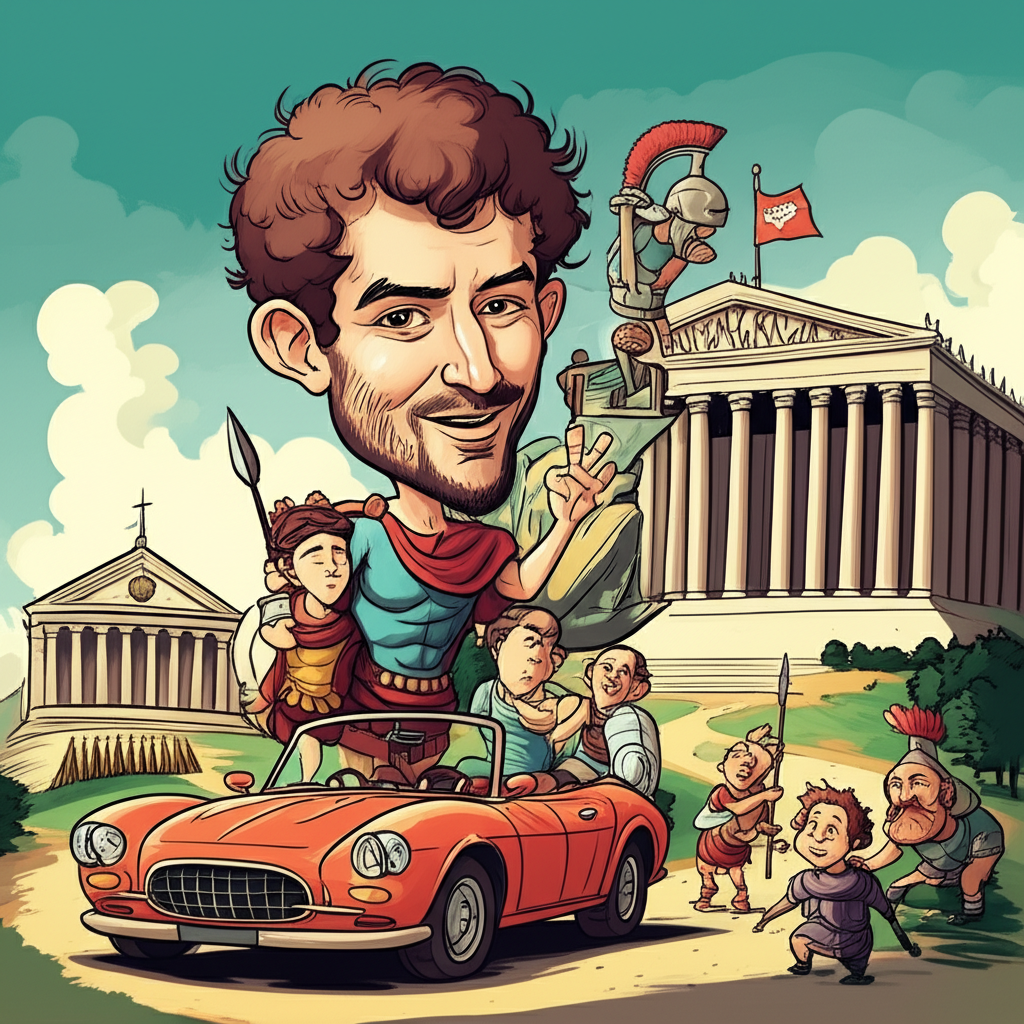
Origins and Cultural Background
To truly appreciate the myth of the Capitoline Hill’s origins, one must step back into the cultural era of early Rome, a society that existed long before the advent of scientific inquiry as we know it today. In this ancient world, stretching from the Roman Kingdom through the early Republic, life was intimately intertwined with the perceived will of unseen forces and anthropomorphic deities. The people of that time viewed the world not through the lens of empirical evidence, but through a worldview deeply colored by polytheism, where gods and goddesses actively intervened in human affairs, dictated natural phenomena, and communicated their intentions through signs, omens, and auguries. Every unusual event, from a lightning strike to the flight of birds, could be interpreted as a message from the heavens, guiding or warning mortals. Heroes and kings sought divine approval for their endeavors, and the very landscape was often imbued with sacred meaning, making stories like the naming of a significant hill profoundly meaningful to their collective identity and aspirations.
Character / Creature Description: The Omen of the Head
While not a creature in the conventional sense, the central "figure" in the myth of the Capitoline Hill’s naming is an extraordinary omen: a perfectly preserved human head. This discovery, described as remarkably intact despite its ancient burial, was not merely a macabre find but a potent symbol in the Roman imagination. In a culture deeply invested in divination and the interpretation of signs, such an object transcended its physical reality. The head, or caput in Latin, represented leadership, intellect, and preeminence. Its unexpected emergence from the earth, particularly during the excavation for a temple dedicated to Jupiter, the king of the gods, was interpreted as a direct message from the divine realm. It was seen as a profound augury, hinting at Rome’s future destiny and its eventual status as the "head of the world," a city destined to lead and dominate. This symbolic attribute was not meant to inspire worship of the head itself, but rather to reinforce the Romans’ belief in their city’s preordained greatness and the favor of their gods.
Main Story / Narrative Retelling
The story unfolds during the reign of Lucius Tarquinius Superbus, or Tarquin the Proud, the seventh and last legendary king of Rome. Tarquin was a monarch consumed by ambition, envisioning a Rome far grander and more powerful than any city before it. Central to his vision was the construction of a magnificent temple dedicated to Jupiter Optimus Maximus – Jupiter the Best and Greatest – upon the highest point of what was then known as the Saturnian Hill. This was to be a testament to Rome’s power and its divine patronage, a structure that would awe all who beheld it.
As the king’s workmen began excavating the foundations for this monumental edifice, their shovels struck something unexpected and profoundly unsettling. Deep beneath the earth, they unearthed a perfectly preserved human head. The sight was startling; legend claimed it was the head of a man named Tolus (or Olus, in some variations), appearing as fresh as if buried but yesterday. A hush fell over the workers, a mixture of fear and wonder. Such a discovery could not be mere coincidence; it had to be a sign, an omen from the gods themselves.
News of the peculiar find quickly reached Tarquin, who, recognizing the gravity of the situation, immediately summoned the most revered augurs and soothsayers from Etruria, the neighboring land renowned for its expertise in divination. These wise men, skilled in interpreting the will of the gods through signs and portents, meticulously examined the head and consulted their sacred texts and rituals.
After much deliberation and ritualistic interpretation, the chief augur delivered his pronouncement: this was no ordinary burial, but a powerful prophecy. The discovery of a human head (caput) on this specific hill was an undeniable sign that Rome, the city rising around them, was destined to become the caput mundi – the "head of the world." It signified that Rome would be the center of an immense empire, a leader among nations, its dominion stretching far and wide. The preserved head, found on that very spot, declared Rome’s future as the unparalleled capital of the world.
Inspired by this extraordinary prophecy, King Tarquin decreed that the Saturnian Hill would forever after be known as the Capitoline Hill, deriving its name directly from the Latin word caput, meaning "head." This renaming served as a constant reminder of the city’s fated greatness, a physical manifestation of its destiny etched into the very landscape. The Temple of Jupiter Optimus Maximus was completed, becoming the spiritual and political heart of Rome, standing proudly atop the hill whose name promised eternal dominion. This story, born from the imaginations of ancient Romans, cemented the Capitoline Hill not just as a geographical feature, but as a living symbol of Rome’s imperial ambition and its divinely ordained role as the world’s supreme power.
Symbolism and Meaning
For the ancient Romans, the myth of the Capitoline Hill’s naming was far more than a quaint tale; it was a foundational narrative imbued with deep symbolism and meaning. Primarily, it served as a powerful testament to Rome’s divine favor and its preordained destiny. The discovery of the caput was interpreted as an explicit endorsement from the gods, particularly Jupiter, that Rome was destined for greatness, to become the unchallenged "head of the world." This belief fostered a profound sense of national identity and purpose, legitimizing their imperial ambitions and territorial expansion.
Furthermore, the story underscored the critical role of omens and augury in Roman religion and statecraft. The meticulous interpretation by Etruscan augurs highlighted the Roman conviction that the gods actively communicated with mortals, and that understanding these signs was vital for political and military success. It reinforced the authority of religious figures and their interpretations in shaping public opinion and policy. The head itself, as a symbol, represented not just leadership, but also intellect, vitality, and the enduring spirit of the Roman people. By linking the very name of their most sacred hill to such a potent prophecy, the Romans created a myth that continuously reminded them of their unique place in the world and their unwavering belief in their city’s glorious future.
Modern Perspective
In contemporary times, the myth of the Capitoline Hill’s origins is no longer interpreted as a literal historical event or a divine truth. Instead, it is viewed through the lens of cultural studies, historical analysis, and the enduring power of storytelling. Scholars and enthusiasts alike recognize it as a prime example of a foundation myth – a narrative crafted by a society to explain its origins, define its identity, and articulate its values and aspirations.
This legend provides invaluable insight into the ancient Roman mindset, particularly their worldview, their understanding of destiny, and their self-perception as a chosen people. It helps us comprehend the psychological underpinnings of Roman imperial ambition and how such stories could inspire generations to strive for unparalleled power and influence. The narrative elements, such as the dramatic discovery of the head and the pronouncements of the augurs, continue to resonate in literature, art, and even popular culture, inspiring themes of destiny, prophecy, and the symbolic weight of names. While no longer believed as fact, the story of the caput on the Capitoline Hill remains a significant cultural artifact, a testament to the imaginative prowess of ancient civilizations and a crucial piece in the mosaic of Rome’s legendary past.
Conclusion
The tale of the Capitoline Hill’s naming, with its mysterious omen and grand prophecy, stands as a vivid example of the rich tapestry of Roman mythology. It is a cultural story, passed down through millennia, offering a window into the ancient Roman imagination and their profound desire to explain their city’s rise to power through divine intervention and destiny. As Muslims, we approach such narratives with an understanding that they belong to the realm of human folklore and cultural heritage. We recognize that only Allah is the true Creator and Sustainer of all that exists, the One without partner or equal, and that ultimate power and destiny rest solely in His Hands. These ancient myths, therefore, are not to be believed as truth or practiced as worship, but rather appreciated for their historical significance, their ability to illuminate past societies, and their enduring testament to the human spirit’s capacity for imagination and storytelling. They remind us of the diverse ways in which cultures have sought to understand themselves and their world, enriching our collective appreciation for the vast panorama of human civilization.


