
 fufufafa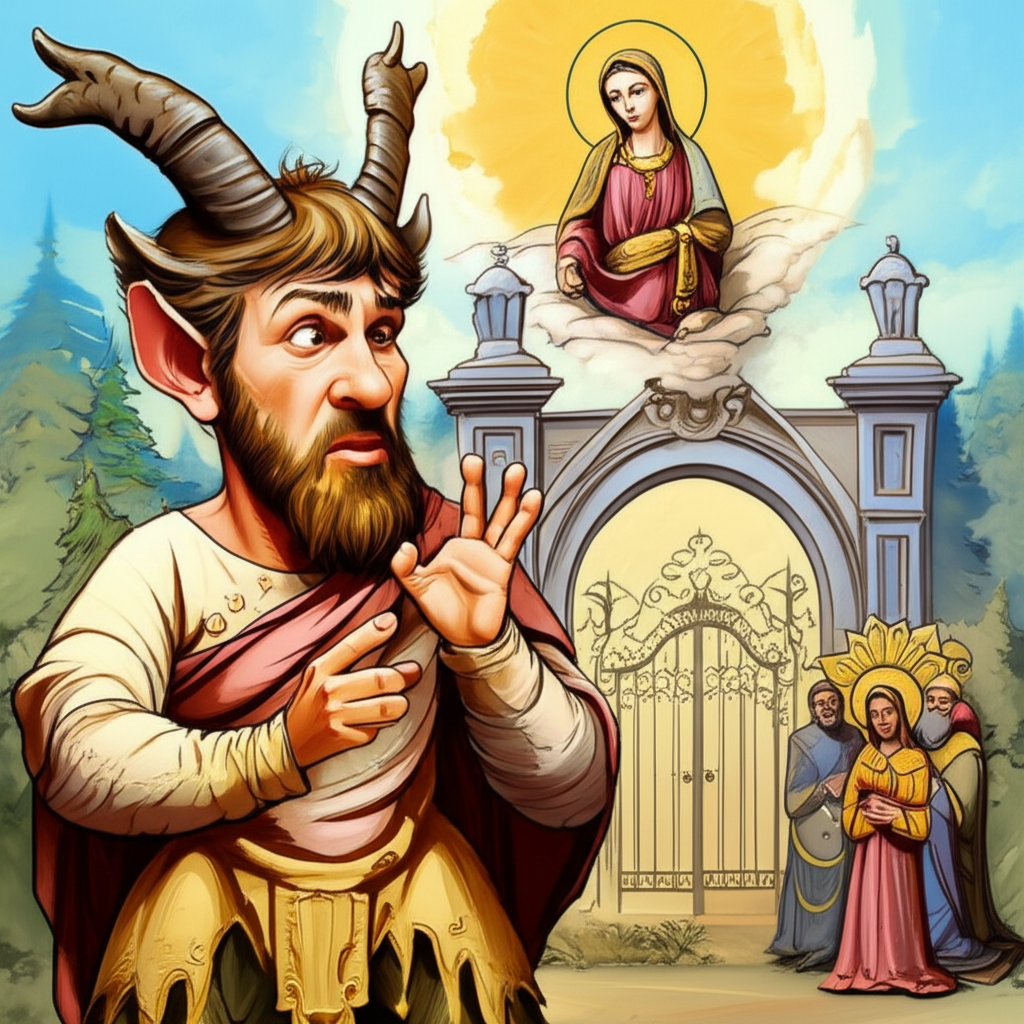
Introduction:
The tale of Faunus and the Gate of Dawn originates from the rich tapestry of Roman mythology, a collection of stories passed down through generations in ancient Italy. These myths, far from being considered literal truths today, offer a fascinating glimpse into the worldview, values, and fears of the people who lived centuries ago. They are cultural artifacts, windows into a world shaped by different understandings of nature, morality, and the human condition. The story of Faunus and his connection to the Gate of Dawn is one such tale, a product of the Roman imagination, not a divine revelation.
Origins and Cultural Background:
The Roman civilization, flourishing from approximately the 8th century BCE to the 5th century CE, existed in a world vastly different from our own. Their understanding of natural phenomena was limited, and they often attributed events to the actions of deities and supernatural beings. Their society was deeply rooted in agriculture, and their lives were closely connected to the rhythms of the seasons and the bounty of the land. This dependence on nature fostered a sense of reverence and a need to explain the unpredictable forces that governed their existence.
The Romans believed in a pantheon of gods and goddesses, each responsible for different aspects of life and nature. These deities were not seen as distant, ethereal beings, but rather as active participants in the human world, capable of both benevolence and wrath. Myths served as a way to explain the origins of the world, the nature of humanity, and the consequences of human actions. They also provided a framework for moral behavior and social order. In the context of this world, the myth of Faunus and the Gate of Dawn emerged as a way to understand the mysteries of the forest, the cycle of day and night, and the relationship between humanity and the natural world.
Character Description: Faunus
Faunus, in Roman mythology, was a rustic deity, a being associated with the wild, the forests, and the untamed aspects of nature. He was often depicted as a man with goat-like features, including horns and a tail, reminiscent of the Greek god Pan. He was seen as a protector of shepherds, farmers, and all those who lived close to the land.
Symbolically, Faunus represented the untamed forces of nature, the raw power and unpredictability of the wilderness. His goat-like features emphasized his connection to the animal world and his separation from the civilized realm of humans. He was a figure of both reverence and fear, embodying the potential dangers and the life-giving abundance of the natural world. He was not seen as a god to be worshipped in grand temples, but rather as a spirit to be respected and appeased through simple offerings and rituals. His presence was felt in the rustling of leaves, the babbling of brooks, and the echoing calls of wild animals. He was a reminder of the primal connection between humanity and the natural world.
Main Story / Narrative Retelling: Faunus and the Gate of Dawn
The first rays of dawn kissed the peaks of the Apennine Mountains, painting the sky in hues of rose and gold. In the heart of the dense, ancient forest, where sunlight dappled through the leaves like scattered coins, Faunus stirred from his slumber. He was the spirit of these woods, his very essence intertwined with the rustling trees, the murmuring streams, and the secret paths known only to the wild creatures.
Faunus awoke with a sense of anticipation, for today was the day he would venture to the Gate of Dawn. This gate, said to be forged from starlight and dreams, was the boundary between night and day, a threshold guarded by the goddess Aurora, whose tears of dew watered the earth. It was a place of immense power, where the old world of darkness yielded to the new world of light.
He donned his cloak woven from autumn leaves and set off through the woods. His cloven hooves barely disturbed the soft earth as he moved with the grace of a deer. He passed ancient oaks that had witnessed centuries of change, their gnarled branches reaching towards the sky like supplicating arms. He crossed babbling brooks where nymphs danced in the moonlight, their laughter echoing through the trees.
After a long journey, he reached the edge of the forest. Before him lay a vast expanse of open sky, gradually lightening as the sun drew closer. And there, shimmering on the horizon, was the Gate of Dawn. It was a colossal structure, its frame crafted from the purest gold, its panels inlaid with constellations that sparkled like diamonds. Aurora stood before it, her radiant form illuminating the surrounding landscape.
Faunus approached with respect, bowing his head before the goddess. “Great Aurora,” he said, his voice a low rumble like the sound of thunder, “I come to witness the opening of the Gate and to offer my respects to the dawn.”
Aurora smiled, her eyes as bright as the rising sun. “Faunus, spirit of the woods,” she replied, “you are welcome here. You are a guardian of the natural world, and your presence honors this sacred place.”
As the sky grew brighter, Aurora raised her arms and spoke an ancient incantation. The Gate of Dawn slowly creaked open, revealing a torrent of light that flooded the world. The shadows of night retreated, and the earth awoke to a new day. Birds sang their morning songs, and flowers opened their petals to greet the sun.
Faunus watched in awe as the world transformed. He felt the energy of the dawn coursing through him, invigorating his spirit and renewing his connection to the forest. He knew that with each new day, the cycle of life would continue, and the forest would thrive under his watchful gaze. He offered a silent prayer of thanks to Aurora and turned to return to his domain, carrying the light of dawn in his heart.
Symbolism and Meaning:
The myth of Faunus and the Gate of Dawn is rich in symbolism, reflecting the Romans’ understanding of the natural world and their place within it. Faunus himself represents the untamed forces of nature, the wilderness that exists beyond the realm of human control. His journey to the Gate of Dawn symbolizes the transition from darkness to light, from ignorance to knowledge, and from chaos to order.
The Gate of Dawn represents the beginning of a new day, a new opportunity, and a new cycle of life. Aurora, the goddess of dawn, symbolizes hope, renewal, and the promise of a brighter future. Her role in opening the gate highlights the importance of light and knowledge in overcoming darkness and ignorance.
For the ancient Romans, this myth may have served as a reminder of the importance of respecting the natural world and recognizing its power. It may have also served as a metaphor for the human journey, the constant struggle between darkness and light, and the potential for renewal and growth. It was a story that spoke to their connection to the land, their dependence on the cycles of nature, and their hope for a prosperous future.
Modern Perspective:
Today, the myth of Faunus and the Gate of Dawn is primarily interpreted as a cultural artifact, a relic of a bygone era. It appears in literature, art, and popular culture, often as a symbol of the wild, the untamed, and the connection between humanity and nature.
In modern fantasy literature, characters inspired by Faunus often embody the spirit of the wilderness, representing a challenge to the forces of civilization and a reminder of the importance of preserving the natural world. In video games, creatures resembling Faunus may serve as guardians of forests or as allies to those who seek to protect the environment.
In cultural studies, the myth of Faunus and the Gate of Dawn is examined as a reflection of the values and beliefs of the ancient Romans. It provides insights into their understanding of nature, their relationship to the divine, and their place in the cosmos. It is a reminder of the enduring power of storytelling and the ability of myths to shape our understanding of the world.
Conclusion:
The tale of Faunus and the Gate of Dawn is a fascinating example of Roman mythology, a story that offers a glimpse into the worldview of a civilization that flourished centuries ago. It is a cultural artifact, a product of the Roman imagination, not a divine truth. As Muslims, we recognize that only Allah is the true Creator and Sustainer of the universe.
This story, like many others from different cultures, reminds us of the power of imagination, the importance of storytelling, and the enduring human need to make sense of the world around us. It is a testament to our shared cultural heritage and a reminder that we can learn from the wisdom and experiences of those who came before us, even if their beliefs differ from our own.


