fufufafa
Introduction:
The Enuma Elish, a captivating creation myth, originates from ancient Mesopotamia, specifically from the region of present-day Iraq. This is a traditional story, a narrative crafted and shared by the people of ancient civilizations, not a factual account of the world’s creation. It is a window into the imagination and worldview of a long-lost era, offering a glimpse into the beliefs and anxieties of those who lived thousands of years ago. The story, etched onto clay tablets, reveals the cosmology and religious beliefs of the Babylonians and Assyrians, empires that once dominated the Fertile Crescent.
Origins and Cultural Background:
The Enuma Elish flourished within the vibrant cultural tapestry of ancient Mesopotamia, primarily during the Babylonian period (circa 18th to 6th century BCE). This was a society deeply intertwined with the rhythms of the natural world. The Tigris and Euphrates rivers, the lifeblood of their civilization, dictated their agricultural cycles and, consequently, their livelihoods. The fertile land, prone to both bountiful harvests and devastating floods, shaped their understanding of the world. They lived in a world where gods and goddesses were believed to control every aspect of life – from the sprouting of crops to the raging of storms. Temples, dedicated to these deities, were the centers of both religious and social life, serving as places of worship, learning, and governance.
The Mesopotamians possessed a complex polytheistic religion, with a pantheon of gods representing various aspects of nature and human experience. They believed the universe had its origins in a primordial state of chaos, a watery abyss. Order, as they understood it, was not a given but a product of cosmic struggle and divine intervention. Their worldview was one of constant interplay between order and chaos, a struggle that mirrored the challenges and uncertainties of their own existence. The Enuma Elish, therefore, wasn’t just a story; it was an explanation for the world around them, a framework for understanding their place within the cosmos, and a narrative that sought to legitimize the existing social order by portraying the gods as the originators of kingship and the divine right to rule.
Character/Creature Description:
The Enuma Elish is populated by a cast of powerful deities, each embodying specific cosmic forces and human characteristics. Foremost among them are:
- Apsu: The primordial god of fresh water, representing the original chaos, the undifferentiated waters from which all things emerged. He is often depicted as a vast, silent ocean, the passive source of all creation.
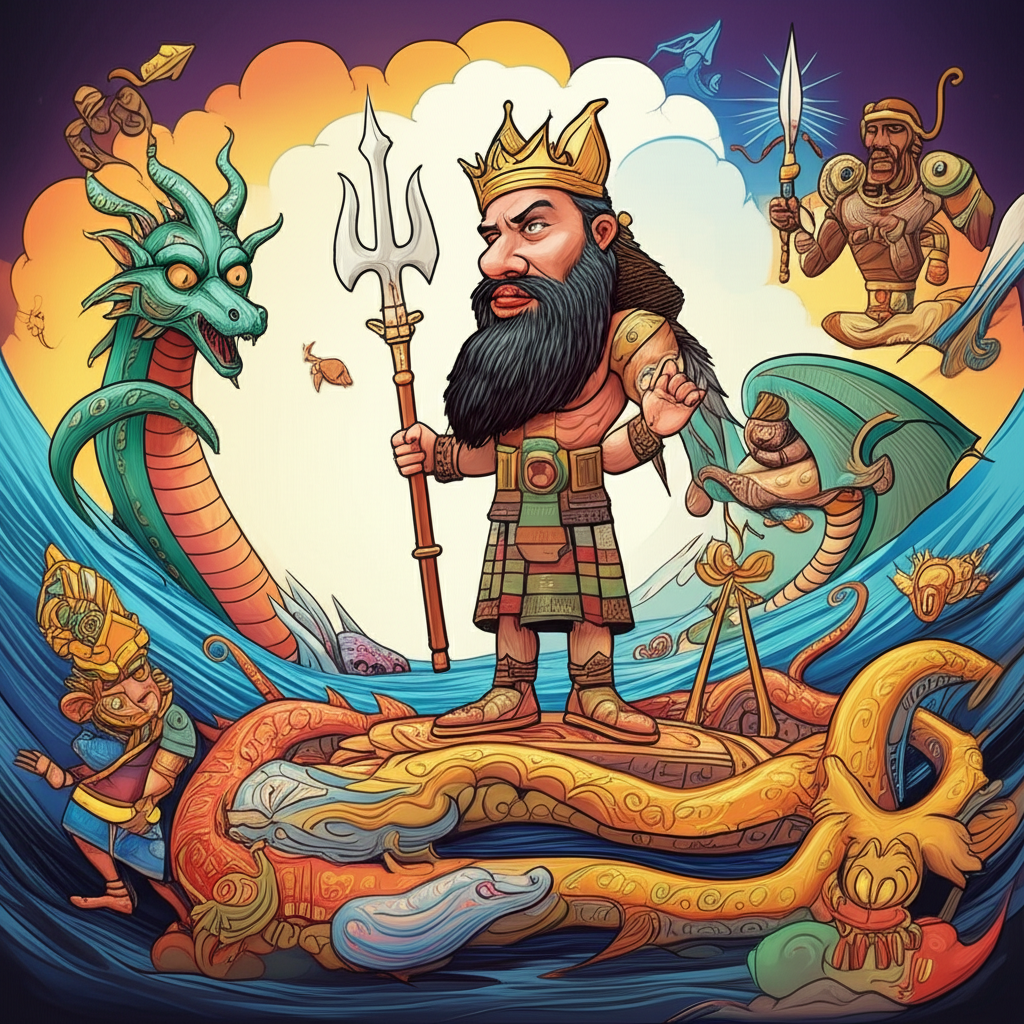
- Tiamat: The goddess of salt water, a monstrous, dragon-like figure, representing the chaotic sea. She is the embodiment of the untamed, destructive forces of the primordial waters. In later versions, she is often described as having the attributes of a serpent or a multi-headed beast, symbolizing the primal power of chaos.
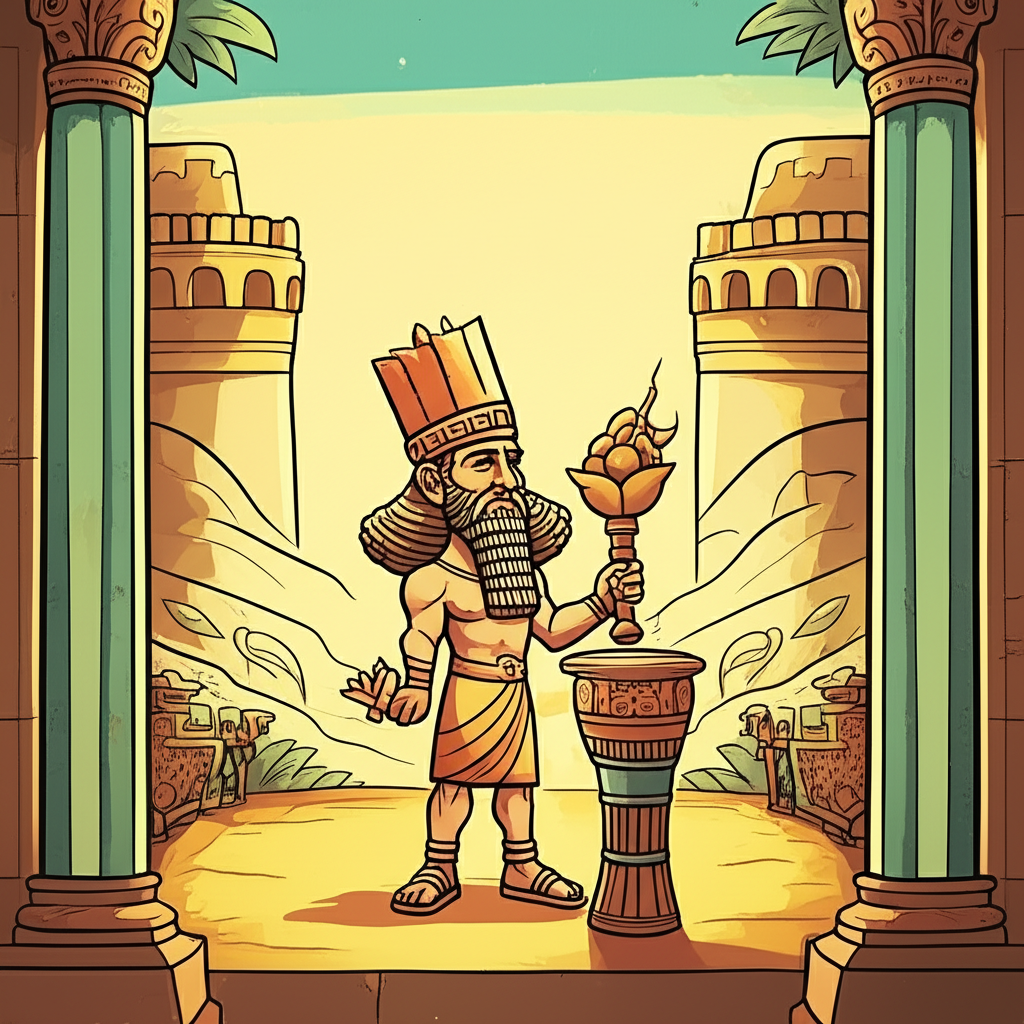
- Marduk: The hero god, the son of Ea and Damkina, and the champion of the younger gods. He is the storm god, the god of wisdom, and the patron god of Babylon. He is depicted as a powerful warrior, armed with weapons forged by the other gods, ready to confront the forces of chaos. His ascension to kingship within the divine realm reflects the political power of Babylon and its kings.
- Ea (Enki): The god of wisdom and craft, a cunning and resourceful deity, often associated with fresh water and the arts of civilization. He is the father of Marduk and plays a crucial role in averting the destruction threatened by Apsu.
- Kingu: Tiamat’s consort, a god appointed to be the leader of Tiamat’s army.
These characters are not meant to be worshipped but are representations of powerful forces and the dynamics of the universe as perceived by the ancient Mesopotamians.
Main Story / Narrative Retelling:
In the beginning, before the heavens and the earth existed, there was only a watery abyss, a primordial chaos. Apsu, the god of fresh water, and Tiamat, the goddess of salt water, mingled their waters, giving birth to the first generation of gods. These younger deities, boisterous and unruly, disturbed Apsu and his vizier, Mummu. Annoyed by their clamor, Apsu plotted to destroy them, to return the universe to its original silence.
Ea, the god of wisdom, detected Apsu’s plan. Through his cleverness, Ea killed Apsu, claiming his domain. In the heart of Apsu, Ea and his consort, Damkina, gave birth to Marduk, a god of immense power and brilliance.
Tiamat, enraged by the death of Apsu and the usurpation of his power, was determined to avenge his death and reclaim her dominion. She birthed monstrous creatures to wage war: dragons, serpents, scorpion-men, and other terrifying beings, led by Kingu, who Tiamat appointed as her king.
The younger gods were terrified by Tiamat’s wrath and the prospect of annihilation. They sought a champion to confront her. After much deliberation, they chose Marduk, offering him supreme authority and kingship if he could defeat Tiamat.
Marduk accepted the challenge, armed with powerful weapons and a chariot drawn by four horses. He confronted Tiamat in battle. In a fierce struggle, Marduk unleashed his power, splitting Tiamat in two. He used one half of her body to create the heavens and the other to form the earth. He then slew Kingu and used his blood to create humanity, whose purpose was to serve the gods.
Marduk, victorious, established order in the cosmos. He organized the stars, the planets, and the constellations, and he established the sun, moon, and seasons. He built Babylon and established the divine order, becoming the king of the gods and establishing his city as the center of the world.
Symbolism and Meaning:
The Enuma Elish is rich in symbolic meaning. The battle between the gods represents the cosmic struggle between order and chaos. The creation of the world from Tiamat’s body symbolizes the emergence of structure and form from the primordial abyss. The story reflects the Mesopotamians’ understanding of the universe as a product of divine conflict and the triumph of order over chaos.
Marduk’s rise to kingship is not merely a mythological event. It reflects the political realities of the Babylonian empire, showcasing the legitimization of Marduk and, by extension, the Babylonian kings. The story serves to validate the divine right to rule and reinforce the social hierarchy. The creation of humanity to serve the gods reinforces the concept of a divinely ordained social order, with humans subservient to the gods and their earthly representatives. The myth also explores themes of creation, destruction, renewal, and the cyclical nature of life, death, and rebirth, mirroring the natural cycles the Mesopotamians observed in the environment around them.
Modern Perspective:
The Enuma Elish continues to captivate modern audiences and scholars. It is studied in academic contexts, particularly in the fields of ancient history, religious studies, and comparative mythology. The story has been adapted in literature, inspiring writers to create new narratives and reinterpretations of the ancient myth. Its themes of creation, chaos, and order resonate with contemporary audiences. The story has also influenced various forms of media, from movies and video games, where the battle between gods and monsters provides an exciting backdrop. The Enuma Elish offers valuable insights into the beliefs and aspirations of ancient civilizations and remains a testament to the power of storytelling.
Conclusion:
The Enuma Elish is a cultural story, a product of the human imagination shaped by the environment and beliefs of the ancient Mesopotamians. It is a captivating narrative that illuminates their worldview and their understanding of the world’s origins. We, as Muslims, recognize that only Allah, the Almighty, is the true Creator and Sustainer of the universe. He is the one God, and there is no god but Him. The stories of other cultures can be examined for their historical and cultural significance, allowing us to learn from the past and appreciate the richness of human expression. The Enuma Elish provides a glimpse into the human capacity for storytelling, the enduring power of imagination, and the universal quest to understand our place in the cosmos. It reminds us of the importance of preserving cultural heritage and appreciating the diverse ways in which humans have sought to make sense of the world.