
 fufufafa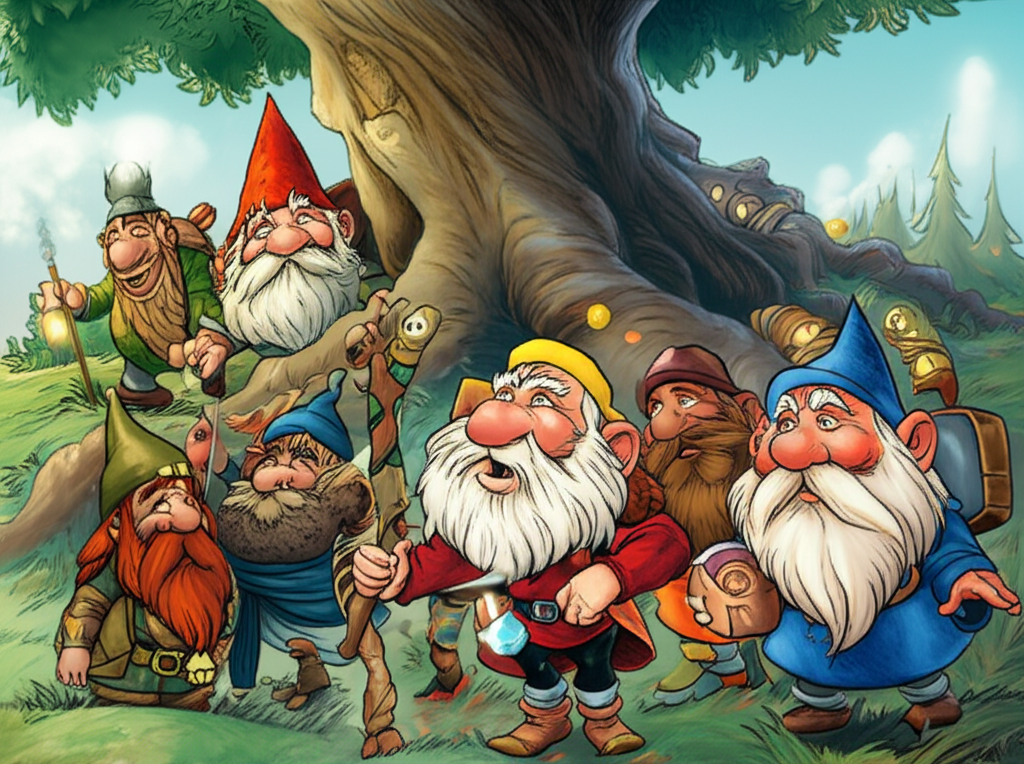
Introduction:
The tale of the dwarves of Yggdrasil is a story that echoes from the frozen lands of the Norse, a traditional narrative passed down through generations. It is a product of their rich oral storytelling tradition, a window into the beliefs and perceptions of the ancient peoples of Scandinavia. This is a story of myth and legend, a glimpse into a world of gods, giants, and mythical beings. It is important to understand that this is a story, a cultural artifact, not a claim of truth or a basis for faith. The story’s value lies in its power to illustrate the imagination and worldview of a people long past.
Origins and Cultural Background:
The stories of the dwarves and Yggdrasil, the world tree, originated in the Viking Age and earlier Germanic cultures, primarily in what is now Scandinavia: Norway, Sweden, Denmark, and Iceland. This was a time of fierce warriors, seafaring explorers, and a society deeply intertwined with the harsh realities of nature. The environment shaped their lives. The long, dark winters and the unforgiving seas demanded resilience and a profound understanding of the natural world.
The Norse viewed the world through a lens of interconnectedness. Their cosmology, or understanding of the universe, was complex and layered. They believed in a cosmos held together by the mighty Yggdrasil, a colossal ash tree whose roots delved into the underworld and whose branches reached the heavens. Within this cosmic tree resided various realms, populated by gods (Aesir and Vanir), giants, elves, dwarves, and humans. The world was a battleground between order and chaos, constantly shaped by the actions of these beings. Fate, or wyrd, was a powerful force, and every individual, from the humblest peasant to the mightiest warrior, had their destiny woven into the fabric of the universe. Their beliefs were a blend of animism (the belief that spirits inhabit all things), polytheism (the worship of many gods), and a deep respect for the natural world.
Character/Creature Description: The Dwarves
The dwarves, in Norse mythology, were skilled artisans, master craftsmen of metal, stone, and wood. They were typically depicted as small, stocky beings with long beards, living deep underground in the earth or within mountains. They were known for their mastery of forging, creating legendary weapons, treasures, and artifacts for the gods. They were also associated with mining, often seen as guardians of the earth’s riches. While their physical descriptions could vary, the common thread was their connection to the earth and their unmatched craftsmanship. They were not inherently good or evil, but their motivations and actions could have significant consequences for the other inhabitants of the cosmos.
Symbolically, the dwarves represented the hidden powers of the earth, the mastery of skill, and the secrets of creation. Their ability to forge weapons and treasures for the gods reinforced their importance within the Norse worldview. They were a reminder of the raw, untamed power that lay beneath the surface, both in the earth and within the human heart.
Main Story / Narrative Retelling:
The wind howled a mournful song through the skeletal branches of the trees, biting at the exposed skin of Einar, a young farmer from the harsh lands of Jotunheim. He had strayed too far from his village, seeking a lost lamb, when a blizzard descended, blinding and disorienting him. The swirling snow blurred his vision, and the icy wind stole his breath. He stumbled, his legs heavy with cold, and collapsed against the base of a towering oak, its gnarled roots digging deep into the frozen earth.
As the storm raged, Einar lost consciousness. When he awoke, he was no longer exposed to the blizzard. He found himself in a vast cavern, lit by glowing crystals that cast an eerie, ethereal light. The air was warm, and the sound of hammering echoed through the cavern’s tunnels.
He cautiously rose, his numbed limbs slowly regaining their strength. As he stumbled forward, he saw them. Dwarves. They were short and stocky, their faces framed by long, braided beards. Their eyes, like tiny embers, glowed with an intensity that seemed to pierce through the very stone. They wore leather aprons, stained with the soot of the forge, and their muscular arms moved with practiced precision as they hammered glowing metal.
Einar, awestruck, watched as one of the dwarves, a particularly old one with a white beard that reached his knees, looked up. He beckoned Einar closer. "Welcome, mortal," the dwarf’s voice rumbled, like the earth itself. "You have stumbled into the heart of Yggdrasil, into the halls of the Dvergar."
The old dwarf, who introduced himself as Brokkr, explained that they were the smiths of the gods, crafting weapons and treasures to maintain the balance of the cosmos. Einar was offered food and warmth, and he was told of the dwarves’ role in creating some of the most powerful artifacts in the world, including Thor’s mighty hammer, Mjolnir, and Odin’s spear, Gungnir.
He learned of their fierce independence, their dedication to their craft, and their rivalry with the gods. They showed him their workshops, filled with anvils, forges, and pools of molten metal. He saw them working with skill and precision, each movement a testament to their years of experience. He watched them craft intricate jewelry, weapons of incredible power, and even a ship that could sail across the sky.
Einar stayed with the dwarves for what seemed like days, or perhaps weeks. The passage of time seemed to lose all meaning within the depths of the earth. He learned the secrets of their craft, the knowledge of the metals, the fire, and the magic that infused their creations.
Finally, the blizzard outside subsided. Brokkr told Einar that it was time for him to leave. He gifted Einar a small, unassuming silver ring, telling him that it would bring him luck and protection. “Remember what you have seen here,” Brokkr said, his eyes twinkling. “The world is full of wonders, if you know where to look.”
Einar climbed back into the world, back to the harsh, wind-swept lands. He never forgot his encounter with the dwarves. The ring, a constant reminder of the hidden power of the earth and the skill of the artisans, remained with him for the rest of his days.
Symbolism and Meaning:
The story of the dwarves of Yggdrasil represents several key aspects of Norse beliefs. The dwarves symbolize the hidden power of the earth, the mastery of skill, and the secrets of creation. Their role as master craftsmen for the gods emphasizes the importance of craftsmanship and skill within their society. The story may also reflect a respect for the natural resources found beneath the earth. The meeting between a mortal and the dwarves can be seen as a journey of initiation, an encounter with the forces that shape the world. The gifts given to the mortal symbolize the knowledge and protection that can be gained through understanding. The isolation of the dwarves reflects the hidden, mysterious, and powerful aspects of the world.
The dwarves’ role in creating powerful weapons for the gods could reflect a respect for warfare and the importance of strength in a world where survival was a constant struggle. The story underscores the interconnectedness of all things within the Norse cosmology, where the actions of one being can have consequences for the entire cosmos.
Modern Perspective:
Today, the tales of the dwarves are popular in literature, movies, and games. They are a staple of fantasy storytelling, often portrayed as skilled artisans and miners, embodying the same characteristics as in the original Norse myths. The dwarves are frequently featured in the Lord of the Rings saga, the Dungeons & Dragons role-playing game, and various video games. They have come to represent a connection to the earth, the importance of craftsmanship, and the value of hard work. They are also interpreted as symbols of resilience and hidden strength. In modern interpretations, their personalities range from stoic and honorable to greedy and avaricious, reflecting the multifaceted nature of human character. Cultural studies explore how these stories reflect the values, fears, and aspirations of the societies that created them.
Conclusion:
The tale of the dwarves of Yggdrasil, like all myths, is a cultural story, a window into the imagination of a people. It’s a testament to the human capacity for storytelling, for weaving narratives that give meaning to the world around us. These stories remind us of the power of the natural world and the importance of skill and creativity. We, as Muslims, recognize that only Allah is the true Creator and Sustainer. We understand that these stories were a way for ancient people to understand their world, a framework for their understanding of the universe. They are a part of our shared human heritage, reminding us of the rich tapestry of human cultures and the enduring power of imagination. The exploration of these narratives encourages us to reflect on the diversity of human thought and the power of storytelling to connect us across time and cultures.


