
 fufufafa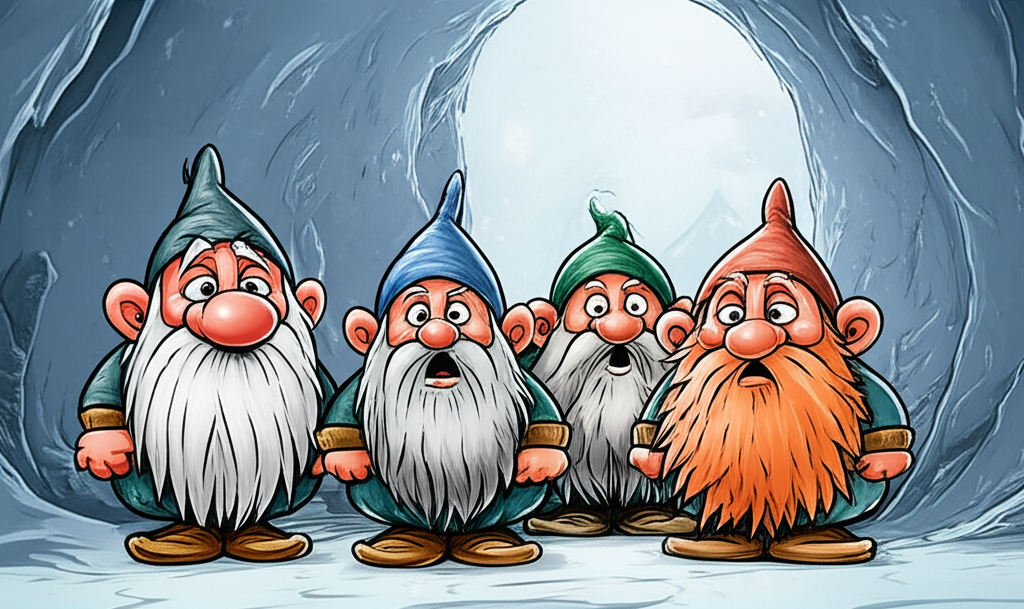
Introduction:
The tale of the Dwarves of Niflheim is a saga woven from the threads of Norse mythology, a rich tapestry of stories originating in the lands of Scandinavia, primarily during the Viking Age and the preceding Germanic Iron Age. This narrative, like so many others from that time, was not written down in its entirety until much later, primarily in the Poetic Edda and the Prose Edda, Icelandic manuscripts compiled in the 13th century. It is a traditional story, passed down through generations of oral storytelling, a window into the beliefs, fears, and aspirations of a people who looked to the natural world for answers and meaning. It’s a journey into a realm of giants, gods, and beings that shaped the very fabric of their cosmos.
Origins and Cultural Background:
The stories of the Dwarves of Niflheim blossomed within a culture deeply connected to the harsh realities of their environment. The Norse people, primarily farmers, seafarers, and warriors, lived in a world of long, dark winters and fleeting summers. Their lives were a constant struggle against the elements. Their understanding of the world was shaped by the natural world around them: the towering mountains, the deep forests, the raging sea, and the unpredictable weather.
Their cosmology, their understanding of the universe, reflected this reality. They believed in a layered cosmos, with the realm of humans (Midgard) at the center, surrounded by the homes of gods (Asgard), giants (Jotunheim), and the dead (Helheim). Niflheim, a realm of ice and mist, was considered one of the primordial realms, a place of cold and darkness from which all things eventually arose. The Norse saw the world as a battleground of forces, where order and chaos, light and dark, were locked in an eternal struggle. Their gods, though powerful, were ultimately mortal and faced their own eventual demise in Ragnarok, the twilight of the gods. This awareness of mortality and the constant struggle against the elements fueled their storytelling and shaped their worldview.
Character/Creature Description:
The Dwarves, or dvergar in Old Norse, are depicted as beings of the earth, skilled artisans and miners. They are not typically portrayed as gods, but rather as beings of immense craft and knowledge. They are often described as short and stout, with long beards and an affinity for the earth and its treasures. Unlike the Gods, who are typically portrayed as fair, the Dwarves could be ugly, and often associated with darkness and the underworld.
Their symbolic attributes are rich and varied. They represent the earth’s bounty, the skill of craftsmanship, and the secrets hidden within the mountains. They are masters of forging, creating legendary weapons, and crafting beautiful objects. Their connection to the earth signifies their understanding of its resources and the knowledge required to manipulate them. Their dwellings, often underground or within the mountains, symbolize the hidden depths of the world, where secrets and treasures are concealed. They are often associated with knowledge of runes, a form of writing that held magical properties.
Main Story/Narrative Retelling:
Let us venture, then, into the mists of Niflheim, the realm of primordial cold. Here, amidst the ice-choked rivers and the swirling fogs, the Dwarves have their domain. The air bites with a chill that seeps into the very marrow, and the sun, if it dares to pierce the gloom, offers only a pale, anemic light.
The tale begins with a traveler, a wandering soul, driven by a thirst for knowledge or perhaps a foolish dare. The traveler’s name, lost to the mists of time, matters little. What matters is the journey itself. Drawn by whispers carried on the frozen winds, the traveler ventures into the heart of Niflheim, seeking the legendary forges of the Dwarves.
After days of traversing the barren landscape, the traveler stumbles upon a cave mouth, barely visible through the swirling snow. A faint glow emanates from within, hinting at the warmth of a fire. Cautiously, the traveler enters, and the world transforms. The biting cold gives way to a stifling heat, and the darkness is pierced by the fiery glow of the Dwarves’ forges.
Here, in the depths of the earth, the Dwarves labor. Their faces are grim, their beards long and matted with soot. They are clad in leather aprons, their hands calloused from hammering and shaping metal. The air is thick with the scent of iron, sulfur, and the acrid smoke of the forges. They work tirelessly, their hammers ringing with a rhythmic clang against the anvils, a symphony of industry in the heart of the frozen realm.
The traveler, awestruck, watches as the Dwarves forge weapons of immense power: swords that gleam with an otherworldly light, axes that can cleave mountains, and rings that hold the power of fate. Some Dwarves work with stone, crafting intricate carvings that adorn the walls of their cavernous halls. The traveler observes the Dwarves, not engaging, but watching them carefully.
The Dwarves, in turn, are not particularly welcoming, but neither are they hostile. They know of the visitor’s presence, but they are focused on their work, and they are not inclined to conversation or interaction. They toil without pause, driven by their passion for craft. One Dwarf, older and more wizened than the others, finally acknowledges the traveler with a curt nod. He speaks in a gravelly voice, advising the visitor to leave, for this place is not for mortals. The Dwarf mentions that the secrets of their craft are not to be shared.
The traveler, sensing the unspoken warning, obeys. The journey out is as difficult as the journey in. The traveler barely escapes Niflheim, changed by the encounter, burdened by the knowledge of the Dwarves’ craft, and perhaps humbled by the realization that some secrets are best left undisturbed.
Symbolism and Meaning:
The story of the Dwarves of Niflheim, like many Norse myths, is rich with symbolism. The Dwarves represent the power of craftsmanship, the hidden knowledge of the earth, and the dangers of seeking forbidden secrets. Their association with the underworld and their expertise in forging weapons could represent the forces of creation and destruction, a duality inherent in the Norse worldview. The traveler’s journey into Niflheim could symbolize the quest for knowledge, the exploration of the unknown, and the inevitable confrontation with the darker aspects of the world. The cold and darkness of Niflheim could represent the challenges and dangers that come with exploring unknown realms and pushing boundaries.
The Dwarves’ mastery of metalwork and runes emphasizes the importance of skill and knowledge within their culture. The creation of powerful weapons can also represent the Norse people’s reverence for strength, courage, and their understanding of war. The story serves as a reminder of the power of the natural world, the importance of respecting its boundaries, and the consequences of seeking knowledge that is not meant to be shared.
Modern Perspective:
The tales of the Dwarves of Niflheim continue to resonate in contemporary culture. They are a frequent presence in fantasy literature, movies, and video games. The Dwarves, as figures of craftsmanship and skill, have become archetypes, inspiring characters like the blacksmiths in The Lord of the Rings and the craftsmen of World of Warcraft. They are interpreted in movies like the Marvel films. The exploration of their underground domains and the themes of hidden knowledge continue to fuel the imagination of storytellers across the world. They offer a means to explore themes of craft, resourcefulness, and the hidden depths of the human psyche. The myth has become a powerful source of inspiration for writers, artists, and game developers, allowing them to explore themes of craftsmanship, secrecy, and the potential for both creation and destruction.
Conclusion:
The encounter with the Dwarves of Niflheim is a compelling story, a window into the beliefs and values of a people who once lived under the shadow of the northern skies. It is a cultural heritage, a testament to the power of imagination and the enduring human fascination with the unknown. We, as Muslims, recognize that the true Creator and Sustainer of all things is Allah, the One. We acknowledge the value of cultural heritage and storytelling, understanding that stories like these offer a glimpse into the diverse expressions of the human spirit. The stories of the Dwarves of Niflheim, while not to be taken as truth, are a testament to the power of imagination and the enduring human desire to explore the mysteries of the universe. They are a reminder of our shared heritage of storytelling, and the importance of respecting and learning from different cultures.


