
 fufufafa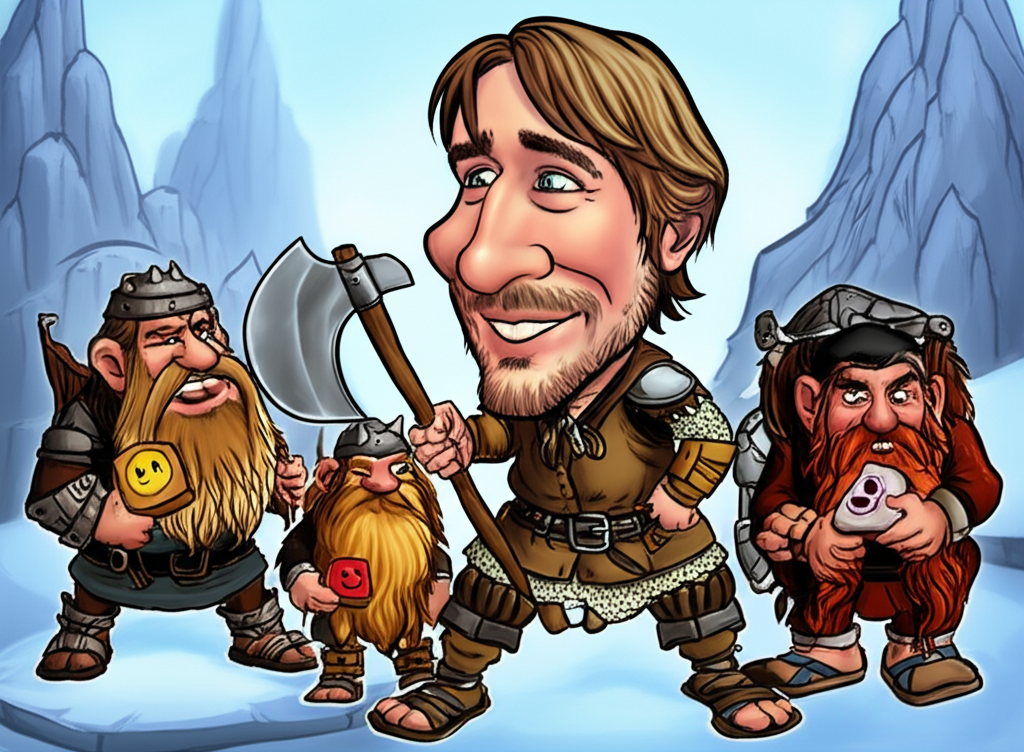
Introduction:
This tale of an encounter with the dwarves of Jotunheim is drawn from the rich tapestry of Norse mythology. These stories were passed down through generations by the people of Scandinavia, primarily during the Viking Age and the centuries leading up to it. This particular narrative, like many others in the Norse corpus, is not presented as historical fact but as a traditional story used to explore themes of craft, cunning, and the relationship between different beings in the cosmos.
Origins and Cultural Background:
The Norse people, living in what is now Norway, Sweden, Denmark, Iceland, and parts of Finland, inhabited a world vastly different from our own. Theirs was a harsh environment, shaped by long, dark winters and short, intense summers. Their society was primarily agrarian, with strong warrior traditions. They were seafarers, explorers, and raiders, their lives intricately tied to the natural world. The Norse worldview was deeply influenced by their surroundings. They believed in a cosmos populated by gods, giants, elves, dwarves, and various other supernatural beings. These beings, much like the humans, were flawed, capable of both great kindness and terrible cruelty. Their myths were not just entertainment but also served as explanations for the world around them, providing a framework for understanding the forces of nature and the human condition. The oral tradition was paramount, with stories passed down through skalds and storytellers, evolving and adapting with each retelling.
Character / Creature Description:
The dwarves, or dvergar in Old Norse, are depicted as skilled craftsmen, master smiths, and miners who dwell primarily underground, in caves, and within mountains. They are often described as short, stocky, and possessing great strength despite their size. In Norse mythology, dwarves are not typically portrayed as inherently evil, but they are often greedy, secretive, and possessive of their creations. They are renowned for their craftsmanship, forging weapons, jewelry, and magical items of unparalleled quality. Symbolically, the dwarves represent the hidden powers of the earth, the mastery of craft, and the potential dangers of greed and isolation. They are not divine beings to be worshipped, but rather figures in a complex cosmology that sought to explain the mysteries of the world.
Main Story / Narrative Retelling:
Bjorn, a young woodsman from a small village nestled at the edge of a vast forest, found himself lost. He had been tracking a particularly large stag for days, venturing deeper and deeper into the woods than he had ever dared before. Now, the sun was beginning to dip below the horizon, painting the sky in hues of orange and purple, and he realized with a growing sense of dread that he was utterly and hopelessly lost.
As darkness fell, the forest transformed. The familiar trees became menacing silhouettes, and every rustle of leaves sounded like a whispered threat. Bjorn stumbled onward, hoping to find some sign of civilization. He soon came to a rocky outcrop, and at its base, he noticed a small opening – a cave, almost hidden by overgrown moss and ferns. Desperate for shelter from the approaching night, he cautiously entered.
The air inside was cool and damp, carrying a faint smell of earth and metal. As Bjorn ventured deeper, he heard the distinct sound of hammering – rhythmic, precise, and echoing through the cavern. He followed the sound, his heart pounding in his chest, until he reached a large chamber illuminated by the flickering light of a forge.
There, he saw them: the dwarves of Jotunheim. They were shorter than any man Bjorn had ever seen, their faces weathered and lined, their beards long and tangled. They were hard at work, hammering glowing metal on anvils, their movements precise and efficient. Sparks flew through the air, illuminating their focused expressions.
One of the dwarves, noticing Bjorn’s presence, stopped hammering and fixed him with a stern gaze. He was older than the others, his beard reaching almost to his knees. "Who are you, mortal, and what brings you to our halls?" he demanded, his voice deep and gravelly.
Bjorn, intimidated by their presence and the strange atmosphere of the cavern, stammered, "I… I am Bjorn, a woodsman. I am lost and sought shelter from the night."
The dwarf considered him for a moment, then nodded. "You may rest here for the night, mortal," he said. "But do not touch anything. This is our workshop, and we do not tolerate meddling."
Bjorn gratefully accepted their offer. He sat by the edge of the chamber, watching the dwarves work. He saw them forge intricate jewelry, powerful weapons, and strange, glowing artifacts. He was amazed by their skill and the sheer beauty of their creations. He watched them work through the night, their hammers never ceasing, their dedication unwavering.
As the first rays of dawn filtered into the cave, the elder dwarf approached Bjorn. "We have shown you hospitality, mortal," he said. "Now you must leave. We will guide you back to the edge of the forest, but you must never speak of what you have seen here. If you do, you will face our wrath."
Bjorn, eager to escape the strange and unsettling atmosphere of the dwarves’ workshop, readily agreed. The dwarves led him out of the cave and pointed him in the direction of his village. He thanked them and hurried away, never looking back.
He never forgot his encounter with the dwarves of Jotunheim. He kept his promise, never revealing the location of their hidden workshop or the secrets he had witnessed. The experience changed him, however. He gained a newfound respect for the hidden powers of the earth and the skill and dedication required to master a craft.
Symbolism and Meaning:
This story, like many Norse myths, likely served multiple purposes. On a practical level, it might have been used to explain the origins of exceptionally well-crafted items found in barrows or traded from other cultures. On a deeper level, it explores themes of the hidden world, the power of craftsmanship, and the dangers of greed and transgression. Bjorn’s encounter can be interpreted as a symbolic journey into the unknown, where he gains knowledge and understanding but must also respect the boundaries and secrets of the dwarves’ realm. The dwarves themselves represent the hidden potential of the earth, the power of skill and dedication, and the importance of respecting the natural world. The tale could have also served as a cautionary one, warning against seeking out forbidden knowledge or breaking oaths.
Modern Perspective:
The dwarves of Norse mythology continue to fascinate and inspire in modern culture. They are frequently depicted in fantasy literature, movies, and video games. J.R.R. Tolkien’s dwarves in The Lord of the Rings are heavily influenced by the Norse dvergar, with their love of crafting, their underground dwellings, and their often gruff personalities. In many modern interpretations, dwarves are portrayed as honorable, skilled warriors and craftsmen, embodying values such as loyalty, perseverance, and a deep connection to the earth. The myth also appears in Marvel Comics and the Marvel Cinematic Universe, further popularizing the image of the Norse dwarves. In cultural studies, the myth is used as a way to understand the pre-Christian beliefs of the Scandinavian people, and the way those beliefs have shaped culture, literature, and art.
Conclusion:
The tale of encountering the dwarves of Jotunheim is a cultural story passed down through generations, offering a glimpse into the worldview and imagination of the ancient Norse people. It is important to remember that this is a work of fiction, a product of human creativity, and not a statement of truth or a source of divine power.
As Muslims, we believe that only Allah is the true Creator and Sustainer of the universe. We recognize the importance of understanding and appreciating different cultures and their stories, but we affirm that Allah is the only One worthy of worship and devotion.
This story, and others like it, serve as a reminder of the rich tapestry of human culture, the power of imagination, and the enduring tradition of storytelling. They are a testament to the human capacity to create meaning and explore the mysteries of the world through the lens of myth and legend.


