
 fufufafa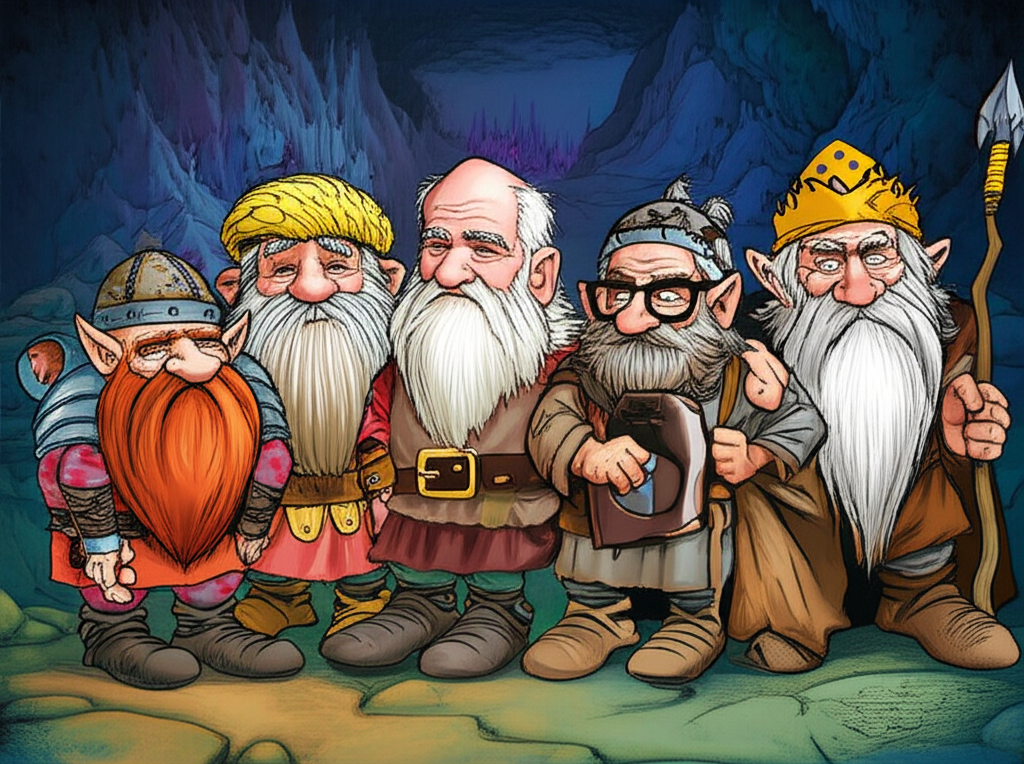
1. Introduction:
This story recounts a hypothetical encounter with the dwarves of Helheim, a realm in Norse mythology. Norse mythology originates from the pre-Christian beliefs and legends of the Scandinavian and Germanic peoples. These tales, passed down orally for generations before being written down in texts like the Prose Edda and Poetic Edda, offer a glimpse into the worldview of the Vikings and their ancestors. It is important to remember that this is a traditional story, part of a rich tapestry of myths used by ancient people to understand their world, and is not presented as fact.
2. Origins and Cultural Background:
The era in which these myths flourished was a harsh one, defined by agricultural societies, seafaring voyages, and a constant struggle against the elements. The Vikings, known for their longships and raiding expeditions, lived in a world teeming with perceived dangers and powerful forces. They saw the natural world as animated by spirits and deities, and their mythology served as a way to explain the unexplainable – the changing seasons, the unpredictability of the sea, the cycle of life and death. Their society was deeply influenced by notions of honor, courage, and fate, all of which are reflected in their sagas and myths. The world was perceived as existing on multiple levels, connected by the world tree Yggdrasil, with realms like Asgard (home of the gods), Midgard (the world of humans), and Helheim (the realm of the dead) all interconnected.
3. Character / Creature Description:
The dwarves, or dvergar in Old Norse, are described as master craftsmen, often associated with the earth, mountains, and mining. They are typically depicted as short, stocky beings, skilled in forging weapons, crafting jewelry, and working with precious metals. They are said to live in subterranean realms, hidden from the eyes of humans and gods alike. Symbolically, the dwarves represent skill, ingenuity, and the hidden potential found within the earth. They can also represent greed and possessiveness, as they are often depicted as hoarding their treasures. In the context of Helheim, the dwarves might be involved in the construction and maintenance of structures within the realm of the dead, or perhaps even tasked with crafting items for the goddess Hel.
4. Main Story / Narrative Retelling:
A chilling wind howled through the skeletal branches of the trees as I, a lone traveler lost in the desolate expanse of the Norse afterlife, stumbled onwards. I had heard whispers amongst the wandering spirits of a hidden forge, deep within the frozen heart of Helheim, where the dwarves toiled endlessly. Driven by a morbid curiosity, I pressed on, ignoring the moans of the damned that echoed through the icy valleys.
The landscape was bleak: a perpetual twilight cast long, distorted shadows across the frozen ground. The air grew colder, biting at my exposed skin. Eventually, I came upon a cleft in a towering, obsidian cliff face. A faint, rhythmic clang of metal upon metal emanated from within. Hesitantly, I stepped inside.
The passage opened into a vast cavern, dimly lit by the flickering glow of forges. Dwarves, their faces grim and etched with the weariness of centuries, labored at their anvils. Sparks flew, illuminating their muscular arms and thick beards, matted with grime and soot. The air was thick with the smell of sulfur and molten metal.
These were not the boisterous dwarves of legend, celebrating their craft with song and ale. These were dwarves bound to Helheim, their faces reflecting the endless sorrow and despair of the realm. They moved with a mechanical precision, their hammers rising and falling with the same monotonous rhythm, forging tools and implements for the denizens of the underworld.
One dwarf, older than the rest, with a beard that reached his knees, looked up from his work. His eyes, deep-set and piercing, seemed to bore into my soul. He spoke in a guttural tongue, a language I somehow understood. "What brings a living soul to this forsaken place?"
I explained my aimless wandering, my curiosity about their craft. He merely grunted. "Here, there is no beauty, no joy. Only the endless cycle of creation and decay. We forge not for pleasure, but out of necessity. Hel demands it."
He gestured to a pile of grotesque tools – hooks for dragging lost souls, chains for binding the restless dead, and blades forged from the tears of the damned. They were implements of torment, crafted with the same skill and precision as the finest weapons of Midgard, but infused with the darkness of Helheim.
I watched them work for what felt like an eternity, the clang of their hammers echoing in the cavern, a soundtrack to the endless suffering of the underworld. The old dwarf, seeing my growing unease, finally spoke again. "Leave this place, mortal. There is nothing here for you but sorrow. Return to the world of the living, and cherish the light while you still can."
He turned back to his anvil, the rhythmic clang of his hammer resuming its mournful song. I took his advice and fled the cavern, the image of the dwarven forge, with its endless cycle of creation and despair, forever etched into my memory.
5. Symbolism and Meaning:
To the ancient Norse, this story, if they had told it, might have represented the inevitability of death and the cyclical nature of existence. The dwarves, in this context, could symbolize the relentless forces of nature, constantly shaping and reshaping the world, even in the realm of the dead. The bleakness of Helheim and the dwarves’ joyless labor could serve as a reminder of the importance of living a virtuous life, as opposed to the grim fate awaiting those who did not. It could also represent the hidden skills and resources that lie dormant, even in the most desolate and hopeless of circumstances.
6. Modern Perspective:
The image of the dwarves, particularly their association with mining and craftsmanship, has persisted in modern literature, movies, and games. J.R.R. Tolkien’s dwarves in The Lord of the Rings are a prime example, inheriting the Norse dwarves’ skill with stone and metal, as well as their love of treasure. In video games, dwarves often appear as skilled engineers, warriors, or miners. In cultural studies, the dwarves serve as a point of entry for understanding Norse mythology and its influence on modern fantasy and culture.
7. Conclusion:
The encounter with the dwarves of Helheim is a tale woven from the threads of Norse mythology, a story used by ancient people to grapple with the mysteries of life, death, and the forces that shaped their world. It is a testament to their rich imagination and storytelling tradition, not a reflection of literal truth. As Muslims, we understand that Allah is the sole Creator and Sustainer of the universe, and that these mythological beings are products of human imagination. Nevertheless, studying these stories provides valuable insight into the cultural heritage of different societies and the enduring power of narrative to explore the human condition. It reminds us of the importance of preserving and understanding the stories of the past, while remaining grounded in our faith and belief in the one true God.


