fufufafa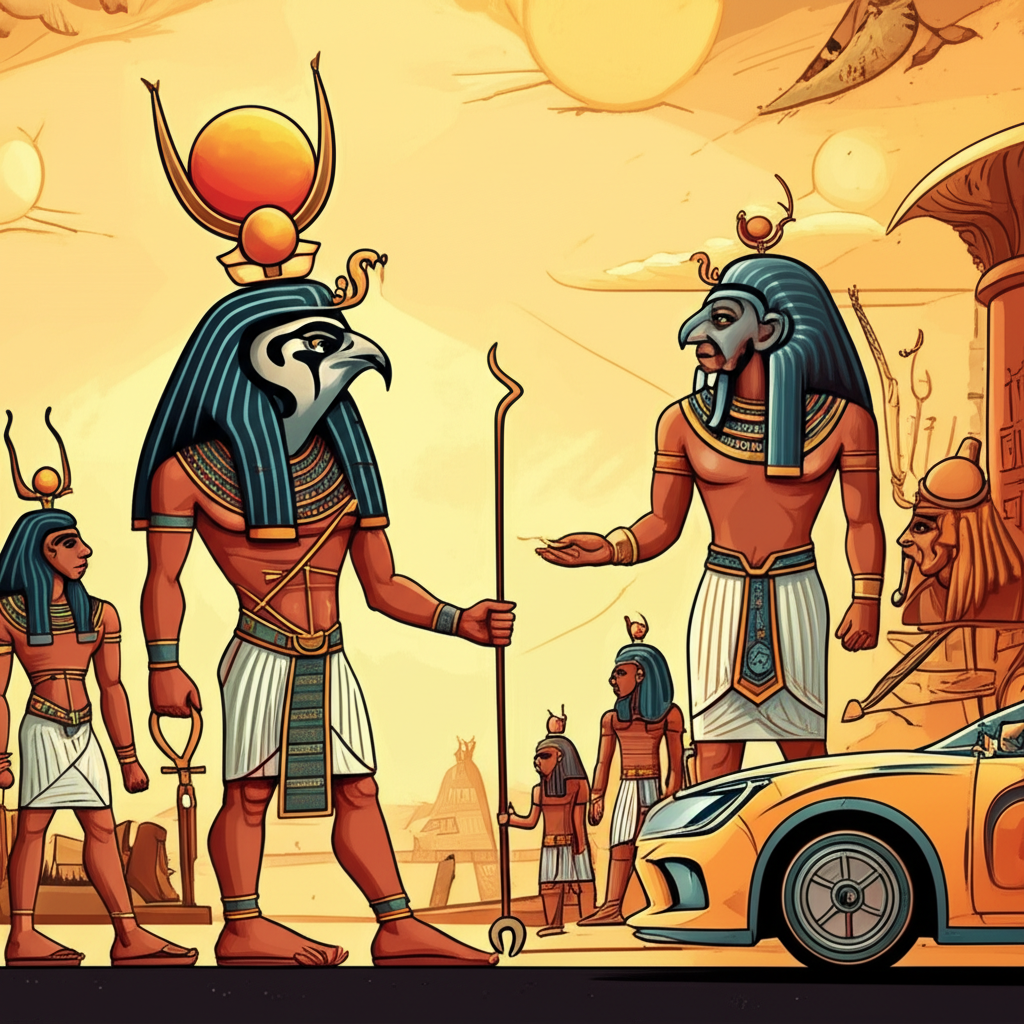
The sands of Egypt, vast and ancient, hold within them stories whispered for millennia, narratives woven into the very fabric of their civilization. Among these are tales of gods and kings, of cosmic battles and the cyclical nature of existence, all stemming from the rich tapestry of ancient Egyptian mythology. It is crucial to understand that these are traditional stories, products of a bygone era, shared and pondered by people long past. They offer a window into the worldview of an ancient society, a fascinating glimpse into their attempts to comprehend the universe and their place within it.
The world of ancient Egypt, a civilization that flourished along the fertile banks of the Nile River for thousands of years, was one deeply intertwined with nature. Their lives were dictated by the predictable, yet often awe-inspiring, rhythm of the Nile’s annual flood, the scorching intensity of the desert sun, and the starry expanse of the night sky. This environment fostered a profound sense of connection to the natural world, and their mythology reflects this. Deities were often personifications of natural forces, their actions mirroring the cycles of life, death, and rebirth that governed their reality. The Egyptians viewed the cosmos as a complex, often volatile, system where divine powers held sway, and understanding these powers was paramount to maintaining order and prosperity.
At the heart of many of these cosmic dramas stands Ra, a paramount deity in the Egyptian pantheon. Ra, often depicted as a man with the head of a falcon crowned with a sun disk, was the embodiment of the sun, the ultimate source of light, warmth, and life. His daily journey across the sky, from dawn to dusk, was seen as a powerful metaphor for the eternal cycle of creation and renewal. The sun disk itself was a potent symbol, representing sovereignty, divine power, and the life-giving energy that sustained all things. Ra’s celestial barge, upon which he traversed the heavens, was his vessel of power, carrying him through the trials of day and the perils of the underworld.
The myth of Ra and the "War of Osiris" is not a single, monolithic narrative in the same way a historical battle might be chronicled. Instead, it represents a complex web of interconnected stories that explore themes of kingship, rebellion, death, and the enduring struggle between order and chaos. At its core, this myth often involves a conflict stemming from the betrayal and murder of Osiris, the benevolent god of the underworld and resurrection, by his jealous brother, Set. While Ra is not always the direct combatant in every retelling of Osiris’s downfall, his role as the supreme god, the ultimate arbiter of cosmic law, is inextricably linked to the events.
Imagine, if you will, a time when the world was still finding its balance. The gods walked among mortals, their power shaping the very existence of the land. Osiris, beloved by his people and his devoted wife Isis, ruled with wisdom and compassion. He brought order to the chaotic lands, teaching humanity the arts of agriculture and civilization. His reign was a golden age, a time of peace and prosperity.
However, lurking in the shadows was his brother, Set, a god of chaos, desert storms, and violence. Envy gnawed at Set’s heart, a bitter resentment for Osiris’s popularity and his divine authority. Fueled by this dark ambition, Set devised a treacherous plot. He orchestrated a grand banquet, and with cunning deception, tricked Osiris into a magnificent coffin, precisely sized to fit him. Once Osiris lay within, Set and his accomplices slammed the lid shut, sealing the god’s fate, and cast the coffin into the Nile, where it was carried out to sea.
The land was plunged into despair. Isis, heartbroken and determined, embarked on a perilous journey to find her beloved husband. Her quest led her through trials and tribulations, guided by fragments of whispered rumors and divine intuition. Eventually, she found Osiris’s body, only for it to be stolen again by Set, who dismembered it into fourteen pieces and scattered them across Egypt.
It is here that Ra’s ultimate authority comes into play. While Isis and her sister Nephthys grieved and searched for the scattered limbs of Osiris, Ra, from his celestial throne, observed the unfolding chaos. The murder of Osiris was not merely a personal tragedy; it was an affront to the cosmic order, a disruption of the natural cycle of life and death that Ra, as the sun god, represented. Ra, in his role as the supreme ruler and maintainer of Ma’at (truth, order, justice), would have been deeply concerned by such a blatant act of betrayal and the ensuing disruption.
In some versions of the myth, Ra might have intervened directly, or his divine decree might have set in motion the forces that allowed for Osiris’s eventual resurrection. It was Ra’s power, the life-giving force of the sun, that ultimately enabled Isis to gather the fragments of Osiris, perform the sacred rites, and bring him back from the brink of oblivion. Though Osiris could not fully reclaim his earthly life, he became the ruler of the underworld, the god who ensured that life continued after death, a testament to the enduring power of renewal.
The symbolism embedded within these narratives is profound and multifaceted. The conflict between Osiris and Set, for instance, can be seen as a representation of the eternal struggle between order and chaos, between the life-giving forces of creation and the destructive impulses of disorder. Osiris, with his connection to the fertile Nile valley and his role in resurrection, embodies the cyclical nature of life, the promise of renewal even after death. Set, on the other hand, represents the untamed, destructive forces of the desert, the unpredictable elements that threatened the stability of Egyptian society.
Ra’s role as the supreme solar deity underscores the importance of divine authority and the establishment of a just and ordered society. His sun disk, a constant and reliable presence in the sky, symbolized the enduring nature of divine law and the promise of a new dawn, even after the darkest night. The myth also speaks to the power of love, devotion, and perseverance, as exemplified by Isis’s unwavering quest to reclaim her husband.
Today, these ancient myths continue to resonate, not as literal truths, but as powerful cultural artifacts that have shaped our understanding of storytelling, symbolism, and the human condition. The figures of Ra, Osiris, and Set appear in countless works of literature, film, and popular culture, often reimagined and reinterpreted to explore themes of power, betrayal, and the eternal struggle between good and evil. In academic circles, these myths are studied for their insights into ancient Egyptian religion, social structures, and their unique worldview.
It is essential to reiterate that these are traditional stories, born from the imagination and cultural context of the ancient Egyptians. As Muslims, we recognize that only Allah is the true Creator and Sustainer of the universe, the sole entity worthy of worship. These ancient narratives, while culturally significant, are not divine revelations. Instead, they serve as a testament to the enduring power of human storytelling, the universal desire to make sense of the world, and the rich tapestry of cultural heritage that continues to inform and inspire us. By exploring these myths, we gain a deeper appreciation for the diverse ways in which humanity has sought to understand its existence, celebrating the creativity and intellectual curiosity of those who came before us.