fufufafa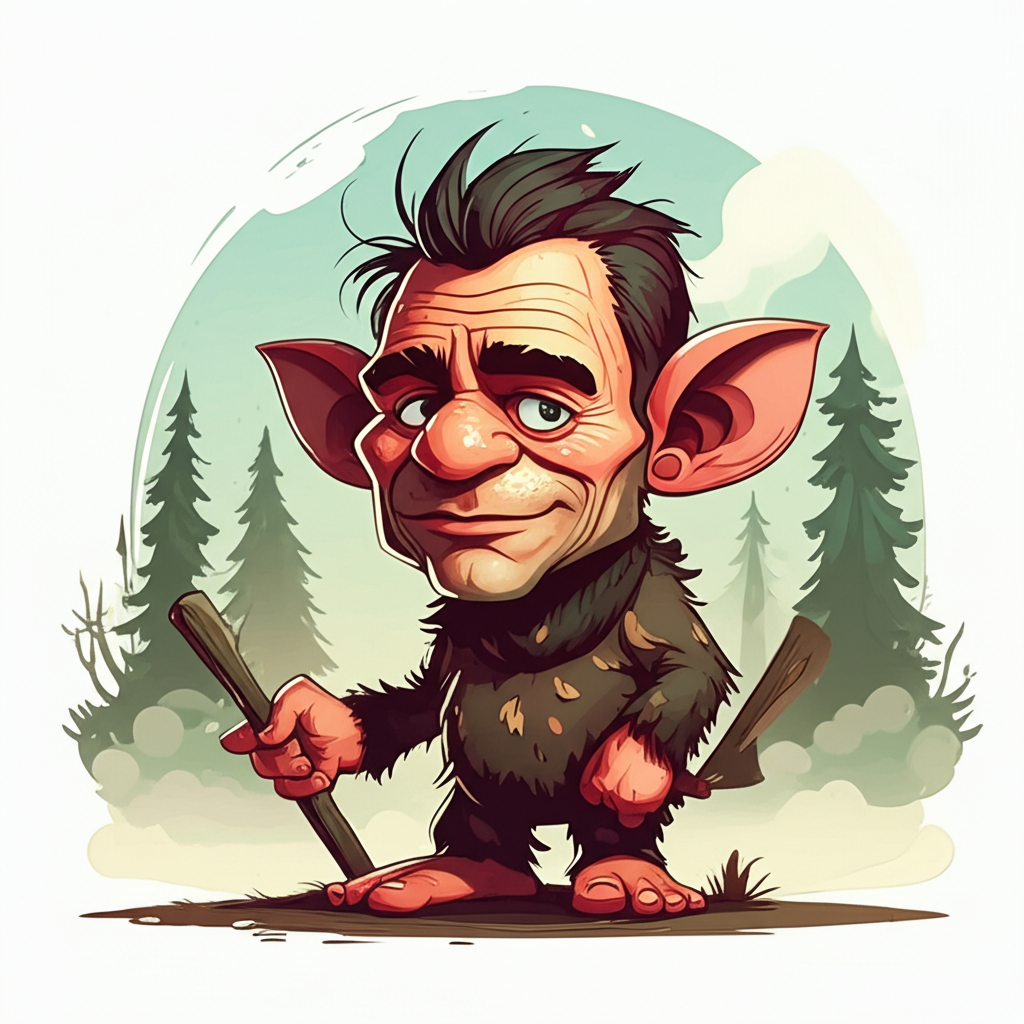
The mists that cling to the ancient forests of the Pacific Northwest have long held secrets, not of scientific discovery or geological shifts, but of narratives woven by generations. Within the rich tapestry of Indigenous folklore, stories of beings that inhabit the liminal spaces between the human world and the wild are common. Among these, the Pukwudgie emerges as a figure shrouded in both wonder and caution, a testament to the ancient peoples’ profound connection to their environment and their imaginative ways of understanding it. These are not tales to be taken as literal truth, but rather as the enduring echoes of a time when oral tradition was the vibrant pulse of cultural understanding, offering glimpses into the worldview of those who walked this land long before us.
The origins of the Pukwudgie myth are deeply rooted in the Indigenous cultures of the Eastern Woodlands, particularly among the Wampanoag and Algonquin peoples. These stories circulated for centuries, passed down through elders to younger generations around crackling fires, under star-dusted skies. The era in which these tales flourished was one of intimate coexistence with nature. The world was perceived not as a collection of inanimate objects, but as a living, breathing entity, imbued with spirit and intention. Every rustle of leaves, every shift in the wind, every shadow that danced in the dappled sunlight held a potential narrative, a lesson, or a warning. The natural world was a complex web of relationships, and the Pukwudgie was one of its many inhabitants, a being that represented a specific facet of this intricate existence.
The Pukwudgie is often depicted as a small, elusive creature, typically no taller than a human child, though some accounts suggest they could grow larger. Their skin is described as gray or brown, often with a gnarled, bark-like texture, allowing them to blend seamlessly into the forest floor. Their eyes are said to glow with an eerie luminescence, and they possess sharp, pointed fingers. A defining characteristic is their mischievous or sometimes malevolent nature. They are not inherently good or evil in a human sense, but rather embodiments of the unpredictable forces of the wild. They could be helpful, guiding lost travelers or sharing secrets of the forest, but they were equally capable of playing cruel tricks, luring people astray with illusions, or even causing harm. Their symbolic attributes lie in their representation of the untamed aspects of nature – its hidden dangers, its capricious moods, and its capacity for both creation and destruction. They embody the idea that not all aspects of the natural world are readily understood or controlled by humans.
The narratives surrounding the Pukwudgie are varied, but a recurring theme involves their interaction with humans, often serving as a cautionary tale. One such tale, woven through generations, speaks of a time when the Pukwudgie were more prevalent, their presence felt acutely by the forest dwellers. It is said that the Pukwudgie were guardians of certain sacred places, or perhaps simply beings who enjoyed the company of humans, albeit in their own peculiar way. They might appear as fleeting shadows at the edge of vision, or their distinct, high-pitched laughter might echo through the trees. Some stories recount how a lost hunter, desperate for direction, might stumble upon a Pukwudgie. The creature, with a flick of its pointed finger, might reveal a hidden path or a source of fresh water. In other instances, a curious child who wandered too far from their village might be enticed by the Pukwudgie’s playful calls, only to find themselves disoriented and frightened as the creature led them in circles, their giggles turning into taunts. These tales often served to impress upon the listener the importance of respecting the boundaries of the natural world and the need for vigilance when venturing into its depths. The Pukwudgie, in these stories, acts as a living embodiment of the forest’s power to both sustain and confound.
The symbolism embedded within the Pukwudgie myth is multifaceted. For the ancient peoples, the Pukwudgie could have represented the inherent duality of nature – its beauty and its danger, its generosity and its scarcity. They might have symbolized the unseen forces that governed their lives, the capricious winds, the sudden storms, the unexpected encounters in the wilderness. The Pukwudgie’s elusiveness and their tendency to play tricks could also have served as a metaphor for the mysteries of life, the challenges that cannot be easily overcome, and the importance of wisdom and caution. Their ability to manipulate the environment, creating illusions or altering pathways, could have reflected the ancient understanding of the interconnectedness of all things and the subtle energies that permeate the world. Furthermore, the Pukwudgie’s interactions with humans might have served as a moral compass, teaching lessons about greed, curiosity, and the consequences of straying from the path of respect and humility.
In the modern landscape of literature, film, and gaming, the Pukwudgie has experienced a resurgence, albeit in a transformed context. While no longer part of living spiritual practice, this creature has found a new life as a figure of imaginative storytelling. In some contemporary works, the Pukwudgie is portrayed as a formidable antagonist, a creature of dark magic and malicious intent, drawing on the more sinister aspects of their traditional lore. In others, they are depicted with a more nuanced, almost fae-like quality, emphasizing their connection to nature and their role as guardians of the wild. Their image can be found in fantasy novels, as creatures encountered on perilous quests, and in video games, where they might appear as challenging adversaries or intriguing NPCs. These modern interpretations, while entertaining, often diverge from the original cultural context, highlighting the enduring power of these ancient narratives to inspire new forms of creative expression.
It is important to reiterate that the Pukwudgie is a figure from traditional folklore and mythology, a testament to the rich cultural heritage and imaginative spirit of the ancient peoples. As Muslims, we recognize that only Allah (God) is the true Creator and Sustainer of all existence, the source of all power and wisdom. These stories, like all ancient myths and legends, offer a window into the past, allowing us to understand the worldview, fears, and aspirations of those who came before us. They are not meant for belief or worship, but for educational appreciation, reminding us of the enduring human impulse to explain the world around us through compelling narratives. The echoes of the Pukwudgie, like the rustling leaves of the ancient forests, continue to whisper tales of a world viewed through the lens of deep connection to nature and the boundless expanse of human imagination.