fufufafa
The mists that cling to the ancient mountains of Aotearoa, known today as New Zealand, whisper tales of a time when the world was new, and the spirits of the land and sea were palpable forces. From the heart of Māori culture, a rich tapestry of oral traditions, emerges the captivating lore of the Taniwha. These are not merely monsters, but complex beings woven into the fabric of daily life and the very landscape by the ancient people of this land. It is crucial to understand that these are traditional stories, born from the imaginations and experiences of a bygone era, offering a window into a unique cultural heritage rather than presenting any claim of reality or belief.
Origins and Cultural Background
In the pre-colonial era of Aotearoa, Māori society was deeply intertwined with its natural environment. The vast Pacific Ocean, the soaring volcanic peaks, the dense, ancient forests, and the winding rivers were not merely scenery but living entities, imbued with spiritual essence, or mana. This worldview fostered a profound respect for nature, where every element held a place within a holistic cosmic order. Myths and legends were the primary means by which knowledge was transmitted, history was preserved, and moral codes were reinforced. They explained the inexplicable – the formation of a valley, the treacherous currents of a river, the abundance or scarcity of food. People of that time viewed the world through a lens of animism, where the spiritual and physical realms were seamlessly blended, and powerful entities like the Taniwha served as both cautionary figures and ancestral guardians.
Character / Creature Description
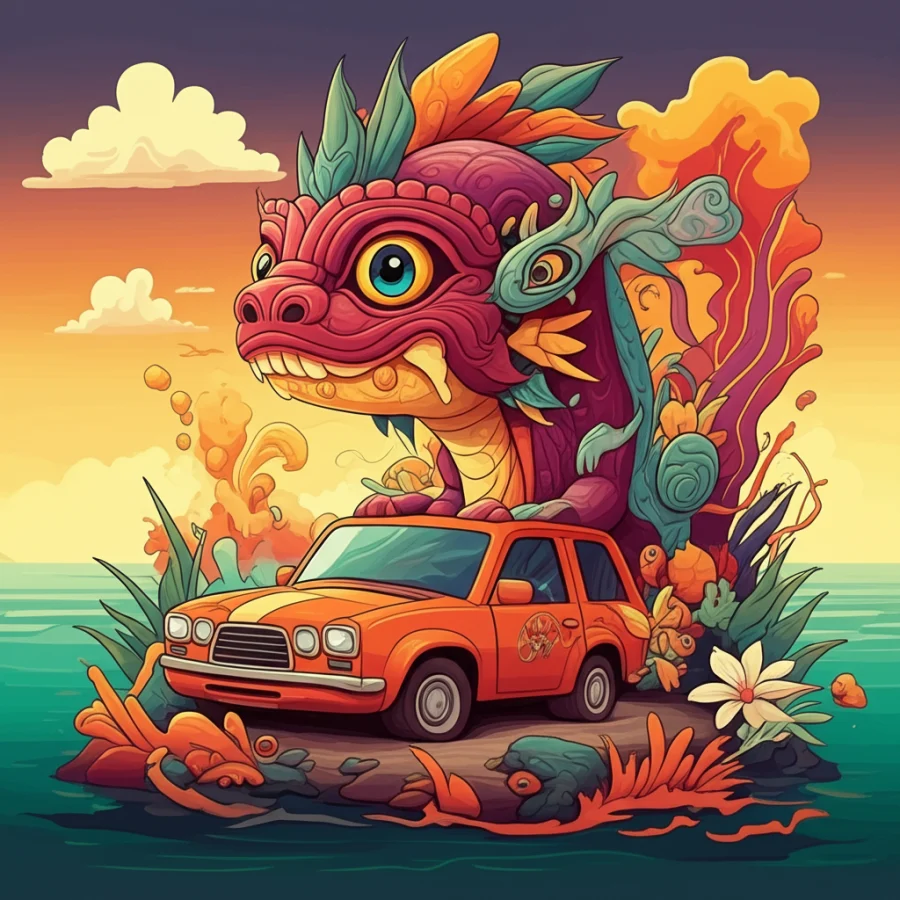
The Taniwha are perhaps the most renowned and diverse figures within Māori mythology. Unlike a singular beast, the term Taniwha encompasses a broad category of supernatural beings, each with unique characteristics and associations. They are often depicted as large, formidable creatures, varying widely in form: some are serpentine or eel-like, dwelling in rivers, lakes, and estuaries; others resemble immense sharks, whales, or even giant reptiles with fins, inhabiting the deep ocean. Still others are described as amorphous, sometimes even appearing as a colossal tree trunk or rock formation, their true form hidden from mortal eyes.
Symbolically, Taniwha embody the raw power and unpredictable nature of the environment. They are guardians of specific places – a sacred spring, a dangerous river crossing, a rich fishing ground. They are said to uphold tapu (sacredness or restriction) and can be fiercely protective of their domains and the people associated with them, particularly certain iwi (tribes) or hapū (sub-tribes) who claim a Taniwha as an ancestral guardian. Conversely, they could be malevolent, causing floods, droughts, or capsizing canoes if disrespected or if tapu was violated. Their presence served as a powerful reminder of the need for balance, respect, and proper conduct within the natural world.
Main Story / Narrative Retelling
In the sheltered embrace of a deep bay, where emerald forests met the turquoise sea, lay the village of Ngāti Rongo. For generations, the people of Ngāti Rongo had lived in harmony with their surroundings, guided by the wisdom of their elders and the unspoken presence of their ancestral guardian, a Taniwha known as Te Moana-nui-a-Kiwa – ‘The Great Ocean of Kiwa’. It was said that Te Moana-nui-a-Kiwa, a creature of immense size with a skin like polished paua shell and eyes that glowed with ancient knowledge, dwelt in the deepest trenches of the bay, emerging only when the balance of land and sea was threatened.
The elders taught the young ones to always offer a karakia (prayer or incantation) before casting their nets, to take only what was needed, and to never pollute the crystal waters. For many years, peace reigned. The fishing grounds were bountiful, and the kumara crops flourished on the fertile slopes.
One season, however, a group of ambitious young men, eager to prove their prowess, began to disregard the old ways. They ventured further out than permitted, disturbing sacred fishing grounds, and, in their haste, left remnants of their catches to rot on the shores, ignoring the elders’ warnings about tapu. The sea, once so generous, began to grow sullen. The fish became scarce, and a strange, unsettling quiet descended upon the usually vibrant bay.
Then, one stormy night, as the winds howled and the waves crashed against the cliffs with unusual ferocity, a tremor shook the very foundations of the village. The next morning, a colossal rock formation, never seen before, had appeared at the mouth of the bay, blocking the passage of fishing canoes. The waters beyond were a swirling vortex of dangerous currents. Fear gripped the hearts of Ngāti Rongo.
The wise old tohunga (priest or expert) of the village, old Hemi, gathered the people. "Te Moana-nui-a-Kiwa stirs," he declared, his voice grave. "Our disrespect has angered our guardian. The rock is its warning, its form taken to block our path until we remember our covenant with Tangaroa, god of the sea, and with the spirit of this place."
Humbled and afraid, the young men confessed their transgressions. Under Hemi’s guidance, the entire village performed a solemn whakapapa (ritual of apology and reconnection). They cleaned the shores, offered carefully prepared food to Tangaroa, and recited ancient chants of respect and repentance, pledging to restore the balance.
As the sun set on the third day of their penance, a deep, resonant rumble echoed from the depths of the bay. The colossal rock formation began to slowly, almost imperceptibly, shift. By dawn, it had vanished, leaving the bay open once more, its waters calm and inviting. The fishing grounds soon teemed with life again, and the unsettling quiet was replaced by the familiar sounds of the thriving ecosystem. The people of Ngāti Rongo never forgot the lesson. They knew that Te Moana-nui-a-Kiwa had not left them, but had simply withdrawn its visible warning, its presence a constant reminder to honour the sacred relationship between humanity and the natural world.
Symbolism and Meaning
To the ancient Māori, the stories of Taniwha were far more than mere entertainment. They served as potent symbols and practical guides. The Taniwha represented the awesome power of nature – the sudden wrath of a river in flood, the hidden dangers of a deep cave, or the unpredictable currents of the sea. They were personifications of the fear of the unknown, giving a tangible form to the hazards that ancient people faced daily.
Beyond fear, Taniwha also embodied morality and the consequences of human actions. Disrespect for the environment, violation of tapu, or transgression of social norms could invoke the wrath of a Taniwha, thus reinforcing community cohesion and responsible stewardship. As ancestral guardians, they symbolised the enduring connection between a people and their land, reflecting the spiritual authority of chiefs and the wisdom of elders. Ultimately, the Taniwha tales were a sophisticated means of transmitting geographical knowledge, ecological principles, and ethical codes across generations, deeply embedding a sense of place and identity within the Māori worldview.
Modern Perspective
In contemporary Aotearoa and beyond, the Taniwha continue to resonate, though their interpretation has evolved. They are no longer figures of literal belief for most, but powerful symbols within Māori cultural identity and a fascinating subject for cultural studies. Taniwha frequently appear in modern Māori art, literature, and even popular culture, often reimagined as protectors of the environment, guardians of heritage, or metaphors for the challenges and resilience of indigenous communities. They feature in children’s books, art exhibitions, and even some public art installations, signifying a connection to the past and a proud assertion of cultural heritage. While perhaps not directly depicted, the spiritual connection to nature and ancestors, often seen in films like Whale Rider, draws from the same deep well of Māori cosmology that gives rise to the Taniwha. They serve as a vibrant link to the imaginative world of ancestors, fostering an appreciation for the unique cultural tapestry of Aotearoa.
Conclusion
The stories of the Taniwha, like the echoes of Tangaroa, god of the sea, from which many are said to descend, remain a vital part of Māori cultural heritage. They are a testament to the profound imagination and deep connection to the natural world held by the ancient people of Aotearoa. As we explore these narratives, it is important to reiterate that these are cultural stories, traditional myths, and not to be understood as literal truths or objects of belief. As Muslims, we hold firm to the belief that Allah (God) alone is the true Creator and Sustainer of all existence, the One who fashioned the heavens and the earth and everything within them, and to Him alone is all worship due.
Nevertheless, the study of such cultural narratives enriches our understanding of human civilization, offering insights into diverse worldviews and the enduring power of storytelling. The legends of the Taniwha remind us of the universal human capacity for imagination, for finding meaning in the world around us, and for transmitting values and wisdom through compelling tales that resonate across time, connecting us to the rich heritage of humanity.