fufufafa
1. Introduction
Within the rich tapestry of Māori oral tradition, a vibrant and profound cultural heritage from Aotearoa (New Zealand), lies a collection of narratives that speak of creation, migration, and the deep connection between people and their environment. Among these ancient tales, the concepts of Tangaroa, the Taniwha, and the ancestral homeland of Hawaiki intertwine, offering a glimpse into the worldview of a people profoundly shaped by the sea and the land. This article delves into these traditional stories, presenting them purely as ancient narratives told by the Māori ancestors, intended for cultural, historical, and educational understanding, and not as factual accounts or objects of belief.
2. Origins and Cultural Background
The myths surrounding Tangaroa, Taniwha, and Hawaiki emerged from a pre-colonial Māori society, a time before European contact, when life was intrinsically linked to the natural world. These were a people of remarkable seafaring prowess, whose ancestors embarked on epic voyages across the Pacific from a mythical homeland often referred to as Hawaiki. Their society was structured around tribal kinship (iwi, hapū), with strong emphasis on genealogy (whakapapa), communal living, and a deep respect for elders and spiritual leaders (tohunga).
For the Māori of that era, the world was alive with spiritual presence. Mountains, rivers, forests, and the vast ocean were not merely inanimate features but were imbued with mana (prestige, spiritual power) and tapu (sacredness). This animistic worldview meant that natural phenomena were often personified, and the boundaries between the physical and spiritual realms were fluid. Stories were the primary means of transmitting knowledge, history, values, and moral codes across generations, shaping a collective understanding of their place in the cosmos.
3. Character / Creature Description: The Taniwha
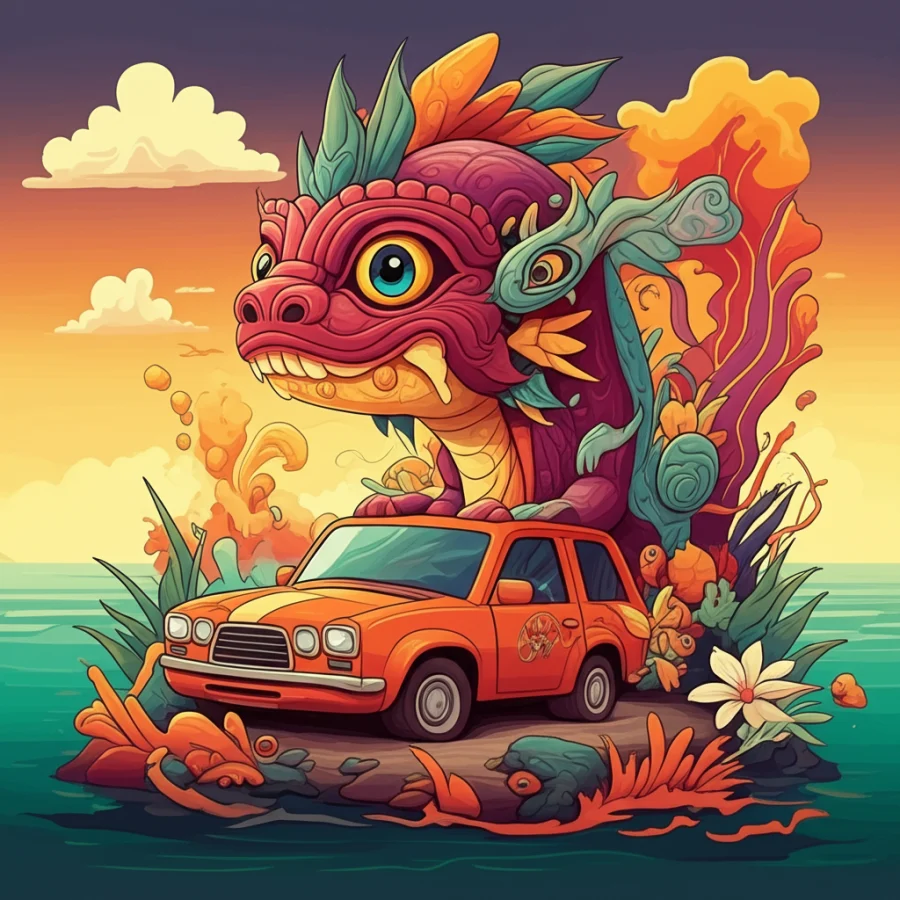
Central to many Māori narratives, and often linked to the realm of Tangaroa and the memory of Hawaiki, are the Taniwha. These are powerful, supernatural beings that traditionally dwell in deep pools of rivers, caves, lakes, or the vastness of the ocean. The description of Taniwha varies widely across different iwi and individual accounts, reflecting their diverse roles and the specific landscapes they were associated with. They could appear as gigantic lizards, fierce sharks, immense whales, or even as strangely shaped logs or rocks. Some Taniwha were said to possess human-like features or transform between animal and human forms.
Symbolically, Taniwha were multifaceted. Many were revered as kaitiaki (guardians), protecting specific places, resources, or people. They might guide lost travellers, offer warnings of impending danger, or act as protectors of a particular hapū or iwi, often associated with the mana of powerful chiefs. Conversely, other Taniwha were feared as dangerous, destructive entities, capable of causing floods, capsizing canoes, or devouring people. These fearsome Taniwha often represented the unpredictable and perilous aspects of nature, serving as cautionary tales against disrespecting the environment or transgressing societal norms. It is crucial to understand that these descriptions are rooted in symbolic representation and imaginative storytelling, not in any literal belief in their physical existence.
4. Main Story / Narrative Retelling: The Journey from Hawaiki
Imagine the ancient shores of Hawaiki, a land bathed in the warmth of ancestral knowledge and the gentle lapping of the Pacific. Here, the ancestors of the Māori people thrived, their lives interwoven with the rhythm of the tides and the wisdom passed down through generations. But a restless spirit stirred, a yearning for new horizons, guided by prophecies and the meticulous observations of tohunga skilled in the celestial arts. The great migration was decided – a momentous journey across the vast, blue expanse.
As the magnificent waka (ocean-going canoes) were prepared, laden with provisions, precious seeds, and the sacred knowledge of their people, the voyagers understood the immensity of their undertaking. They were not merely crossing water; they were entering the domain of Tangaroa, the mighty deity of the sea, son of Ranginui (Sky Father) and Papatūānuku (Earth Mother). Tangaroa’s realm was boundless, a source of life and sustenance, yet also a place of immense power and unpredictable fury. The voyagers offered solemn prayers and incantations, seeking his favour, for their very survival depended on his benevolence.
With sails unfurled and paddles dipping rhythmically, the waka pushed off from Hawaiki’s embrace, carrying with them the memories, dreams, and spiritual essence of their homeland. Days turned into weeks, weeks into months, as the canoes traversed the vast, open ocean. The stars became their compass, the currents their guides, and the sea their constant companion. It was in this boundless domain of Tangaroa that the Taniwha made their presence known, not as simple creatures, but as powerful manifestations of the ocean’s ancient energy and the deep spiritual connection that bound the voyagers to their past and future.
Some narratives speak of Taniwha, immense as islands, rising from the depths, their forms sometimes resembling colossal whales or sharks, their eyes reflecting the mysteries of Tangaroa. These Taniwha, born of the sea’s raw power, often presented daunting challenges. They were said to churn the waters into a frenzy, creating treacherous currents and towering waves that tested the voyagers’ resolve, their skill, and their faith. These encounters were not merely physical obstacles but spiritual trials, intended to gauge the strength and unity of the people.
Yet, other Taniwha appeared as benevolent guides, echoes of Hawaiki’s protective spirit carried across Tangaroa’s vastness. Perhaps a shimmering form would swim alongside a struggling waka, its presence calming the stormy seas, or a strangely shaped log, imbued with a watchful spirit, would drift into their path, guiding them towards safer waters or revealing a hidden reef rich with fish. These Taniwha were seen as ancestral guardians, manifestations of the mana of the voyagers’ lineage, ensuring the continuity of their journey towards Aotearoa. They were the enduring link between the old world and the new, guardians of the wisdom that Hawaiki had bestowed upon its children, ensuring that the spirit of their origins would forever resonate in their new home. Upon reaching the shores of Aotearoa, many of these Taniwha were said to have taken up residence in the rivers, lakes, and coastal waters of the new land, becoming the local kaitiaki of their respective iwi, forever connecting them to the great journey and the power of Tangaroa.
5. Symbolism and Meaning
To the ancient Māori, these stories were far more than simple tales; they were profound explanations of their world and their place within it. Tangaroa represented the immense, life-giving, and sometimes destructive power of the ocean – a force that sustained them, provided passage, and demanded respect. The Taniwha, in their diverse forms, symbolized the complex relationship between humans and the natural world. They embodied both the dangers and the protective forces of the environment, reminding people of the sacredness of specific places, the importance of respecting boundaries, and the consequences of moral transgression. A benevolent Taniwha could signify ancestral guidance, the mana of a chief, or the spiritual vitality of a particular lineage. A malevolent one might represent the forces of chaos, the perils of the unknown, or a warning against environmental exploitation.
Hawaiki, though a geographical origin, transcended mere location. It symbolized the spiritual and cultural source of the Māori people, their ancestral memory, their shared identity, and the continuity of their traditions. The journey from Hawaiki, facilitated by Tangaroa’s domain and punctuated by encounters with Taniwha, represented the courage, navigational prowess, and spiritual fortitude of their ancestors. It was a narrative that affirmed their identity, their connection to the land and sea, and their enduring legacy.
6. Modern Perspective
Today, the echoes of Tangaroa, Taniwha, and Hawaiki continue to resonate powerfully within Māori culture and beyond. While no longer believed in a literal sense, these narratives form a cornerstone of cultural identity, celebrated and studied for their artistic, historical, and symbolic value. Taniwha, in particular, appear frequently in contemporary Māori art, literature, and film, often serving as powerful metaphors for environmental protection, indigenous rights, and the enduring connection to ancestral lands and waters. Works like Witi Ihimaera’s novel The Whale Rider (and its subsequent film adaptation) beautifully weave Taniwha-like themes into modern narratives, exploring ancestral guidance and the sacred bond between humans and nature. These stories are also used in educational contexts to teach about Māori history, values, and language, fostering a deeper appreciation for this unique cultural heritage.
7. Conclusion
The stories of Tangaroa, the Taniwha, and the journey from Hawaiki stand as magnificent testaments to the imaginative spirit and profound wisdom of the ancient Māori people. They are not to be mistaken for factual accounts or objects of worship, but rather revered as rich cultural narratives that offer invaluable insights into a complex worldview and a deep connection to the natural world. As Muslims, we recognize that Allah is the one true Creator and Sustainer of all existence, and it is to Him alone that all worship is due. Yet, we can appreciate the beauty and cultural significance of such storytelling. These narratives serve as enduring reminders of the human capacity for imagination, the power of oral tradition, and the universal quest to understand our origins and our place in the world, forever echoing through the generations.