
 fufufafa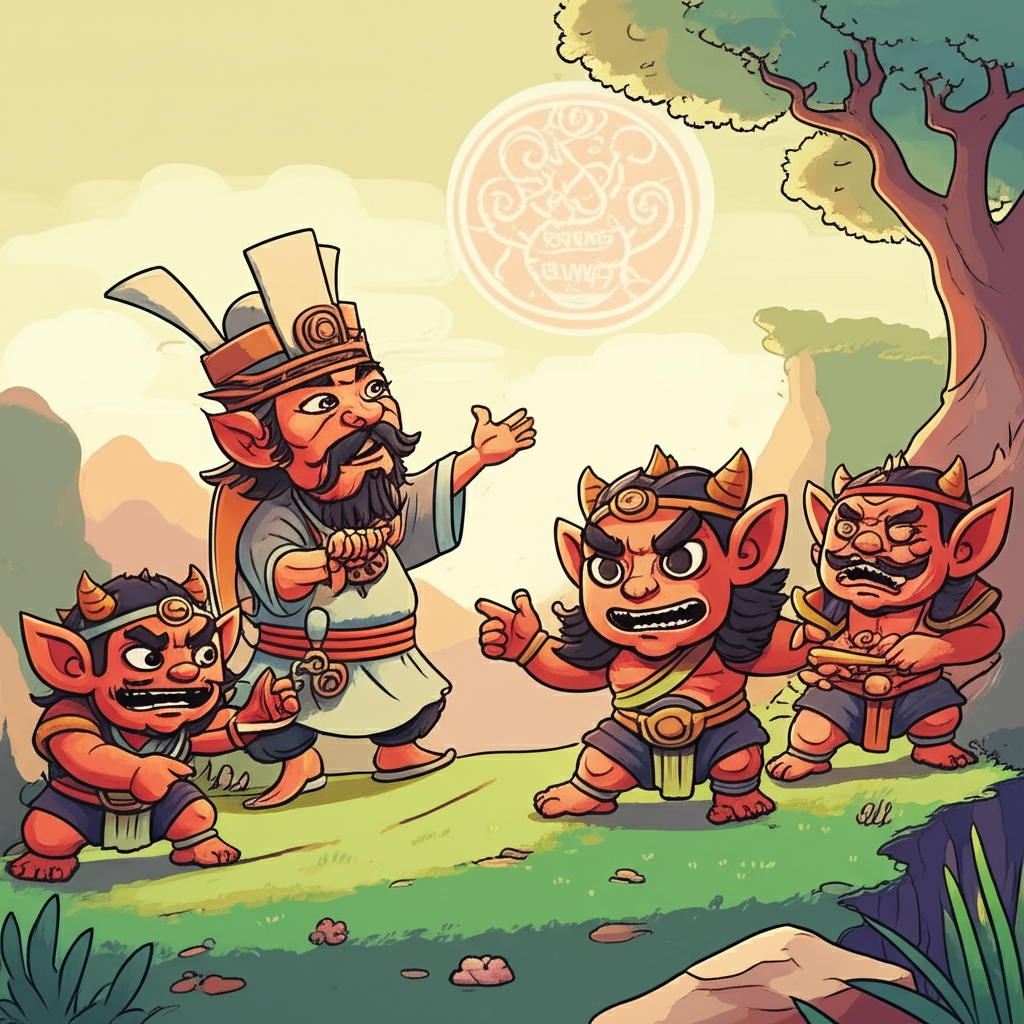
The tapestry of human civilization is woven with threads of myth and legend, stories spun in the hearth fires of ancient communities to explain the mysteries of the world and the depths of the human spirit. From the snow-capped peaks of the Korean peninsula emerges one such narrative, a tale echoing with the whispers of celestial visitors and the mischievous spirits of the earth: the legend of Hwanung and the Heavenly Descent Site, where the elusive Dokkaebi are said to linger.
This is not a chronicle of historical fact, but a cherished piece of folklore, a testament to the imaginative power of ancient Koreans. It is a story passed down through generations, a vibrant thread in the rich cultural heritage of the Korean people, offering a glimpse into their worldview during a time when the natural world was imbued with profound spiritual significance.
The Dawn of Myth: A World Alive with Spirits
Imagine a Korea of antiquity, a land of dense forests, soaring mountains, and swift-flowing rivers. This was a world where the lines between the tangible and the intangible were blurred. For the people of this era, the natural world was not merely a backdrop but a vibrant, living entity, populated by a myriad of spirits, deities, and unseen forces. Mountains were seen as sacred, inhabited by powerful mountain gods, while rivers flowed with the lifeblood of the land, overseen by their own watery custodians.
The sky, a vast and awe-inspiring expanse, was often perceived as the domain of higher beings, a realm of purity and divine authority. Life was a delicate balance, a constant negotiation with these powerful forces, and understanding their whims and intentions was paramount for survival and prosperity. It was within this context of animism and a deep reverence for the cosmos that the story of Hwanung’s descent took root.
Hwanung: The Celestial Emissary
Central to this narrative is Hwanung, a figure who embodies the aspiration for divine guidance and the establishment of order. He is depicted as the son of Hwanin, the Lord of Heaven, a celestial sovereign who presided over the heavenly realm. Hwanung, therefore, represents a connection between the divine and the earthly, a being imbued with heavenly authority and wisdom. He is not a god to be worshipped in the same vein as Hwanin, but rather a benevolent emissary, sent with a purpose. His symbolic attributes lie in his lineage, signifying celestial origin, and his mission, representing the desire for enlightenment and the establishment of a just society on Earth. He is the embodiment of celestial intention reaching out to the terrestrial.
The Narrative of the Heavenly Descent
The story unfolds with Hwanung’s fervent desire to descend to Earth and bring civilization to humankind. Observing the suffering and disarray of the mortal world, Hwanung implored his father, Hwanin, for permission. Hwanin, recognizing his son’s noble intentions, granted his wish. He bestowed upon Hwanung three Heavenly Seals, symbolizing divine authority, wisdom, and the blessings of heaven.
Hwanung, accompanied by a retinue of three thousand followers and a host of heavenly beings, descended to the summit of Mount Taebaek. This hallowed peak, shrouded in mist and commanding a view of the surrounding lands, became known as the Heavenly Descent Site. Here, Hwanung established a divine city, a symbol of celestial order brought to the earthly realm. He presided over the affairs of humankind, teaching them laws, agriculture, medicine, and various arts. He brought a sense of structure and guidance, transforming the lives of the people who lived in his presence.
It was during this time that a bear and a tiger, living in a cave near the divine city, approached Hwanung with a fervent wish to become human. Hwanung, ever benevolent, presented them with a bundle of mugwort and twenty cloves of garlic. He instructed them to remain in the cave, away from the sunlight, and to consume only these sacred offerings for one hundred days. The tiger, impatient and unable to endure the confinement and sparse diet, soon abandoned the trial. The bear, however, persevered. After twenty-one days, she emerged from the cave, transformed into a beautiful woman. This woman, named Ungnyeo, then became the wife of Hwanung, and together they bore a son named Dangun, who would go on to found the first Korean kingdom, Gojoseon.
The Whispering Dokkaebi
Intertwined with the celestial narrative of Hwanung is the presence of the Dokkaebi. These are not the celestial beings that accompanied Hwanung, but rather mischievous and often playful spirits of the earth, deeply rooted in Korean folklore. The Dokkaebi are often depicted as shapeshifters, with distinctive features like horns, large noses, and a penchant for riddles and trickery. They are said to inhabit remote mountains, old houses, and other secluded places.
In the context of the Heavenly Descent Site, the Dokkaebi are often portrayed as beings who witnessed Hwanung’s arrival and his teachings. While not directly involved in the grand celestial plan, their presence signifies the earthly realm’s own indigenous spirits interacting with the divine influence. They might be seen as observing with curiosity, perhaps even playing their pranks on Hwanung’s followers or the early humans learning their ways. Their inclusion in the narrative adds a layer of earthy realism and a touch of the whimsical to the more solemn tale of heavenly descent, highlighting the interplay between the divine and the elemental. They represent the untamed, capricious spirit of the land, a contrast to the ordered intention of Hwanung.
Symbolism and Meaning: The Human Aspiration
To the ancient Koreans, this myth likely held profound symbolism. Hwanung’s descent represented the aspiration for divine knowledge and the establishment of a moral and civilized society. It spoke to the belief that guidance from a higher power could bring order and prosperity to human affairs. The three Heavenly Seals were not just trinkets but potent symbols of authority, wisdom, and celestial favor, essential for good governance.
The story of the bear and the tiger transforming into a human highlights the concept of perseverance and transformation. The bear’s patient endurance, despite hardship, led to a profound change, mirroring the potential for human growth and the desire for a more evolved existence. The union of Ungnyeo and Hwanung, culminating in the birth of Dangun, symbolized the legitimate foundation of Korean nationhood, tracing its origins back to a divinely ordained lineage.
The Dokkaebi, in their mischievous way, might have represented the untamed forces of nature that humans had to contend with. Their presence served as a reminder that even with divine guidance, the earthly realm had its own unpredictable elements. They could also symbolize the inherent duality of existence – the potential for chaos alongside order, for trickery alongside wisdom.
Echoes in the Modern Landscape
Today, the echoes of Hwanung and the Dokkaebi resonate through Korean culture. While no longer believed as literal events, these stories continue to inspire. In literature, films, and television dramas, characters embodying Hwanung’s celestial nature or the mischievous spirit of the Dokkaebi are common tropes. The Dokkaebi, in particular, have seen a resurgence in popularity, often portrayed as complex characters with both comical and poignant dimensions in popular dramas and movies. They are explored in academic studies of Korean mythology and folklore, offering insights into the historical worldview and cultural values of the Korean people. The concept of the Heavenly Descent Site, though a mythical location, continues to be a potent symbol in the national consciousness, representing a foundational moment in Korean history and identity.
A Tapestry of Tradition
In conclusion, the tale of Hwanung and the Heavenly Descent Site, with its intertwined presence of the Dokkaebi, is a captivating narrative from Korean folklore. It is a story born of ancient imagination, reflecting a worldview deeply connected to the spiritual forces of nature and the cosmos. It is a reminder of the enduring power of storytelling to transmit cultural values, explore human aspirations, and offer imaginative insights into the human condition.
As Muslims, we understand that only Allah, the Almighty, is the true Creator and Sustainer of all that exists, in the heavens and on earth. The stories we explore from different cultures, like this one, are valuable for their cultural and historical context, enriching our understanding of the diverse ways humans have sought to make sense of their world. They are threads in the vast tapestry of human heritage, woven with imagination, tradition, and the timeless human quest for meaning.


