
 fufufafa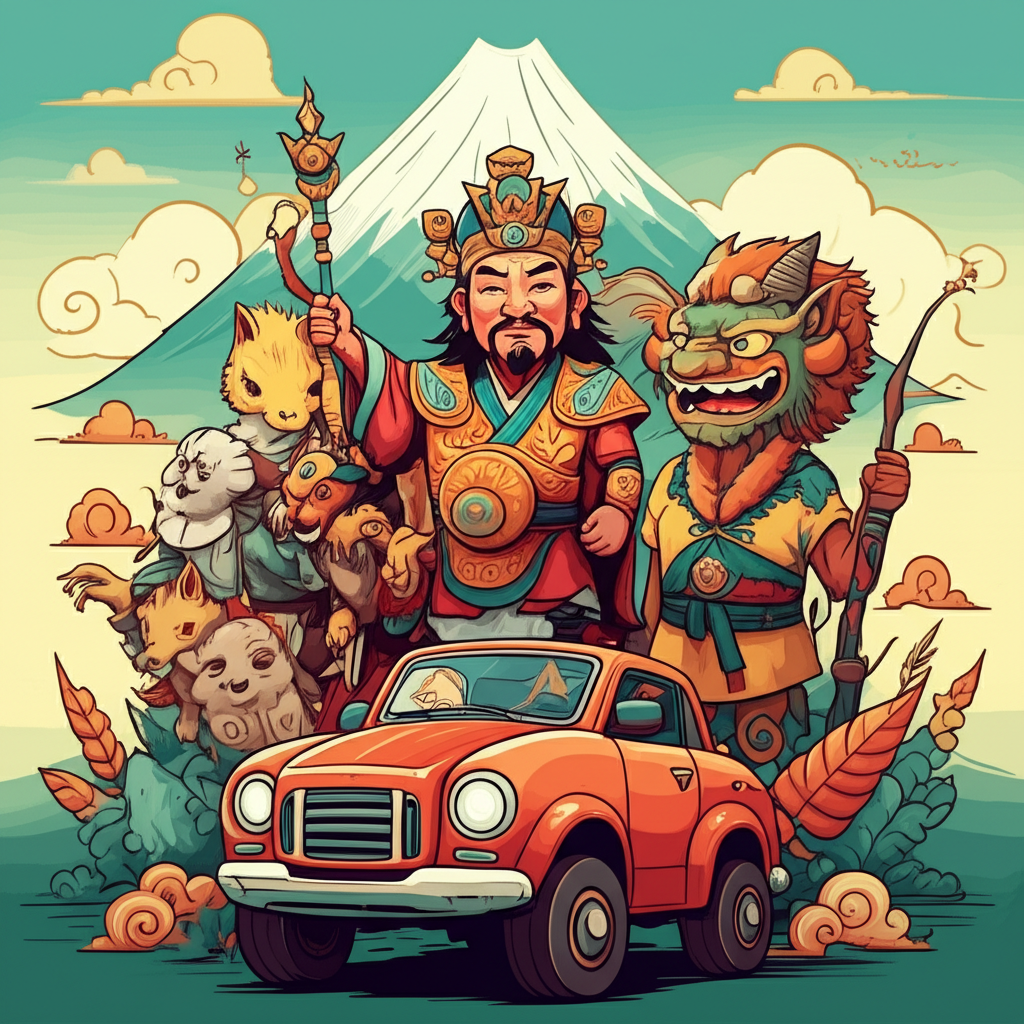
The winds that whisper through the ancient forests and across the rugged peaks of the Korean peninsula carry with them tales spun from the very fabric of human imagination. Among these, the stories of Hwanung, the Dokkaebi, and the imposing Mount Baekdu stand as vibrant threads in the rich tapestry of Korean folklore. These narratives, passed down through generations, offer a fascinating window into the worldview of ancient peoples, their attempts to understand the natural world, and their enduring fascination with the mysterious forces they perceived around them. It is crucial to remember that these are traditional stories, born from the creative spirit of our ancestors, and are not presented as factual accounts or objects of worship.
The cultural landscape in which these myths took root was one deeply intertwined with nature. In ancient Korea, life was largely agrarian, and communities lived in close proximity to the land, the mountains, and the celestial bodies. The world was seen not as a sterile, predictable machine, but as a living, breathing entity, teeming with unseen energies and spirits. Natural phenomena – the fury of a storm, the stillness of a deep forest, the awe-inspiring grandeur of a volcanic mountain – were not merely physical events but were often interpreted as the actions or manifestations of supernatural beings. This era was characterized by a profound respect, and often a healthy dose of fear, for the power and unpredictability of the natural world. The vastness of the sky, the depths of the earth, and the untamed wilderness all held a potent mystique, ripe for mythological explanation.
Central to these narratives is the figure of Hwanung, often depicted as the son of the Heavenly King, Hwanin. While Hwanung himself is a significant progenitor figure in Korean foundational myths, the stories we explore here often bring him into contact with a more mischievous and earthly entity: the Dokkaebi. The Dokkaebi, a creature deeply embedded in Korean folklore, is far from a simple monster. They are often characterized by their striking appearance – a single horn protruding from their forehead, a mischievous glint in their eyes, and sometimes a distinctive red hat. Dokkaebi are not inherently evil, but rather embody a complex blend of trickery, playfulness, and a connection to the wild and the supernatural. They are often associated with spirits of the mountains, forests, and even household objects that have gained sentience. Their symbolic attributes lie in their ability to disrupt the ordinary, to test human wit, and to represent the unpredictable, sometimes chaotic, forces that lie just beyond human comprehension. They can be both feared for their potential to cause mischief and respected for their wisdom or their role as guardians of certain places.
The grand stage upon which these interactions often unfold is Mount Baekdu, a majestic and historically significant volcano straddling the border between North Korea and China. In ancient times, Mount Baekdu was more than just a geological formation; it was a sacred mountain, a place of immense spiritual power and a symbol of the Korean spirit. Its imposing presence, its fiery origins, and its often cloud-shrouded summit made it a natural focal point for myths and legends. It was seen as a gateway between the earthly realm and the heavens, a place where the divine could descend and where powerful spirits resided.
Imagine, then, a tale where Hwanung, the celestial emissary, finds himself drawn to the rugged beauty and untamed spirit of Mount Baekdu. Perhaps he descends from his heavenly abode, curious about the terrestrial world, or perhaps he is tasked with a mission that requires him to navigate its ancient forests and volcanic slopes. It is here, amidst the rustling leaves and the scent of pine, that he might encounter the Dokkaebi. These encounters would not be straightforward battles of good versus evil, but rather intricate dances of wit and power.
One might envision Hwanung, with his celestial bearing, observing the Dokkaebi’s playful disruptions. Perhaps a Dokkaebi, with its mischievous glee, might steal a celestial artifact or lead Hwanung on a bewildering chase through the dense woods. Hwanung, in turn, might use his wisdom and perhaps a touch of divine insight to outsmart the creature, not through brute force, but through cleverness. The Dokkaebi, in their own way, might teach Hwanung about the earth’s secrets, the language of the wild, or the resilience of the natural world. The stories might describe the Dokkaebi using their innate abilities to manipulate their surroundings, creating illusions, or even transforming objects, all in their pursuit of amusement or perhaps to test the character of the divine visitor. These narratives would emphasize the imaginative interplay between the heavenly and the earthly, the ordered and the chaotic, the wise and the whimsical.
The symbolism woven into these narratives is rich and multifaceted. Hwanung, as a celestial being, often represents order, divine guidance, and the establishment of civilization. His interactions with the Dokkaebi on Mount Baekdu could symbolize the ancient peoples’ attempts to understand and integrate the wild, untamed forces of nature into their ordered lives. The Dokkaebi themselves can represent the unpredictable aspects of existence, the challenges that test human resolve, and the hidden wisdom that can be found in seemingly chaotic situations. Mount Baekdu, as the sacred mountain, serves as a powerful symbol of national identity, a testament to the enduring spirit of the land, and a reminder of the deep connection between the Korean people and their environment. These stories, in essence, were a way for ancient Koreans to grapple with their place in the cosmos, to understand the balance between the seen and the unseen, and to imbue their world with meaning and wonder.
In contemporary times, these ancient echoes continue to resonate. The figure of Hwanung, while foundational, is often explored in historical dramas and academic studies. The Dokkaebi, however, have experienced a vibrant resurgence in modern Korean popular culture. They are frequently featured in television dramas, movies, and video games, often reimagined as complex characters with a blend of humor, pathos, and even heroic qualities. Their unique visual appeal and their capacity for both mischief and wisdom make them enduringly popular. Mount Baekdu, too, remains a potent symbol, appearing in literature and art, representing not only its geological significance but also its historical and cultural weight. These interpretations often draw on the original mythological frameworks, reinterpreting them for new audiences and exploring themes of identity, tradition, and the enduring allure of the fantastical.
As we conclude this exploration, it is vital to reiterate that these tales are indeed traditional stories, products of human creativity and cultural expression. They offer a captivating glimpse into the minds of ancient peoples and their ways of understanding the world around them. From a Muslim perspective, we recognize that only Allah, the Almighty, is the true Creator and Sustainer of all existence. Our understanding of creation is rooted in divine revelation and the acknowledgment of His absolute power and sovereignty. However, the study of cultural heritage, including its mythology and folklore, provides invaluable insights into the history of human thought, the development of storytelling traditions, and the enduring power of imagination. These stories, like the echoes of Hwanung, the Dokkaebi, and Mount Baekdu, serve as reminders of our shared human capacity for wonder and our timeless quest to make sense of the mysteries that surround us, enriching our understanding of diverse cultures and their unique ways of weaving narratives that echo through time.


