
 fufufafa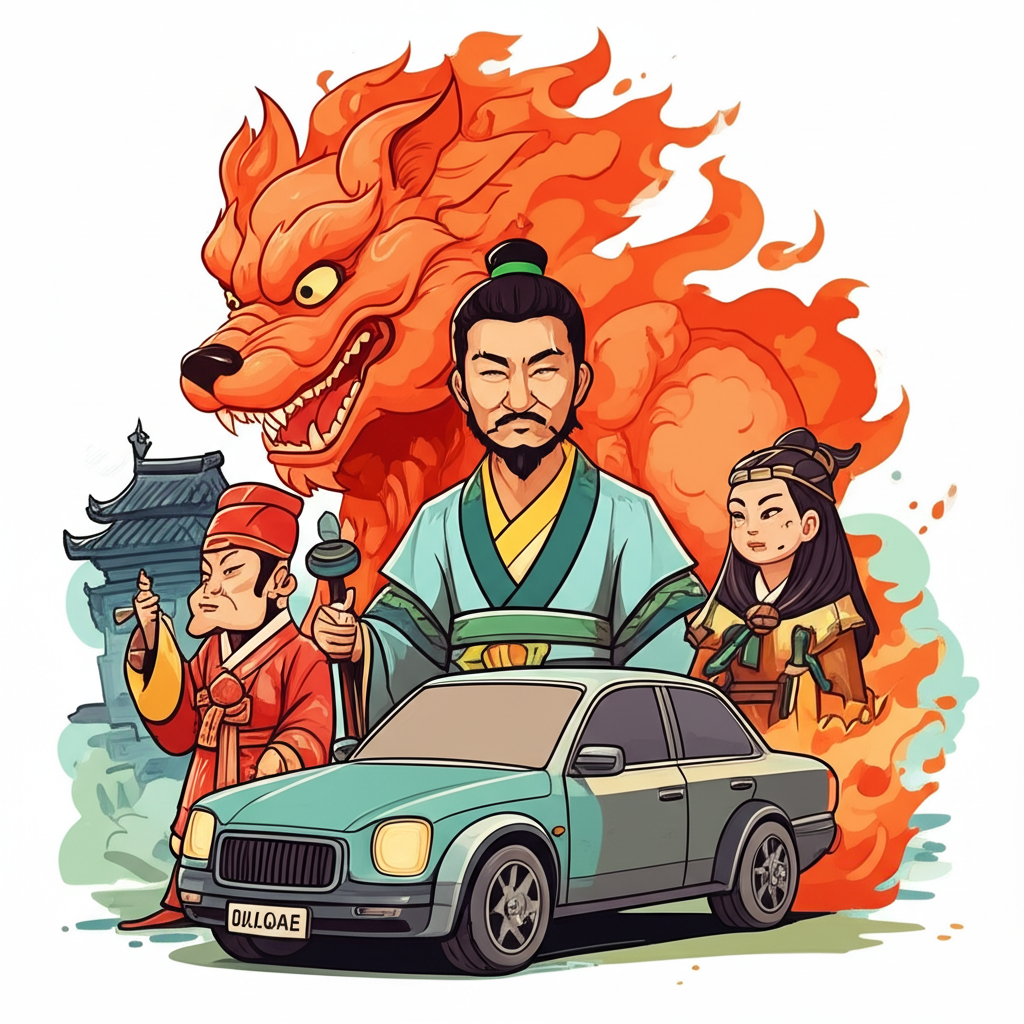
In the mists of ancient Korea, where the sky met the earth in a tapestry of wonder and mystery, stories were woven to explain the inexplicable and give meaning to the world. Among these cherished tales, passed down through generations around flickering hearths, are the narratives that speak of celestial descents, monstrous guardians of darkness, and the very foundations of human civilization. These are the echoes of Hwanung, the myth of the Bulgae, and the cultural backdrop of kingdoms like Baekje – traditional stories told by ancient peoples, not as historical fact or divine revelation, but as reflections of their understanding of the cosmos and their place within it.
Origins and Cultural Background: A World of Spirits and Phenomena
The cultural era in which these myths flourished was one intimately connected with nature. Early inhabitants of the Korean peninsula lived in agrarian societies, their lives dictated by the cycles of the sun, moon, and seasons. Before the advent of organized philosophical or religious systems, people viewed the world through an animistic lens, believing that spirits resided in trees, rivers, mountains, and the very air they breathed. Shamanism was a prevalent spiritual practice, with shamans acting as intermediaries between the human and spirit worlds, seeking to appease powerful forces and interpret omens.
The awe-inspiring phenomena of the natural world – the dazzling light of day, the comforting glow of night, the sudden fury of a storm, or the terrifying obscurity of an eclipse – were not mere scientific occurrences. To these ancient minds, they were manifestations of powerful, often capricious, spiritual entities or the results of cosmic dramas playing out beyond human sight. As early tribal societies coalesced into more complex political entities, eventually giving rise to kingdoms like Gojoseon and later the Three Kingdoms (Goguryeo, Silla, and Baekje), these foundational myths evolved, serving not only to explain the world but also to legitimize leadership and foster a shared cultural identity.
Characters and Creatures: Architects of Order and Harbingers of Chaos
Within these ancient narratives, distinct figures emerge, each embodying specific aspects of the ancient Korean worldview.
Hwanung, though not a deity to be worshipped in any modern sense, is a central figure in Korea’s foundational mythologies. He is depicted as the son of Hwanin, the Lord of Heaven, who descended to Earth to establish a city and bring civilization to humankind. Hwanung is often portrayed with the attributes of a benevolent leader and culture-bringer, imparting knowledge of agriculture, medicine, and moral laws to the early inhabitants. His story represents the belief in a divine mandate for human civilization and the aspiration for an ordered, harmonious society.
In stark contrast to Hwanung’s civilizing influence are the Bulgae, often translated as "Fire Dogs." These are mythical creatures from the Kingdom of Darkness, known as Gyeomok-guk. They are fearsome, monstrous hounds, their bodies wreathed in fire or darkness, with an insatiable hunger for light. The Bulgae are not presented as evil in a moral sense but as agents of cosmic disruption, dispatched from their shadowy realm to steal the celestial bodies. They are primarily symbolic explanations for solar and lunar eclipses, embodying the temporary disappearance of light and the primal fear of encroaching darkness.
Baekje, unlike Hwanung or the Bulgae, is not a character or creature but a powerful ancient kingdom that flourished on the southwestern Korean peninsula for nearly 700 years (18 BCE – 660 CE). While the myth of Hwanung precedes Baekje, and the Bulgae myth is a widespread Korean folktale, the existence of such a sophisticated and culturally rich kingdom means that these stories would have been integral to its cultural fabric. Baekje, renowned for its art, architecture, and international trade, would have been a vibrant repository of such traditional narratives, preserving and perhaps reinterpreting them within its own unique cultural context.
The Celestial Drama: A Narrative Retelling
Imagine, if you will, the vast, shimmering expanse of the heavens, where the Lord of Heaven, Hwanin, resided in his celestial palace. His son, Hwanung, looked down upon the human world with compassion, seeing a realm ripe for civilization and harmony. With his father’s blessing, Hwanung descended to the peak of Mount Taebaek, bringing with him the three heavenly seals – symbols of his authority and the tools of his mission. He established a sacred city, Shinshi, "City of God," under a sandalwood tree, and began his task of ordering the human world, teaching agriculture, governing laws, and bringing peace. He sought to create a world of light and knowledge, guided by celestial principles.
Yet, even as Hwanung strove to bring order, other forces stirred in the cosmic balance. Far below the radiant sky and the budding human settlements, lay the shadowy realm of Gyeomok-guk, the Kingdom of Darkness. Its ruler, weary of eternal gloom, yearned for the brilliant light that graced the human world. He cast his gaze upon the Sun and the Moon, twin beacons of the sky, and coveted their luminosity.
To fulfill his desire, the King of Darkness dispatched his fearsome hounds, the Bulgae, the Fire Dogs. These creatures, their forms flickering with dark flames, were commanded to ascend to the heavens and seize the celestial lights.
The first Bulgae, a massive beast with burning eyes, launched itself skyward, its destination the glorious Sun. It surged through the ether, its monstrous jaws snapping. But as it neared the Sun, an unbearable heat radiated from the fiery orb. The Bulgae howled in pain, its shadowy body scorching, unable to withstand the intense blaze. It could only take a partial bite, singeing its maw, before retreating in agony, its mission unfulfilled. The brief moment of its partial consumption was, for the ancient people, the explanation for the Sun’s temporary dimming during a solar eclipse.
Undeterred, the King of Darkness sent forth another Bulgae, larger and perhaps more cunning than the first, to snatch the serene Moon. This second hound ascended, its shadowy form cutting through the starlit sky. It reached the Moon, a cool, silvery disc against the velvet blackness. The Bulgae opened its colossal jaws and attempted to swallow the lunar orb whole. But as it did, an intense, piercing cold emanated from the Moon, freezing the Bulgae’s tongue and chilling its very essence. Unable to tolerate the bitter chill, it too recoiled, howling its frustration, having only managed a partial bite. This, the ancients believed, was why the Moon would sometimes appear to vanish or be partially consumed during a lunar eclipse.
Thus, the Bulgae continued their endless, futile quest, forever trying to devour the celestial lights, forever repelled by their inherent properties. Their raids explained the periodic disappearances of the Sun and Moon, a cosmic struggle witnessed from the earth below, a story that would resonate through the ages, providing a mythical explanation for the natural world.
Symbolism and Meaning: Ancient Interpretations
To the ancient people, these stories were rich with symbolic meaning. Hwanung represented the very essence of leadership, wisdom, and the bringing of civilization. His descent from heaven underscored the importance of an ordered society, guided by moral principles and practical knowledge. He was the embodiment of human aspiration for progress and harmony.
The Bulgae, on the other hand, symbolized the unknown, chaos, and the primal fear of darkness and disruption. Eclipses, terrifying and unpredictable events, were explained through their relentless, yet ultimately unsuccessful, attempts to devour the celestial lights. They represented the temporary triumph of disorder over the established cosmic rhythm, a reminder of the fragility of light and life. The Sun and Moon themselves were not merely astronomical bodies but potent symbols of life, time, and divine order. Their constant presence was a source of comfort and sustenance, their temporary absence a cause for fear and wonder.
Within the context of a flourishing kingdom like Baekje, these myths would have taken on additional layers of meaning. They could have served to reinforce the legitimacy of their own rulers, connecting them to a lineage of celestial order. The struggle between light and darkness might have been interpreted as the constant effort required to maintain a prosperous and stable kingdom against external threats or internal strife. Ultimately, these stories provided a framework for understanding their world, their origins, and their place in the grand cosmic design.
Modern Perspective: Echoes in Contemporary Culture
Today, the echoes of Hwanung and the Bulgae resonate not as literal beliefs but as cherished elements of Korean cultural heritage. These myths are no longer explanations for natural phenomena but sources of inspiration and national identity. They are found retold in children’s books, animated series, and fantastical narratives that capture the imagination. Modern Korean literature, films, and video games frequently draw upon these ancient tales, reinterpreting their themes of creation, order, chaos, and cosmic struggle for contemporary audiences.
Academically, these myths are studied as invaluable windows into the minds of ancient peoples – their values, fears, and worldview. They are subjects of folklore studies, cultural anthropology, and historical research, offering insights into the evolution of human thought and storytelling traditions on the Korean peninsula. The stories serve as a testament to the enduring human need to create narratives that explain, inspire, and connect generations.
Conclusion: A Legacy of Imagination
The tales of Hwanung, the Bulgae, and their cultural connections to ancient kingdoms like Baekje stand as powerful reminders of humanity’s innate drive to understand the world and their place within it. These are not beliefs to be adopted or deities to be worshipped, but rich cultural stories – products of ancient imagination, designed to explain the inexplicable and instill meaning.
As Muslims, we recognize that Allah alone is the true Creator and Sustainer of the heavens and the earth, and all phenomena within them occur by His divine will and perfect design. The sun, the moon, and the stars are signs of His boundless power and wisdom, created with precision and order, not subject to the whims of mythical creatures.
Nevertheless, these cultural narratives, while distinct from our faith, offer profound insights into the human spirit’s capacity for wonder, creativity, and the enduring power of storytelling. They form an irreplaceable part of a rich cultural heritage, reminding us of the diverse ways in which humanity has sought to comprehend existence through the ages, leaving behind a legacy of imagination that continues to inspire and educate.


