
 fufufafa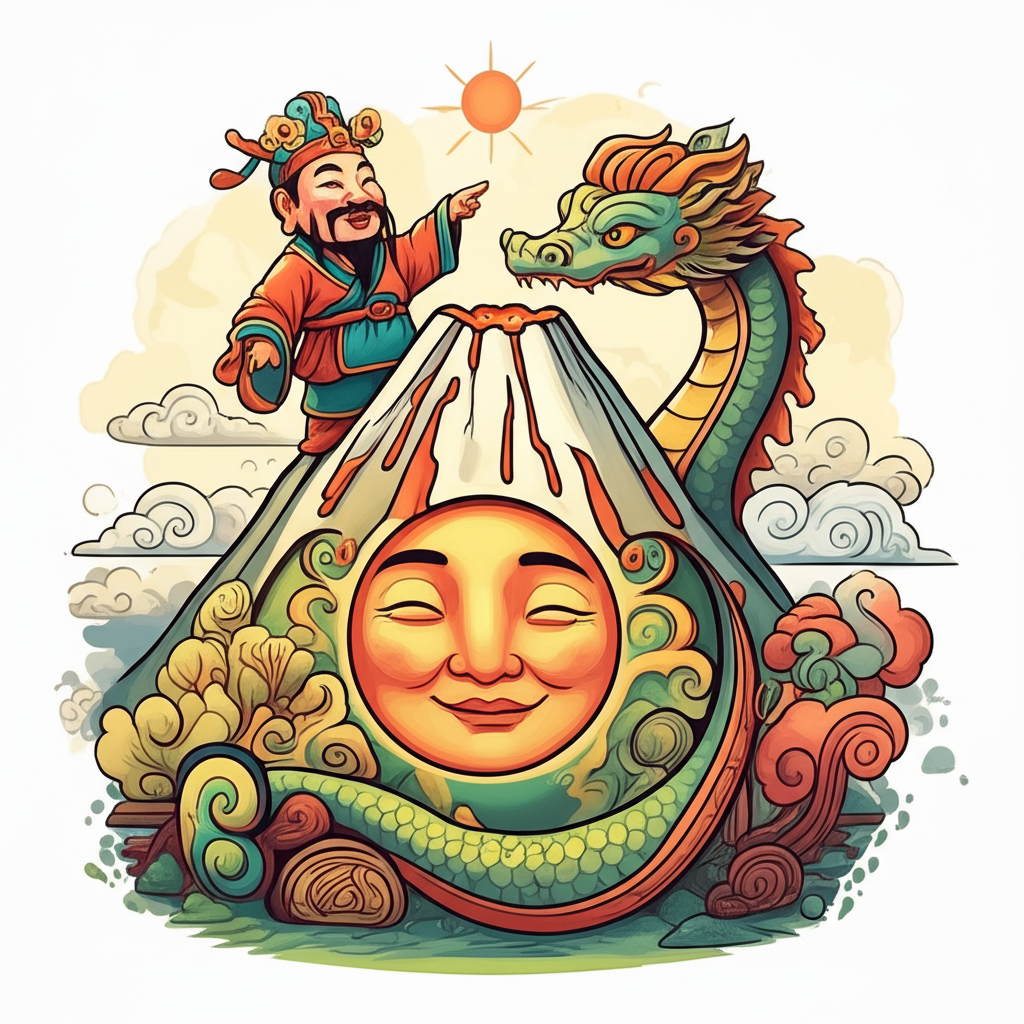
1. Introduction
Within the rich tapestry of Korean mythology, there exists a profound and ancient narrative woven by the ancestors of the Korean peninsula. This is a traditional story, passed down through generations, reflecting the worldview and spiritual understanding of ancient people, rather than a factual account. It speaks of celestial beings, aspiring creatures, and sacred landscapes, offering a window into a bygone era’s cultural imagination.
2. Origins and Cultural Background
The myths surrounding figures like Hwanin, the Imugi, and the sacred Mount Baekdu find their roots in the early cultural eras of ancient Korea, particularly during the formative periods of kingdoms like Gojoseon. For these early societies, deeply connected to the land and the rhythms of nature, the world was alive with unseen forces and spiritual entities. Their environment, dominated by towering mountains, vast forests, and the surrounding seas, shaped a worldview imbued with animism and a profound reverence for natural phenomena. Mountains, in particular, were seen not merely as geographical features but as spiritual anchors, connecting the earthly realm to the heavens. The cosmos was perceived as an ordered, hierarchical system, where celestial beings influenced earthly events, and where humans and creatures alike sought to understand their place within this grand design. Life was often a struggle against the elements, fostering a deep appreciation for perseverance, humility, and the potential for transformation—themes frequently explored in their folklore.
3. Character / Creature Description
At the heart of this particular myth stand three pivotal elements: Hwanin, the Imugi, and Mount Baekdu.
Hwanin, often referred to as the Heavenly King or Lord of Heaven, is a revered figure in Korean foundational myths. He is not presented as a deity to be worshipped, but rather as a symbolic representation of cosmic order, ultimate wisdom, and benevolent authority. Hwanin embodies the celestial mandate, the source of all life and governance, observing the world with an all-encompassing gaze. His "echoes" are not physical sounds but rather the subtle, pervasive influence of his divine will and established universal laws that shape destinies and guide aspirations.
The Imugi is a fascinating creature, a lesser serpent that embodies the very essence of potential and unfulfilled destiny. Unlike the majestic dragon (Yong), which is a fully realized symbol of power, wisdom, and good fortune, the Imugi is a pre-dragon, a creature forever striving to achieve its final, glorious transformation. Symbolically, the Imugi represents ambition, the arduous journey of self-improvement, the struggle against inherent limitations, and the profound longing for a higher state of being. It is a creature of perseverance, but also one often weighed down by the burden of its unfulfilled destiny, existing in a liminal space between the mundane and the magnificent.
Mount Baekdu, the highest peak on the Korean peninsula, is far more than a geological landmark. It is a profoundly sacred mountain, a spiritual axis mundi, and a symbol of the Korean nation’s origin and spirit. In myth, it serves as a powerful conduit between heaven and earth, a place where divine energies converge and where mortals and mythical creatures might seek to achieve their highest aspirations. Its volcanic crater lake, Cheonji ("Heaven Lake"), is often depicted as a place of immense spiritual power, a pure source of life and transformation.
4. Main Story / Narrative Retelling
High above the mortal realm, in the ethereal expanse where clouds billowed like silent oceans, resided Hwanin, the Heavenly King. His gaze, encompassing and benevolent, drifted across the vast landscapes below, observing the delicate dance of life, the struggles, and the aspirations of all creatures. From his celestial abode, he established the cosmic order, and his wisdom permeated the very fabric of existence, subtle as a whisper yet profound as the turning of the seasons. These were the "Echoes of Hwanin," the silent decrees and the inherent potential he instilled in the world.
Far below, nestled amidst the rugged, ancient peaks of the Korean peninsula, lay the majestic Mount Baekdu. Its snow-capped summit pierced the sky, a sacred beacon reaching towards the heavens, its crater lake, Cheonji, a pristine mirror reflecting the celestial realm. It was here, in the cold, clear waters that snaked down Baekdu’s slopes, and within its hidden caves, that an Imugi dwelled.
This particular Imugi was ancient, its scales the color of deep moss and polished stone, its eyes holding a profound, yearning intelligence. For a thousand years, it had lived, observed, and aspired. Unlike its brethren, content to merely exist as serpents, this Imugi harbored an unwavering dream: to shed its earthly form and ascend into the heavens as a true dragon, a Yong. It understood, through instincts older than time, that the path to transformation was arduous, requiring not just longevity, but profound virtue, unwavering perseverance, and a divine blessing—an echo from Hwanin himself.
Every dawn, the Imugi would emerge from its hidden lair, its long, serpentine body gliding silently towards the highest accessible reaches of Mount Baekdu. It would coil itself upon a frost-kissed rock, its gaze fixed on the endless sky, absorbing the celestial energies that Hwanin had infused into the mountain. It fasted for long stretches, meditating on the nature of purity and power. It endured bitter winters, its scales glazing with ice, and sweltering summers, its skin parched by the sun, never wavering in its devotion to its singular goal.
Years turned into centuries. The Imugi witnessed the rise and fall of ancient forests, the migration of countless creatures, and the distant echoes of human settlements forming at the mountain’s base. It learned patience from the slow erosion of stone, resilience from the enduring pines, and wisdom from the silent majesty of Baekdu itself. Its spirit, though still encased in a serpent’s form, grew luminous with an inner light.
Hwanin, from his celestial vantage, observed the Imugi. He saw not just a serpent, but a soul burning with unyielding aspiration, a creature embodying the very essence of disciplined effort and profound yearning. The time for a final trial, a true echo of his cosmic will, had come.
One auspicious night, under a sky ablaze with stars, a celestial mist descended upon Mount Baekdu, swirling around the Imugi’s form. A golden pearl, shimmering with an otherworldly light, materialized before it. This was the Yeouiju, the legendary wish-granting pearl, a direct gift and test from Hwanin, signifying the culmination of its long vigil.
To seize the Yeouiju and complete its transformation, the Imugi had to perform one final, selfless act. A great drought had begun to plague the lands around Baekdu, threatening the nascent human communities that revered the mountain. Hwanin’s echo resonated: true power lay not in self-gain, but in benevolent action.
Without hesitation, the Imugi, still in its serpent form, coiled around the Yeouiju. It did not swallow it immediately, as many would assume. Instead, it raised its head towards the heavens, and with a mighty roar that reverberated through the valleys, it invoked the ancient powers of Baekdu. Channeling the energy of the Yeouiju and its own millennia of accumulated virtue, the Imugi gathered the moisture from the air, from the deep earth, and from the celestial mists. A torrential rain began to fall, drenching the parched lands, filling the dry rivers, and bringing life back to the wilting crops.
As the last drops of rain fell, and the sun broke through the clouds, a blinding light enveloped the Imugi. Its scales shimmered and elongated, powerful horns sprouted from its head, and magnificent claws emerged from its body. Its form grew immense, coiling and uncoiling with newfound grace and power. With a final, triumphant roar, the Imugi, now a glorious Yong, a true dragon, ascended into the heavens, its silhouette etched against the sun-drenched sky. The echoes of Hwanin had guided its journey, and its perseverance had earned its destiny.
5. Symbolism and Meaning
To the ancient Koreans, this myth was rich with symbolic meaning. Hwanin represented the ultimate source of order, the benevolent cosmic will that governed all existence. His "echoes" conveyed the idea that destiny is not entirely predetermined but influenced by divine principles, and that true ascension requires alignment with these higher virtues. The Imugi, through its long and arduous journey on Mount Baekdu, symbolized the human condition—the persistent striving for self-improvement, the struggle against inherent limitations, and the profound desire for transformation and enlightenment. Its eventual success, earned through selflessness and perseverance, underscored the importance of inner virtue over outward appearance and the belief that diligent effort, combined with moral action, could lead to a higher state of being. Mount Baekdu, as the sacred stage for this transformation, represented the spiritual heartland, a place of immense power and purity where one could connect with the divine and undertake profound personal trials. The entire narrative spoke to the ancient Korean values of endurance, humility, the pursuit of wisdom, and the interconnectedness of heaven and earth.
6. Modern Perspective
Today, the myth of the Imugi and the echoes of Hwanin continue to resonate deeply within Korean culture, albeit interpreted through a contemporary lens. It no longer serves as a literal belief system but rather as a powerful cultural narrative. The Imugi, in particular, has found a significant place in modern Korean literature, films, and popular media. From epic fantasy K-dramas that feature Imugi as complex characters struggling with their fate (sometimes antagonist, sometimes protagonist), to webtoons and video games, the creature remains a potent symbol of ambition, potential, and the journey of self-discovery. Mount Baekdu retains its sacred status, revered as a national symbol and a source of inspiration. Academics and cultural scholars study these myths not for their factual claims but for their insights into ancient Korean thought, their artistic merit, and their enduring influence on national identity and storytelling traditions.
7. Conclusion
The story of the Imugi, Mount Baekdu, and the benevolent echoes of Hwanin is a testament to the profound imagination and rich cultural heritage of ancient Korea. It is a traditional narrative, a piece of folklore that illuminated the world for those who first told it, offering explanations for the mysteries of life and the human spirit. As Muslims, we recognize that only Allah, the Most High, is the true Creator and Sustainer of all existence, and that all power and wisdom ultimately reside with Him. This story, therefore, stands as a cherished cultural artifact, a beautiful example of how diverse societies have used storytelling to explore universal themes of aspiration, transformation, and the eternal quest for meaning, reminding us of the enduring power of human imagination and the timeless legacy of cultural heritage.


