
 fufufafa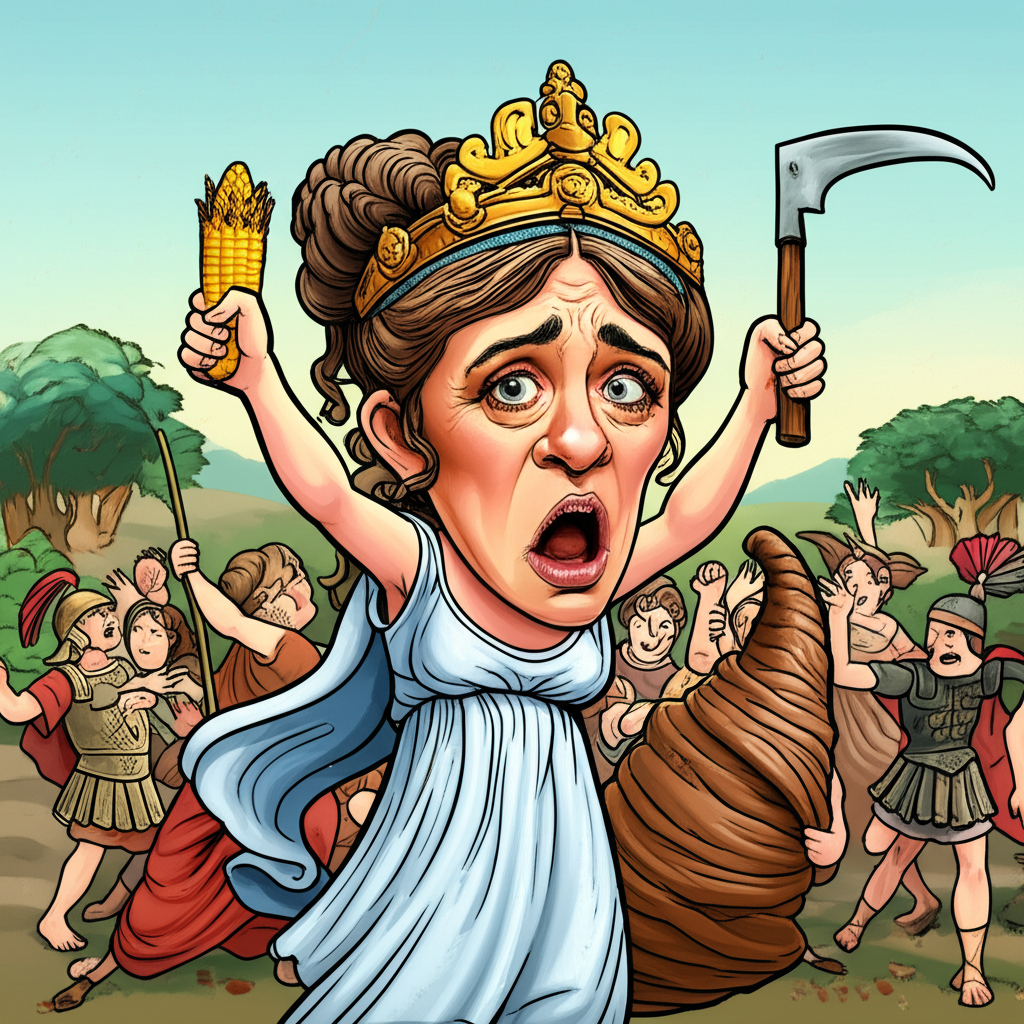
1. Introduction
Across the tapestry of ancient civilizations, stories emerged that sought to explain the world, its mysteries, and the very foundations of human society. This article delves into two prominent traditional narratives from ancient Roman mythology: the poignant myth of Ceres and her daughter Proserpina, which illuminates the cycles of nature, and the foundational legend of the "Rape of the Sabines," a dramatic tale pivotal to the origin of Rome. These are not historical accounts in the modern sense, nor are they meant to be believed as literal truth; rather, they are ancient cultural stories, passed down through generations, offering insights into the worldview, values, and imaginative spirit of the people who shared them.
2. Origins and Cultural Background
These myths are deeply rooted in the heart of ancient Rome, a civilization that flourished for over a millennium and left an indelible mark on Western culture. The era in which these myths gained prominence spanned from the city’s legendary founding in the 8th century BCE through the Republican and Imperial periods. Roman society was predominantly agrarian, with its survival intrinsically linked to the fertility of the land and the success of harvests. This environment naturally fostered a deep reverence for deities associated with agriculture and the earth, like Ceres.
The worldview of ancient Romans was polytheistic, populated by a pantheon of gods and goddesses who mirrored human emotions and interactions, albeit on a grander, more powerful scale. They believed these deities directly influenced all aspects of life – from the changing seasons and the bounty of the fields to the outcomes of battles and the very establishment of cities. Myths served not only as entertainment but also as explanations for natural phenomena, moral lessons, justifications for social structures, and crucial narratives about their origins and identity as a people. They offered a framework for understanding their place in the cosmos and their historical trajectory, particularly regarding the founding and expansion of their mighty empire.
3. Character Descriptions and Symbolic Attributes
Central to the first myth is Ceres, the Roman goddess of agriculture, grain crops, fertility, and motherly relationships. Her Greek counterpart is Demeter. Ceres was often depicted as a mature woman, serene yet powerful, adorned with wreaths of wheat or poppies, holding a scepter or a torch, and sometimes accompanied by a cornucopia overflowing with abundance. Symbolically, she represented the nurturing aspect of the earth, the cycle of growth and harvest, and the profound, unconditional love of a mother. Her attributes underscore the vital importance of agriculture to Roman life and the cyclical nature of existence.
Her daughter, Proserpina (Persephone in Greek mythology), was a goddess of spring and the underworld. She was often depicted as a beautiful maiden, sometimes holding flowers or sheaves of grain. Her dual nature – a vibrant goddess of life who becomes queen of the dead – is central to her story.
The second myth, the "Rape of the Sabines," involves Romulus, the legendary founder of Rome, and the Sabine women. Romulus is depicted as a determined, almost ruthless leader, driven by the ambition to establish and grow his nascent city. The Sabine women, though initially victims, later become figures of peace and integration, symbolizing the potential for reconciliation and the forging of new identities from disparate peoples.
4. Main Story / Narrative Retelling
Let us first explore the myth of Ceres and Proserpina, a narrative that explains the changing seasons through a mother’s grief.
Once, in the verdant fields of Sicily, the radiant maiden Proserpina, daughter of Ceres, was gathering blossoms with her companions. The air was sweet with the scent of spring, and the earth teemed with life under the watchful, loving gaze of her mother. However, the ruler of the Underworld, Pluto (Hades in Greek lore), observed Proserpina from his shadowy domain. Captivated by her beauty, he ascended to the world above, his chariot drawn by black steeds, and with a sudden, violent motion, he seized the screaming maiden and dragged her down into the abyssal depths of his realm. The earth swallowed them whole, leaving only a scattering of flowers as a testament to the horror that had transpired.
Ceres, upon discovering her daughter’s disappearance, was plunged into an inconsolable grief that shook the very foundations of the world. With a burning torch in hand, she embarked on a desperate, nine-day search across the land, her pleas echoing through valleys and over mountains. Her sorrow was so profound that she neglected her divine duties; the fields withered, crops failed, and a devastating famine gripped the earth. Humanity suffered, and even the offerings to the gods ceased.
Alarmed by the desolation, Jupiter (Zeus), the king of the gods, intervened. He sent messengers to Pluto, demanding Proserpina’s release. Pluto, however, had already tricked Proserpina into eating a few pomegranate seeds, a symbolic act that bound her to the Underworld. A compromise was eventually reached: Proserpina would spend a portion of the year (typically autumn and winter) with Pluto in the Underworld, during which time Ceres would mourn, and the earth would become barren. For the remaining part of the year (spring and summer), Proserpina would return to her mother, and Ceres’ joy would cause the earth to burst forth with life and abundance once more. This cycle, the ancients believed, explained the rhythm of the seasons, a poignant dance between life and dormancy, joy and sorrow.
Now, let us turn to a separate but thematically related Roman foundational myth: the "Rape of the Sabines." This narrative recounts an event central to the early days of Rome.
In its nascent years, Rome, founded by Romulus, was a city primarily populated by men—adventurers, exiles, and shepherds. As the city grew, Romulus realized a critical shortage: there were no women to marry, no families to establish, and thus, no future generations to ensure the city’s longevity. Rome’s attempts to negotiate alliances and secure wives from neighboring communities were met with disdain and refusal, as the fledgling city was viewed as a collection of outcasts.
Determined to secure Rome’s future, Romulus devised a cunning plan. He announced a grand festival, the Consualia, dedicated to the god Consus, featuring spectacular games and races. Invitations were extended to all surrounding peoples, including the Sabines, a proud and ancient people inhabiting the nearby hills. Trusting in the sanctity of the games, the Sabines arrived in great numbers, bringing their wives and daughters.
As the festivities reached their peak, Romulus gave a prearranged signal. At once, the Roman men, armed and organized, rushed into the crowd, seizing the Sabine women and carrying them off. The Sabine men, outraged and humiliated, fled, vowing revenge. This act, often referred to as the "Rape of the Sabines," should be understood in its ancient context, where "rape" (from Latin raptio) primarily meant abduction or seizure, though it undoubtedly encompassed the violent taking of women for marriage, often against their will, and thus implied sexual violation as part of the forced union.
War soon erupted between the Romans and the Sabines. The conflict raged, culminating in a fierce battle near the Roman citadel. However, in a dramatic turn of events, the abducted Sabine women, now having lived among the Romans for some time and, in many cases, having borne children to their Roman husbands, intervened. They rushed onto the battlefield, their hair disheveled and their children in their arms, pleading with both sides to cease the bloodshed. They implored their fathers and brothers to accept their new lives and their husbands to cease fighting their kin. Their emotional appeal moved both armies, leading to a truce. A peace treaty was signed, and the Sabines were integrated into Roman society, becoming co-citizens and effectively doubling Rome’s population and strength.
5. Symbolism and Meaning
The myth of Ceres and Proserpina is a profound allegorical narrative. To ancient people, it primarily represented the cycle of life, death, and rebirth, particularly evident in the agricultural calendar. Ceres’ grief and joy directly mirrored the barrenness of winter and the fertility of spring and summer. It also symbolized the deep, unbreakable bond between a mother and her child, highlighting the emotional toll of separation and loss. On a broader scale, it offered a cosmic explanation for the forces that govern the natural world, reinforcing the idea that even divine power is subject to compromise and the inevitability of change.
The "Rape of the Sabines," on the other hand, is a myth of origin and nation-building. It symbolizes the aggressive, expansionist nature of early Rome and the pragmatic, often brutal, measures taken to ensure its survival and growth. It underscores the critical importance of lineage and population in establishing a lasting city. Furthermore, the women’s intervention symbolizes their pivotal role not just as producers of future generations, but as agents of peace and integration, transforming a violent act of abduction into the foundation of a unified Roman populace. It suggests that even from conflict, new societal bonds can be forged, and disparate groups can be melded into a stronger, shared identity. The myth served to legitimize the mixed ancestry of the early Romans and explain the presence of Sabine names and customs within their society.
6. Modern Perspective
Today, these ancient myths continue to resonate and are interpreted through various lenses in literature, art, and academic study. The story of Ceres and Proserpina has inspired countless artistic renditions, from the dramatic Baroque sculpture The Rape of Proserpina by Bernini, which captures the raw emotion of the abduction, to numerous paintings, poems, and musical compositions. In literature and psychology, it is often explored as an archetype of the grieving mother, the innocent maiden’s descent into the unknown, and the cyclical nature of human experience – themes of loss, resilience, and transformation. Its influence can be seen in modern fantasy narratives and explorations of the unconscious mind.
The "Rape of the Sabines" also remains a powerful subject in art, famously depicted by Nicolas Poussin and Jacques-Louis David, who used the story to explore themes of violence, heroism, and the foundation of states. In modern cultural studies, this myth is critically examined for its portrayal of gender roles, power dynamics, and the often-violent genesis of nations. Historians and sociologists analyze it as a foundational myth that both reflects and shapes societal attitudes towards marriage, conquest, and the assimilation of diverse populations. The term "rape" itself, with its strong modern connotations of sexual assault, often sparks contemporary discussions on how ancient texts should be interpreted and understood in light of evolving ethical sensibilities, distinguishing the historical meaning of "abduction" from its modern usage while acknowledging the inherent violence of the act.
7. Conclusion
In concluding, it is paramount to reiterate that the narratives of Ceres and Proserpina, and the "Rape of the Sabines," are cultural stories born from the imaginative spirit of ancient civilizations. They are not to be regarded as factual accounts or as objects of belief, worship, or practice. As Muslims, we recognize that there is no creator or sustainer but Allah, the One True God, Who is utterly unique and incomparable, and to Whom alone all worship and praise are due.
These myths, like countless others from various cultures, stand as testaments to humanity’s timeless need to explain the inexplicable, to find meaning in the cycles of nature, and to craft narratives that define their origins and values. They are a rich part of our shared cultural heritage, offering windows into the human imagination and the diverse ways people have sought to understand their world. By studying these stories, we gain a deeper appreciation for the art of storytelling, the evolution of human thought, and the enduring power of narrative to shape identity and transmit cultural understanding across the vast expanse of time.


