fufufafa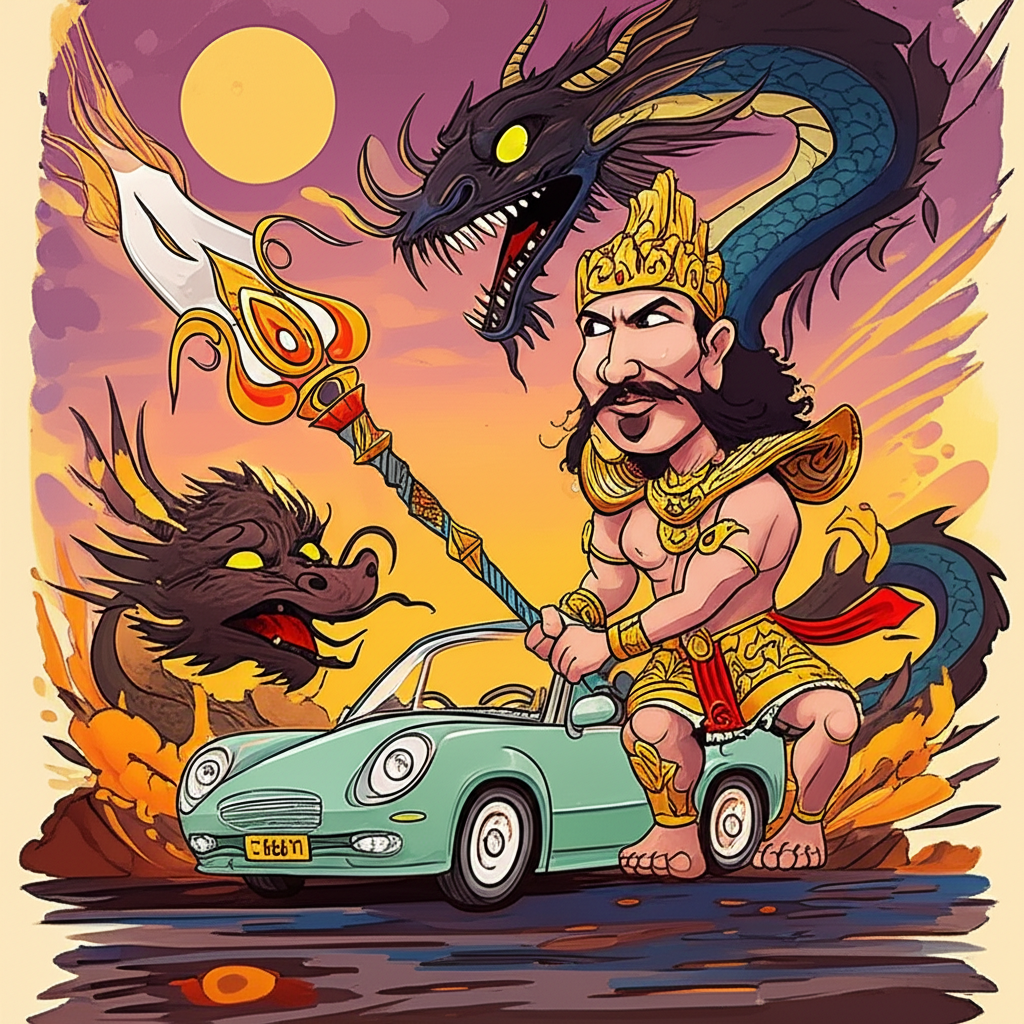
Introduction:
From the heart of the Philippine archipelago, passed down through generations by word of mouth, comes a vibrant tale of gods, monsters, and the eternal dance between light and darkness. This is the story of Bathala, the supreme deity, and Bakunawa, the monstrous serpent perpetually hungry for the moon. It is a traditional story, a product of the rich imagination of our ancestors, meant to explain the mysteries of the world they inhabited.
Origins and Cultural Background:
This myth originates from the pre-colonial Philippines, a time when the islands were divided into various barangays (villages) each with its own set of beliefs and traditions. The people lived in close harmony with nature, their lives deeply intertwined with the cycles of the sun, moon, and stars. Their understanding of the world was shaped by their immediate environment – the lush forests, the vast oceans, and the unpredictable weather patterns.
The ancient Filipinos, like many early cultures, sought to explain the unexplainable. Eclipses, typhoons, and other natural phenomena were often attributed to the actions of deities and mythical creatures. The cosmos was not a cold, impersonal void, but a living, breathing realm teeming with supernatural beings. This myth of Bathala and Bakunawa likely arose from a desire to understand and cope with the fear and uncertainty surrounding lunar eclipses, transforming a terrifying event into a captivating narrative. Their worldview was animistic, believing that spirits inhabited everything around them, from the tallest trees to the smallest stones. This belief system naturally extended to the celestial bodies, imbuing them with power and personality.
Character / Creature Description:
-
Bathala: The supreme deity in pre-colonial Tagalog mythology. He is often depicted as a wise and benevolent creator god, the ruler of the universe and the source of all life. Bathala is not typically given a specific physical form in the myths, suggesting a more abstract, all-encompassing presence. He represents order, justice, and the power of creation. Symbolically, he embodies the hope for a balanced and harmonious world.
-
Bakunawa: A gigantic sea serpent or dragon-like creature with a gaping mouth and an insatiable hunger for the moon. Its scales shimmered like a thousand sunsets, and its eyes glowed with malevolent intent. The Bakunawa represented chaos, destruction, and the unpredictable forces of nature. It was a symbol of fear and the unknown, the darkness that threatened to swallow the light. The creature is often associated with the destructive power of the ocean and the terrifying spectacle of lunar eclipses. The story of the Bakunawa served as a warning about the dangers that lurked beyond the familiar and the importance of respecting the power of nature.
Main Story / Narrative Retelling:
In the beginning, Bathala, the all-powerful creator, illuminated the night sky with seven beautiful moons. They were a source of wonder and joy for the people, guiding their way and marking the passage of time. However, Bathala’s creation was soon threatened by the emergence of Bakunawa, a monstrous serpent lurking in the deepest oceans.
Bakunawa, driven by an unquenchable hunger and envious of the moon’s radiant beauty, began devouring the celestial orbs one by one. As each moon disappeared into the serpent’s gaping maw, the world was plunged into deeper darkness, and fear gripped the hearts of the people. They cried out to Bathala, begging for his intervention.
Hearing their pleas, Bathala descended from the heavens, his divine presence radiating with power. He confronted Bakunawa, his voice booming like thunder across the ocean. A fierce battle ensued, the clash of divine power against monstrous strength shaking the very foundations of the world.
Bathala unleashed his celestial weapons, bolts of lightning and storms of stars, against Bakunawa. The serpent, however, proved to be a formidable foe, its scales deflecting the attacks and its immense size allowing it to withstand the divine onslaught.
The battle raged for what seemed like an eternity, the fate of the remaining moon hanging in the balance. Finally, Bathala, using his cunning and wisdom, tricked Bakunawa. He created a loud, deafening noise, a cacophony of drums and gongs, mimicking the sound of the world in chaos. Startled and overwhelmed, Bakunawa momentarily released the moon it was about to consume.
Seizing the opportunity, Bathala banished Bakunawa back to the deepest abyss of the ocean, forever bound to remain there. The remaining moon, weakened but safe, continued its journey across the sky. Though the threat of Bakunawa loomed, the people learned to ward off the beast during eclipses by making loud noises, reminding it of its past defeat and forcing it to release its grip on the moon.
Symbolism and Meaning:
The myth of Bathala and Bakunawa is rich in symbolism. It represents the eternal struggle between good and evil, order and chaos, light and darkness. Bathala embodies the principles of creation, justice, and the benevolent power of the divine. Bakunawa, on the other hand, symbolizes the destructive forces of nature, the fear of the unknown, and the insatiable hunger that can consume even the most beautiful things.
The story also speaks to the importance of community and collective action. The people’s efforts to scare away the Bakunawa during eclipses highlight the power of unity and the belief that even the most terrifying threats can be overcome through cooperation. The myth may also have served as a way to explain the natural phenomenon of lunar eclipses, providing a narrative framework for understanding a potentially frightening event.
Modern Perspective:
The myth of Bathala and Bakunawa continues to resonate in modern Philippine culture. It appears in literature, art, and film, often reinterpreted to explore contemporary themes such as environmentalism, social justice, and the preservation of indigenous traditions. The Bakunawa, in particular, has become a popular figure in fantasy and science fiction, often depicted as a powerful and complex creature, sometimes even as a symbol of resistance against oppression. The story also serves as a reminder of the rich cultural heritage of the Philippines and the importance of preserving and sharing these ancient tales.
Conclusion:
The story of Bathala and the War of Bakunawa and the Moon is a testament to the power of storytelling and the enduring appeal of mythology. It is a window into the worldview of our ancestors, their fears, their hopes, and their understanding of the world around them. It’s crucial to remember that this is a cultural story, a product of human imagination, and not a set of beliefs to be practiced or worshipped. As Muslims, we recognize that only Allah is the true Creator and Sustainer of the universe.
This myth, however, remains a valuable part of our cultural heritage, reminding us of the rich and diverse tapestry of Filipino culture. It encourages us to appreciate the power of imagination, the importance of storytelling, and the enduring human quest to understand the mysteries of the world. Let us cherish this tale, not as a divine truth, but as a beautiful expression of human creativity and cultural identity.