fufufafa
Introduction:
The tale of Dagda and the Sacred Mountain originates from the rich tapestry of Irish mythology, a collection of stories passed down through generations by the ancient Celts. These narratives, brimming with powerful gods, mystical creatures, and epic battles, offer a glimpse into the worldview of a people deeply connected to the land and its spirits. It is crucial to understand that this is a traditional story, a product of human imagination and cultural beliefs, not a historical account or a divine revelation. We explore it as a window into the past, a testament to the creativity and storytelling prowess of our ancestors.
Origins and Cultural Background:
The myths surrounding Dagda and other figures of the Tuatha Dé Danann (the people of the goddess Danu) likely took shape during the Iron Age in Ireland, a period characterized by tribal societies, agricultural economies, and a strong oral tradition. The Celts, who inhabited Ireland at this time, viewed the world as imbued with magic and the presence of otherworldly beings. Their understanding of the natural world was intertwined with spiritual beliefs, with sacred groves, rivers, and mountains considered gateways to the Otherworld, the realm of the gods and spirits.
Their society was hierarchical, with druids holding positions of great influence as religious leaders, judges, and keepers of knowledge. The myths were not merely entertainment; they served as a means of transmitting cultural values, explaining natural phenomena, and legitimizing social structures. Storytelling was a vital art, and the bards, skilled poets and narrators, held a respected place in society, preserving and embellishing the ancient tales. The world was a place of cyclical events, where the divine and mortal realms were constantly interacting.
Character Description: Dagda
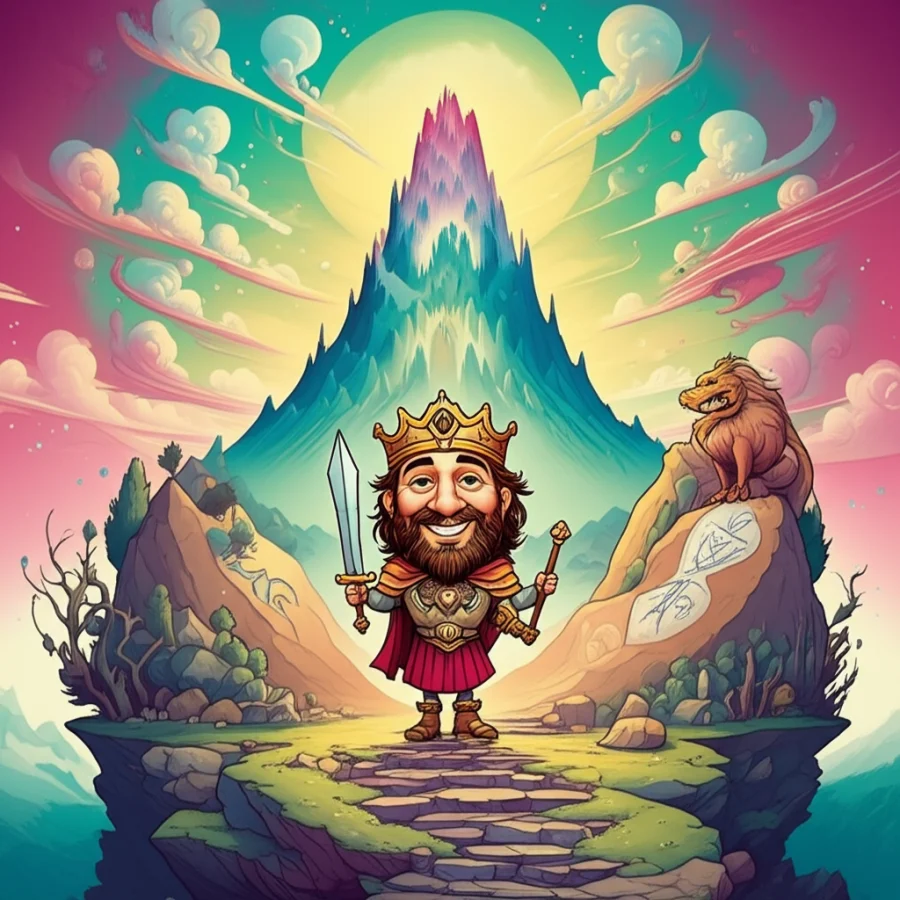
Dagda, often translated as "the Good God" or "the All-Father," is a central figure in Irish mythology, a powerful and multifaceted deity. He is not simply "good" in a moral sense, but rather "good at everything," possessing a wide range of skills and attributes. He is described as being immense in stature, wielding a massive club capable of both crushing enemies and restoring life.
Symbolically, Dagda represents abundance, fertility, wisdom, and strength. He possesses a cauldron, the Undry, which is perpetually filled with food, a symbol of endless provision. He also owns a magical harp, Uaithne, which can control the emotions of men and summon the seasons. His unkempt appearance and voracious appetite contrast with the more refined images of other deities, highlighting his connection to the earth and the primal forces of nature. The club symbolizes his authority and ability to shape the world, while the cauldron signifies his role as a provider and sustainer. The harp represents his control over the natural cycles and the emotions that govern human behavior.
Main Story / Narrative Retelling:
In the ancient lands of Ireland, where mist-shrouded mountains met emerald valleys, stood the Sacred Mountain. This was no ordinary peak; it was a place of power, a nexus point between the mortal realm and the Otherworld, guarded by ancient spirits and imbued with the essence of the land itself.
Dagda, the All-Father, felt a disturbance within the mountain’s heart. Whispers of unrest reached his ears, carried on the wind and rustling through the sacred groves. He knew something was amiss, something that threatened the delicate balance between the worlds. Gathering his mighty club and slinging his cauldron, the Undry, across his broad back, Dagda began his ascent.
The journey was arduous. He traversed treacherous paths, navigated through swirling mists, and faced the challenges posed by the mountain’s guardians. He soothed the restless spirits with melodies played on his magical harp, Uaithne, calming their fears and reminding them of the harmony they were sworn to protect.
Finally, he reached the summit, where he discovered the source of the unrest: a monstrous serpent, awakened from its slumber, coiling around the mountain’s heart and poisoning its essence. The serpent hissed, its eyes burning with malice, its scales shimmering with dark energy.
Dagda knew he could not reason with the beast. A fierce battle ensued, the mountain trembling under the clash of Dagda’s club against the serpent’s scales. Lightning crackled, and thunder roared as the two titans fought for control of the sacred ground.
Using his cunning and strength, Dagda finally managed to strike a decisive blow, shattering the serpent’s head and releasing the poisoned essence back into the earth. He then used his club, imbued with the power of life, to heal the wounded mountain, restoring its balance and vitality.
With the Sacred Mountain restored, Dagda descended, leaving behind a place of peace and harmony. His journey was a testament to his role as the protector of the land and the guardian of the delicate balance between the mortal and otherworldly realms.
Symbolism and Meaning:
The story of Dagda and the Sacred Mountain is rich in symbolism. The mountain itself represents the connection between the earth and the heavens, a place of spiritual power and transformation. The serpent symbolizes chaos, destruction, and the forces that threaten to disrupt the natural order. Dagda’s victory over the serpent represents the triumph of order over chaos, the restoration of balance, and the importance of protecting the sacredness of the land.
To the ancient Celts, this story likely served as a reminder of the importance of respecting the natural world and maintaining harmony with the spirits that inhabit it. It also reinforced the role of the leader as a protector and guardian of the community, responsible for defending against external threats and ensuring the well-being of the people. The story highlights the cyclical nature of life, with periods of chaos and destruction followed by renewal and restoration.
Modern Perspective:
The myth of Dagda and the Sacred Mountain continues to resonate in modern literature, movies, and games. He is often depicted as a powerful and complex figure, embodying both the strength and wisdom of the ancient gods. The themes of protecting the environment, restoring balance, and facing inner demons are timeless and continue to inspire artists and storytellers. The story is often reinterpreted to reflect contemporary concerns about environmental degradation, social injustice, and the search for meaning in a chaotic world.
In cultural studies, the myth is analyzed as a reflection of the values and beliefs of the ancient Celts, offering insights into their worldview, social structures, and spiritual practices. It is recognized as a valuable part of our cultural heritage, a testament to the power of storytelling and the enduring appeal of mythological narratives.
Conclusion:
The Chronicle of Dagda and the Sacred Mountain is a captivating story from Irish mythology, offering a glimpse into the beliefs and values of the ancient Celts. It is a tale of heroism, resilience, and the importance of protecting the natural world. It is a cultural story, a product of human imagination, and should be appreciated as such.
As Muslims, we recognize that only Allah is the true Creator and Sustainer of the universe. We acknowledge the richness and diversity of human culture and the power of storytelling to transmit values and inspire creativity. Let us appreciate this tale as a part of our cultural heritage, a reminder of the imaginative traditions of our ancestors, while remaining steadfast in our faith and devotion to Allah. It is a story, not a sacred text, a product of human creativity, and a testament to the enduring power of the storytelling tradition.