fufufafa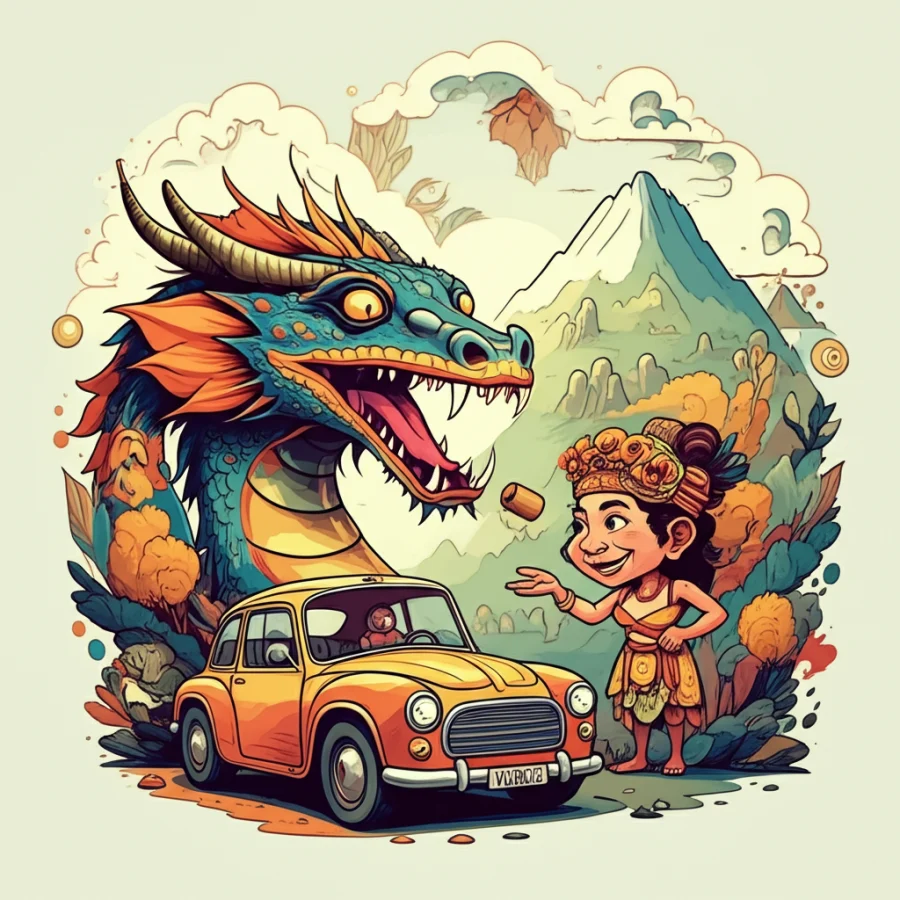
Introduction:
The Philippine archipelago, a land kissed by sun and drenched in monsoon rains, cradles within its myriad islands a tapestry woven with ancient stories. These tales, passed down through generations before the advent of the written word, speak of a world teeming with spirits, mythical creatures, and powerful deities. Today, we journey into the heart of one such story, a narrative that echoes from the pre-colonial Philippines, specifically from the Tagalog and other indigenous groups in Luzon. This is a story about the celestial goddess Anitun Tabu, the serpent-like Bakunawa, and the mystical Mount Makiling. Remember, this is a traditional story, a vibrant piece of cultural heritage. It is a glimpse into the imagination and worldview of people who lived long ago, not a declaration of truth or a call to worship.
Origins and Cultural Background:
The narrative we are about to explore took root in a time before Spanish colonization, a period when the indigenous peoples of the Philippines lived in a world saturated with animistic beliefs. The Tagalog, Kapampangan, and other groups thrived in a society deeply intertwined with the natural world. Their environment – the verdant rice paddies, the dense rainforests, the vast ocean – was seen not just as a source of sustenance but as a living entity, inhabited by a multitude of spirits (anito) and deities. These spirits resided in trees, rivers, mountains, and the very air they breathed.
Life revolved around the cycles of nature, dictated by the sun, the moon, and the seasons. People relied on agriculture, fishing, and trade, but their understanding of the world went far beyond practical necessities. They sought to understand the forces of nature through storytelling, rituals, and the guidance of their elders, who served as keepers of knowledge and tradition. Illness, natural disasters, and the mysteries of life and death were explained through narratives that often featured supernatural beings and the actions of the gods and goddesses. Their worldview was one of profound respect for the natural world and a deep connection to the spiritual realm. The moon, in particular, played a crucial role, influencing planting seasons, tides, and the very rhythm of life.
Character/Creature Description:
The central figures in our story are Anitun Tabu, the celestial goddess, and the Bakunawa, a colossal serpent-like dragon.
-
Anitun Tabu: Represented as a powerful and beautiful goddess, Anitun Tabu was associated with the moon and, by extension, the night sky and the passage of time. She was seen as a benevolent force, her light guiding travelers and marking the rhythms of life. Symbolically, she embodies serenity, the feminine principle, and the cyclical nature of existence.
-
Bakunawa: The Bakunawa is a fearsome, serpentine dragon, said to be a creature of immense size, often described as larger than the entire sky. Its scales shimmered like the darkest night, and its eyes burned with a primal fire. It lived in the ocean depths, constantly seeking to devour the moon and sometimes the sun, plunging the world into darkness. The Bakunawa represents chaos, the destructive forces of nature, and the challenges that threaten the established order.
-
Mount Makiling: The home of the goddess, often linked to Anitun Tabu, Mount Makiling is more than just a mountain; it is a sacred space. It is seen as a place of refuge, a place where people can go to seek help from the goddess.
Main Story / Narrative Retelling:
In the ancient times, when the sky was a canvas of constant change and the world vibrated with the whispers of the anito, Anitun Tabu, the moon goddess, shone with a gentle radiance. Her light guided the fishermen on their nightly voyages and illuminated the farmers’ fields. The world flourished under her benevolent gaze.
But a shadow lurked in the depths of the ocean. The Bakunawa, a serpent of unimaginable size and power, stirred from its slumber. Driven by an insatiable hunger, the Bakunawa desired the moon. It rose from the sea, its massive body coiling and uncoiling, blotting out the stars as it moved.
The first attempt of the Bakunawa to eat the moon failed. The moon, protected by Anitun Tabu, shone brightly and managed to escape. This enraged the serpent. The Bakunawa rose again, its jaws agape, ready to swallow the moon whole. The people of the land saw the earth darken and feared the Bakunawa. The villagers began to make noise, banging pots and pans, and screaming to make the dragon spit out the moon.
The villagers’ efforts were not enough to stop the Bakunawa. Anitun Tabu, however, did not give up. She had many helpers, the people of the land, who fought to defend the moon.
Legend has it that, after some time, the Bakunawa, unable to swallow the moon, retreated to its ocean lair. The people of the land, relieved, rejoiced in the return of the moon’s light. The cycles of the moon, its waxing and waning, became a constant reminder of the Bakunawa’s threat and the eternal battle between light and darkness.
The story goes on to say that the people began to perform rituals and make sacrifices to appease the Bakunawa and to ensure the return of the moon, which served as a symbol of protection and guidance. The sounds of drums and chanting echoed through the night, a desperate plea to the celestial forces to keep the serpent at bay.
The narrative also connects this celestial drama to Mount Makiling. The mountain itself is often seen as the abode of a guardian spirit, a powerful force that works to maintain balance and protect the land from chaos. The spirit, often depicted as a beautiful woman, may be connected to the Anitun Tabu, as well as the forest.
Symbolism and Meaning:
The story of Anitun Tabu and the Bakunawa encapsulates several layers of symbolic meaning.
- The Moon and Light: The moon represents order, guidance, and the cycles of life. The Bakunawa’s attempts to consume the moon symbolize the forces of chaos, the threat to the established order, and the fear of the unknown.
- The Struggle Between Good and Evil: The conflict between the goddess and the serpent reflects the ancient struggle between good and evil, light and darkness, order and chaos.
- The Power of Community: The villagers’ attempts to ward off the Bakunawa underscore the importance of community, cooperation, and collective action in the face of adversity. The loud banging and screaming represent the people’s power.
- Nature and the Environment: The story highlights the deep connection between the ancient people and the natural world. It recognizes the importance of balance and the consequences of disrupting that balance.
- Mount Makiling: The mountain serves as a sanctuary and protector, providing a haven in times of crisis and representing the enduring power of the land.
Modern Perspective:
Today, the story of Anitun Tabu and the Bakunawa continues to resonate in various forms. It is explored in Philippine literature, used in novels and poems to explore themes of cultural identity, the power of myth, and the relationship between humanity and nature. The tale often appears in fantasy novels, offering rich settings for adventure.
Conclusion:
The tale of Anitun Tabu, the Bakunawa, and Mount Makiling is a vibrant thread in the rich tapestry of Philippine folklore. It is a story born from the imaginations of ancient people, a reflection of their worldview, their fears, and their hopes. We must remember that this is a cultural story, a product of a specific historical and social context. As Muslims, we hold firm to our belief that Allah (SWT) is the sole Creator and Sustainer of all things. We recognize the beauty and value of cultural heritage while maintaining our unwavering faith in the one true God.
This story allows us to appreciate the power of human imagination, the enduring appeal of storytelling, and the importance of preserving cultural traditions. The echoes of Anitun Tabu and the Bakunawa serve as a reminder of the rich history of the Philippines and the enduring power of the human spirit to create and remember.