fufufafa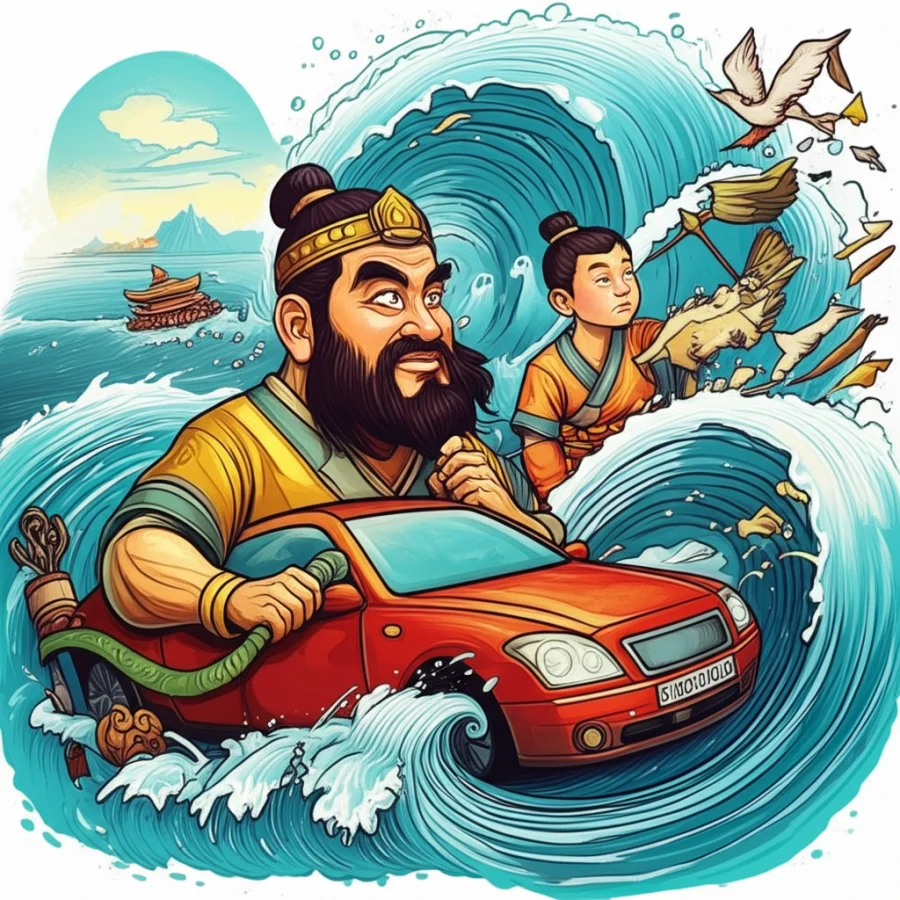
Introduction:
The tale of Gun and Yu, and the Great Flood that threatened to engulf the world, is a cornerstone of Chinese mythology, a narrative passed down through generations. It originates in ancient China, a land of vibrant cultures and profound traditions. This is a traditional story, a product of human imagination and the cultural landscape of a time long past. It is not a historical account, nor is it meant to be considered as a basis for religious belief or practice. Instead, it offers us a window into the beliefs, anxieties, and aspirations of the ancient Chinese people.
Origins and Cultural Background:
The story of Gun and Yu finds its roots in the period of China’s legendary emperors, a time often considered to be before the establishment of the first dynasties, perhaps around the 3rd millennium BCE. This was a time when the Yellow River, known as the “Mother River” of China, frequently flooded, wreaking havoc on agricultural lands and displacing populations. The environment was harsh, the climate unpredictable. Life was a constant struggle against the elements.
The people of this era lived a predominantly agrarian life, deeply connected to the natural world. Their understanding of the world was often rooted in animism, the belief that spirits inhabited all things, from mountains and rivers to the wind and the rain. They saw patterns in the cosmos, sought explanations for the forces of nature, and developed elaborate systems of rituals and ceremonies designed to appease the gods and ensure prosperity. The concept of Tian, or Heaven, was crucial. It was seen as a powerful, often capricious force that influenced human affairs. Their society was hierarchical, with rulers believed to possess a divine mandate to govern. The need for order, stability, and control over natural disasters was paramount, shaping the very fabric of their society and their storytelling.
Character/Creature Description:
The central figures in this myth are Gun and his son, Yu.
-
Gun: Gun is depicted as a strong, determined, and perhaps somewhat flawed figure. He is often associated with the skill of damming and containment. He is a protector of the people, seeking to solve the problem of the devastating floods. However, his method of dealing with the floods reveals a lack of foresight and potential hubris. He is often portrayed as being a mortal, though in some versions he is said to be related to the gods.
-
Yu: Yu, also known as Yu the Great, is the son of Gun. He is depicted as a wise, diligent, and resourceful leader. Unlike his father, Yu is patient and focused on long-term solutions. He is known for his dedication to the people and his willingness to work tirelessly to control the floods. He is often considered to be a divine figure, or at least someone who operates with the guidance of the gods. He is also associated with the concept of order and structure.
Main Story/Narrative Retelling:
The story begins with a catastrophic flood, a deluge that threatened to drown the world. The waters of the Yellow River surged, overflowing its banks and submerging vast swathes of land. People were displaced, crops were ruined, and the very survival of the human race was in peril. The emperor, in desperation, tasked Gun with controlling the flood.
Gun, ambitious and determined, decided to dam the waters. He sought the Xirang, the "Self-Renewing Earth," a magical soil that could expand and contract, capable of blocking the flood. This sacred earth was held by the gods, and Gun, in some versions, stole it, or obtained it through cunning, to build his dams. He built massive earthen barriers, hoping to contain the raging waters. However, Gun’s approach proved ultimately futile. The floodwaters were too powerful, the barriers collapsed, and the devastation continued. Gun’s efforts were ultimately deemed a failure, and he was punished, in some versions of the story, by being executed for his defiance.
Following Gun’s failure, his son, Yu, was given the task of controlling the flood. Yu learned from his father’s mistakes. He understood that containment was not enough; the floodwaters needed a path. Instead of building dams, Yu adopted a different approach. He traveled the land, meticulously charting the rivers and valleys. He used his knowledge of the terrain to divert the water, dredging channels and creating new waterways. He worked tirelessly, enduring hardship and sacrificing personal comforts. Legend says he worked so hard that his body became deformed, and his fingernails and toenails fell off.
Yu is said to have been aided by the gods and aided by magical tools. With the help of a divine tortoise, he marked the rivers and valleys. He used a special hoe to carve out channels through mountains and plains. He worked for thirteen years, enduring hardship and facing constant danger. Gradually, Yu’s efforts began to bear fruit. The floodwaters receded. The land was drained. The people, guided by Yu’s wisdom and his tireless efforts, began to rebuild their lives.
Yu’s success in taming the flood led to him being hailed as a hero. He was seen as a righteous leader and was eventually chosen to become the emperor, establishing a dynasty that would rule for generations. The story of Gun and Yu is a testament to the importance of leadership, patience, and the value of perseverance.
Symbolism and Meaning:
The Flood of Gun and Yu is rich in symbolism.
-
The Flood: Represents chaos, destruction, and the unpredictable forces of nature. It can also symbolize the challenges that face society and the need for order.
-
Gun: Represents a flawed approach to problem-solving, a desire for quick solutions, and potentially, a lack of respect for natural forces. His failure highlights the limitations of brute force and the importance of adapting to the environment.
-
Yu: Represents wisdom, diligence, and the ability to work in harmony with nature. His success embodies the ideals of effective leadership, long-term planning, and the importance of working for the greater good. His methods represent a respect for the environment and the need for sustainable solutions.
-
The Xirang (Self-Renewing Earth): Can be seen as a symbol of both the power and the danger of nature. It also represents the importance of using resources wisely and understanding their potential.
The story likely served to teach lessons about leadership, morality, and the importance of adapting to the environment. It may have also provided a framework for understanding the cycles of nature and the need for human cooperation in the face of adversity. The myth served as a reminder that the world needed careful stewardship.
Modern Perspective:
The story of Gun and Yu continues to resonate today. It is a popular subject in literature, art, and film. The tale is often adapted and reinterpreted in various media, offering insights into human struggles and the importance of environmental responsibility. It’s a story of resilience, ingenuity, and the enduring human spirit.
In modern China, Yu is often venerated as a national hero, embodying the values of hard work, self-sacrifice, and leadership. His legacy is celebrated through monuments, festivals, and cultural events. The story has found its way into video games and comics.
The story also offers an interesting perspective for environmental studies. It is seen as a cautionary tale of humanity’s impact on nature and the importance of living in harmony with the environment.
Conclusion:
The tale of Gun and Yu, the Great Flood, and the taming of the waters is a powerful story from ancient China. It is a cultural heritage, a testament to the imagination and resilience of the people who first told it. It is not meant to be a divine truth, but a window into a culture’s values, fears, and aspirations.
As Muslims, we recognize that only Allah (SWT) is the true Creator and Sustainer of the universe. Our belief rests solely in Him. This story, like many others from around the world, allows us to appreciate the richness and diversity of human culture, the power of storytelling, and the enduring human quest to understand the world around us. It is a reminder of the power of imagination and the importance of preserving cultural heritage.