
 fufufafa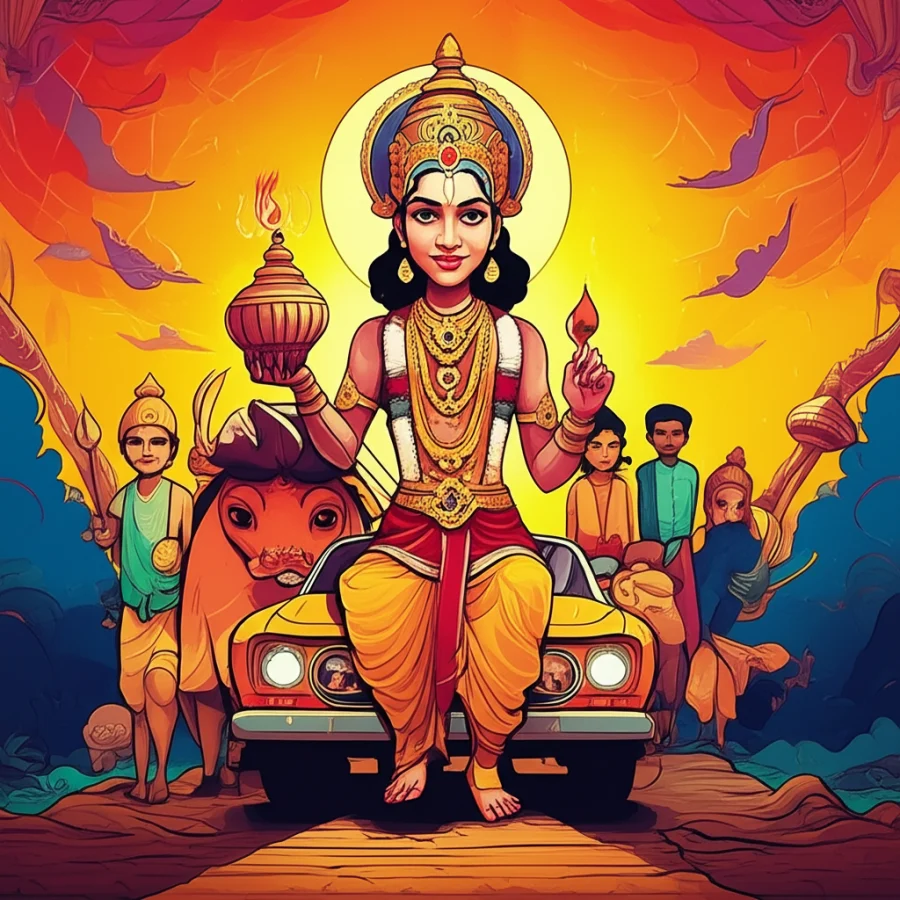
From the sun-drenched lands of ancient India, where epics were woven into the fabric of daily life and the cosmos was understood through grand narratives, emerges a story as intricate and vibrant as a silk tapestry – the mythical origins of Lanka. This is not a historical account, but a traditional tale, passed down through generations by storytellers and poets, offering a glimpse into the imaginative world of our ancestors. These ancient people, living in an era deeply connected to nature and the unseen forces they perceived around them, crafted elaborate explanations for the world’s wonders and the perceived order of existence.
The cultural landscape from which this narrative springs is one of profound philosophical inquiry and a rich spiritual imagination. The Vedic period, and the subsequent development of Hinduism, provided fertile ground for the creation of intricate cosmologies and epic sagas. In this world, the divine and the earthly were not always separate; celestial beings, powerful demons, and wise sages interacted with mortals, shaping destinies and influencing the course of events. The environment, often characterized by dense forests, mighty rivers, and imposing mountain ranges, was imbued with a sense of awe and mystery, readily lending itself to stories of colossal beings and extraordinary realms. The worldview was often cyclical, with concepts of creation, preservation, and destruction playing significant roles, and the human struggle for virtue and understanding was a central theme.
Central to the origin of Lanka, as it is often depicted in these ancient tales, is the figure of Ravana. Ravana is not a mere mortal king; he is a formidable rakshasa, a powerful demonic entity. He is often described as a being of immense strength, possessing ten heads and twenty arms, each representing a different aspect of his power and knowledge, or perhaps his insatiable desires and formidable intellect. His skin is said to be dark, like the stormy clouds, and his eyes blaze with an inner fire. Ravana is often portrayed as a scholar, a devotee of Shiva, and a master of various arts and sciences. However, his immense power is equally matched by his arrogance, his wrath, and his insatiable lust for power and dominion. These attributes are not to be taken as literal descriptions of a divine being, but rather as symbolic representations of the multifaceted nature of power, ambition, and the darker aspects of the human psyche, as understood by the storytellers. His ten heads, for instance, could symbolize his vast knowledge, but also his divided mind or his many vices.
The narrative of Lanka’s origins, as it unfolds in these ancient texts, is often intertwined with the story of Vishwakarma, the divine architect and craftsman of the universe. In some retellings, Vishwakarma himself is credited with the creation of the magnificent city of Lanka. He was commissioned to build a city that would be the epitome of beauty, wealth, and impregnability, a fitting abode for celestial beings or as a formidable stronghold. Imagine a city not merely built of stone and mortar, but of pure gold, shimmering with an ethereal light, its palaces reaching towards the heavens, adorned with precious gems that glittered like fallen stars. Its ramparts were said to be so high and strong that no enemy could breach them, and its gardens bloomed with flowers of unparalleled fragrance and color. This was Lanka, a jewel in the ocean, a testament to divine craftsmanship and the aspirations of its inhabitants.
However, the narrative often takes a turn, introducing the formidable rakshasa king, Ravana, as the eventual ruler and dweller of this magnificent city. According to certain accounts, Lanka was originally a celestial city, perhaps gifted or built for Kubera, the god of wealth. But Ravana, through his might and ambition, usurped the throne and claimed Lanka as his own. He is depicted as a warrior of unparalleled prowess, who conquered armies and subdued kingdoms, his might extending far and wide. His ascendance to power in Lanka is often portrayed as a pivotal moment, transforming the city from a place of divine splendor to a seat of demonic might, a kingdom ruled by ambition and often, by injustice. The story thus becomes a grand tapestry of creation, power, ambition, and the eternal struggle between opposing forces, as understood through the lens of ancient Indian mythology.
The symbolic weight of this narrative is multifaceted. The city of Lanka itself, with its golden edifices and formidable defenses, can be seen as a representation of worldly power, material wealth, and the allure of earthly kingdoms. It embodies the peak of human or, in this case, rakshasa achievement, a place of great beauty and strength. Ravana, with his ten heads and immense power, can symbolize not only the potent force of unchecked ambition and ego but also the complex duality of knowledge and its misuse. His devotion to Shiva, juxtaposed with his tyrannical rule, highlights the ancient understanding of how even profound spiritual practices can be perverted by pride and desire. The narrative might have served to caution against the corrupting influence of power and the dangers of arrogance, even in the face of great learning or spiritual merit. It speaks to the human fascination with grandeur and the inherent fragility of even the most magnificent creations when faced with destructive forces, be they external or internal.
In the modern era, the myth of Lanka and its inhabitants, particularly Ravana, continues to resonate. It finds expression in countless adaptations across literature, film, and popular culture. The epic Ramayana, within which Lanka plays a central role, is a constant source of inspiration, reinterpreted in various forms, from traditional plays and dance dramas to modern novels and animated films. Ravana, in particular, has become a complex and often debated figure, sometimes portrayed as a tragic villain, other times as a symbol of defiance or a fallen hero. The concept of Lanka as a magnificent, yet ultimately doomed, kingdom fuels the imagination, appearing in video games and fantasy narratives as exotic and powerful locations. Cultural studies scholars continue to analyze these stories for their insights into ancient Indian societal values, moral frameworks, and the enduring power of storytelling to explore the human condition.
It is crucial to reiterate that this narrative of Lanka’s origins is a product of ancient storytelling, a cultural artifact reflecting the beliefs and imagination of past civilizations. It is a tale woven from threads of myth and legend, offering a glimpse into a world of grand narratives and symbolic representations. As Muslims, we understand that only Allah is the true Creator and Sustainer of all existence. These ancient stories, while holding cultural and educational value, do not alter this fundamental truth. They serve as a testament to the enduring human capacity for imagination, the art of storytelling, and the rich tapestry of cultural heritage that continues to shape our understanding of the world and our place within it. The whispers of the golden isle, though born of myth, continue to echo, reminding us of the power of narratives to captivate, to teach, and to inspire.







